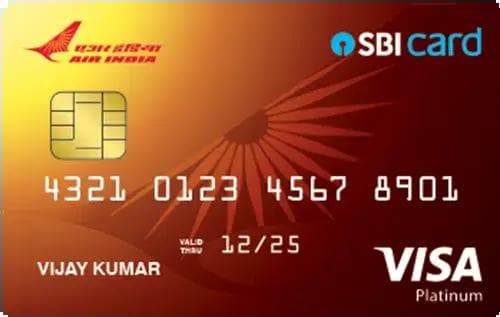
Quick Verdict
- The Air India SBI Platinum Credit Card ⓘ wins for everyday spend due to its higher base reward rate of 1 percent compared to 0.5 percent on the SBI Card Pulse Credit Card ⓘ.
- For travel benefits, including lounge access, the SBI Card Pulse Credit Card ⓘ has an edge with Priority Pass membership, despite both offering 8 domestic lounge visits per year.
- The Air India SBI Platinum has a simpler fee structure with no waiver, making it cheaper to hold if you do not spend at least Rs 2 lakh annually on the Pulse card.
- Pick the Air India SBI Platinum ⓘ if you prioritize travel rewards and want miles; choose SBI Card Pulse ⓘ if you want a richer welcome gift, dining and utility rewards, and Priority Pass access.
Side by Side
| Detail | Air India SBI Platinum Credit Card ⓘ | SBI Card Pulse Credit Card ⓘ |
|---|---|---|
| Annual fee | Rs 1,499 | Rs 1,499 |
| Joining fee | Rs 1,499 | Rs 1,499 |
| Fee waiver on spend | None | Rs 2.00 lakh |
| Reward rate | 1% base, 7.5% on travel | 0.5% base, 2.5% on dining and utilities |
| Reward type | Miles | Points |
| Domestic lounge | 8 per year | 8 per year |
| International lounge | None | None |
| Forex markup | 3.5% | 3.5% |
| Best suited for | Travel, rewards, lounge | Lounge, dining, rewards, travel, shopping |
Rewards Compared
On a Rs 10,000 spend, the Air India SBI Platinum Credit Card ⓘ earns Rs 100 in value at the base rate and up to Rs 750 on travel spends, reflecting a strong travel rewards focus with miles as the currency. This makes it especially lucrative for frequent flyers who spend on Air India or travel-related categories.
The SBI Card Pulse Credit Card ⓘ delivers Rs 50 at its base rate on the same Rs 10,000 spend, which is half that of the Air India Platinum. However, it offers 2.5 percent returns on dining and utility spends, equating to Rs 250 on Rs 10,000, which is more than double the base and appealing for everyday lifestyle expenses. The rewards here are points, which may have different redemption flexibility compared to miles.
Fees Compared
Both cards charge Rs 1,499 as joining and annual fee. The SBI Card Pulse Credit Card ⓘ offers a fee waiver if you spend Rs 2.00 lakh annually, which breaks down to about Rs 16,667 monthly. If you meet this threshold, you effectively pay no annual fee, improving value for high spenders. The Air India SBI Platinum Credit Card ⓘ does not offer any waiver on fees, so the Rs 1,499 stands regardless of spend.
In terms of break-even on rewards covering the fee, the Air India card requires about Rs 1.50 lakh in spend at base rates, while the Pulse card requires nearly Rs 3.00 lakh. So the Air India card recovers fees faster if you use it for general spend.
Which One Should You Pick
Choose the Air India SBI Platinum Credit Card ⓘ if you are a frequent traveler, especially on Air India, and want to earn miles directly. Its higher base reward rate and travel category bonus make it ideal for travel enthusiasts who also want simple fee terms without needing to meet a high waiver limit. However, skip this card if you want Priority Pass access or higher rewards on lifestyle spends like dining.
The SBI Card Pulse Credit Card ⓘ suits those who want a versatile lifestyle card with perks like a Noise smart watch welcome gift, FITPASS PRO, and Netmeds memberships. It rewards dining and utilities better than the Air India card and includes Priority Pass membership for lounge access, making it attractive for urban spenders who value multiple benefits. Avoid this card if you cannot meet the Rs 2 lakh annual spend to waive the fees or if you prefer miles over points.
The final call: For travel-focused rewards and simpler fee structure, the Air India SBI Platinum Credit Card ⓘ wins. For lifestyle benefits, rewards on dining and utilities, and Priority Pass lounges, SBI Card Pulse Credit Card ⓘ is better.
What to Check Before You Apply
- Confirm if the reward points or miles have any caps or expiry terms that might limit value.
- Understand the redemption value of points or miles since the reward type differs and impacts practical returns.
- Calculate if you can meet the Rs 2 lakh annual spend on the Pulse card to benefit from the fee waiver.
- Both cards charge a 3.5% forex markup; consider this cost if you intend to spend heavily abroad.
- Check if the domestic lounges offered match your travel itinerary, as international lounge access is not included on either.

Comments
No comments yet
Be the first to share your experience with this card.