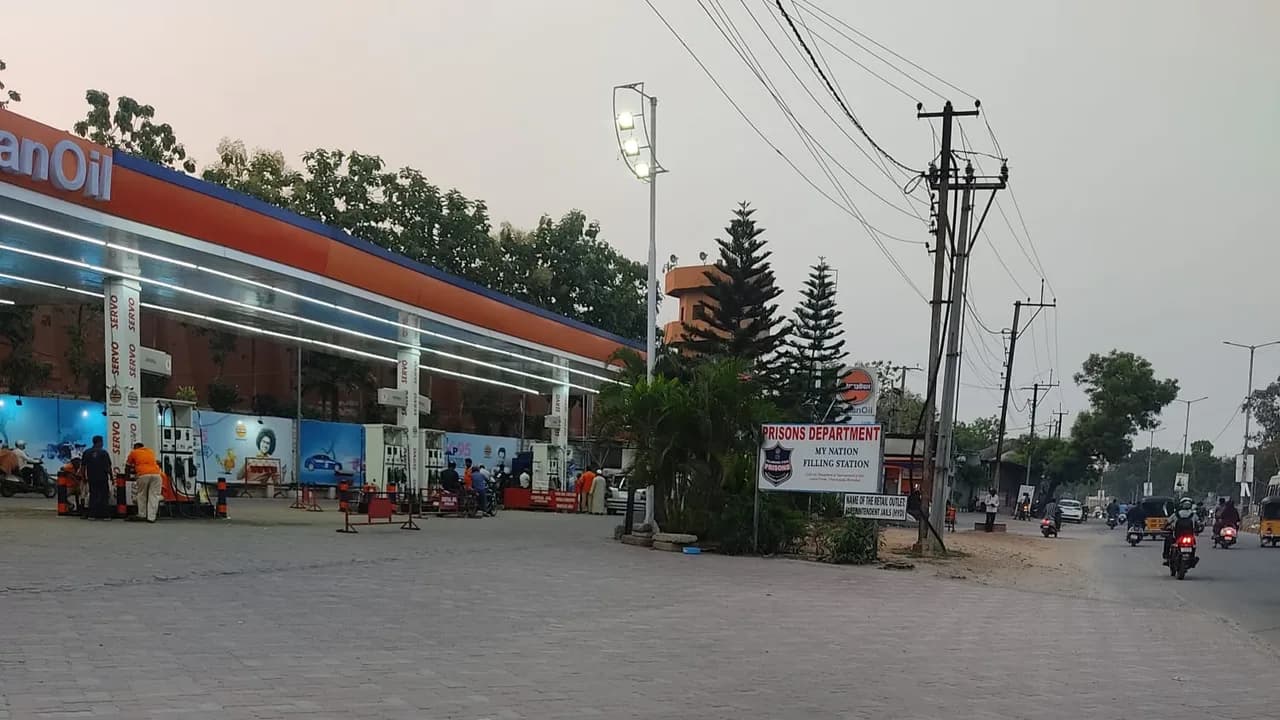
Co-Branded Fuel Cards and Pump Geography: Picking BPCL, IOCL, or HPCL by What's Near You
Published: 18 October 2026 Category: buying-guides | cardbuzz
Every co-branded fuel credit card carries an invisible condition: its accelerated rewards work fully at one oil company's pumps and partially everywhere else. The IndianOil HDFC Bank Credit Card earns its 5% Fuel Points on IndianOil spends; the BPCL SBI Card Octane's accelerated earn targets BPCL; HPCL-aligned cards favour HPCL. Pick the wrong brand and you've bought a ₹449–₹1,499 annual-fee card that behaves like a mediocre general card. This guide makes pump geography — not the headline rate — the first filter in choosing.
Why brand matters more than the rate
The accelerated earn on fuel co-branded cards is brand-gated by design: the oil company subsidises the rewards to drive footfall to its own outlets. The typical structure:
| Card (indicative terms — verify current MITC) | Annual fee | Accelerated fuel earn | Brand gate |
|---|---|---|---|
| IndianOil HDFC Bank Credit Card | ₹500 | 5% as Fuel Points | IndianOil outlets |
| BPCL SBI Card Octane | ₹1,499 | Up to 7.25% value-back (25X points + 1% waiver) | BPCL outlets |
| ICICI HPCL Super Saver | varies | ~6%+ via cashback + waiver + rewards | HPCL outlets |
| IndianOil Kotak / IndianOil Axis variants | ₹449–₹500 | ~4–5% structures | IndianOil outlets |
Fill at a competitor's pump and the earn typically drops to the base rate — often 1 point per ₹100–₹150, or zero on fuel. A driver whose route has no BPCL pumps gets almost none of the Octane's 7.25%.
Mapping your pump geography
Do this exercise before applying:
- List your regular pumps. The 3–5 outlets you actually use — near home, near office, on your highway route.
- Note the brand of each. IOCL, BPCL, HPCL, or independents (Shell, Nayara, Jio-bp).
- Estimate the brand split of your monthly fuel spend. E.g. 60% IOCL, 30% HPCL, 10% others.
- Apply each candidate card's earn to your split. A 5%-at-IOCL card on a 60%-IOCL driver realises 0.6×5% + 0.4×base — roughly 3.4%, not 5%.
The card with the highest headline rate is rarely the winner once your personal brand split is applied. A 5% card matching 80% of your fills beats a 7.25% card matching 30%.
The network-density reality
The three public-sector oil marketers have broadly comparable national networks, but density varies sharply by corridor:
- Highways: one brand often dominates a given highway stretch because of dealership territories. Your regular intercity route may be 70%+ one brand.
- Cities: all three are usually present, but your neighbourhood may lean one way.
- Company-owned outlets (COCO): offer the most consistent experience and are likeliest to code cleanly for rewards and waivers.
Independents (Shell, Nayara, Jio-bp) complicate the picture: co-branded earn doesn't apply there at all. If a third of your fuel goes to independents for quality or location reasons, weight that in the split.
Beyond the earn: what else differs by card
Waiver terms. The IndianOil HDFC card's 1% waiver (₹400–₹5,000 band, ~₹250/cycle cap) and the Octane's waiver (up to ₹4,000/transaction, annual cap ₹1,200) are different shapes. Match the shape to your fill sizes.
Loyalty stacking. IOCL's XTRAREWARDS and HPCL's loyalty programmes accrue on the fuel purchase regardless of payment method. A co-branded card stacks its earn on top of the pump loyalty — the double-dip is automatic, not something you opt into. Factor the loyalty value (typically 0.5–1% in fuel value) into the card comparison.
Non-fuel earn. You'll put non-fuel spend on this card too. Compare the base earn rate and the annual-fee waiver threshold alongside the fuel math.
Fee vs free. Annual fees of ₹449–₹1,499 need the incremental fuel value to clear them. On ₹8,000/month fuel with a 60% brand match, a 5% card generates ~₹2,880/year in incremental value over a 1% base card — comfortably clearing a ₹500 fee, but the ₹1,499 Octane needs the higher earn and fuller brand match to justify itself.
When no co-branded card fits
If your brand split is genuinely fragmented (no brand above 40%), skip co-branded cards:
- A good flat-cashback card with no fuel exclusion gives ~1–1.5% everywhere with zero brand games.
- Two co-branded cards (one per dominant brand) only makes sense above ~₹15,000/month fuel — below that, the second annual fee eats the gain.
- The waiver alone (any card with a decent band and cap) plus UPI for sub-band fills covers the basics.
Pitfalls
Pitfall 1: Applying for the card before mapping pumps. The commonest mistake — headline-first, geography-never. Do the 10-minute pump audit first.
Pitfall 2: Assuming "IOCL" includes all IndianOil-affiliated outlets. Some franchise formats and allied retail bill under different merchant setups. If accelerated earn doesn't post at a specific outlet, the merchant coding is the likely cause.
Pitfall 3: Ignoring the earn caps. Monthly Fuel Point caps mean the accelerated rate applies only to the first ₹X of fuel spend. Heavy drivers hit the cap mid-month; know the cap before annualising.
Pitfall 4: Letting the card choose your pump. Driving 4 km extra for the "right" brand burns the saving. The card should match your existing geography, not reroute your life.
Pitfall 5: Forgetting the fee-waiver threshold. Many fuel cards waive the annual fee at a spend threshold (often ₹50,000–₹1,00,000/year). If your total card spend clears it, the fee argument disappears — compute total-card economics, not fuel-only.


Comments
No comments yet
Be the first to share your experience with this card.