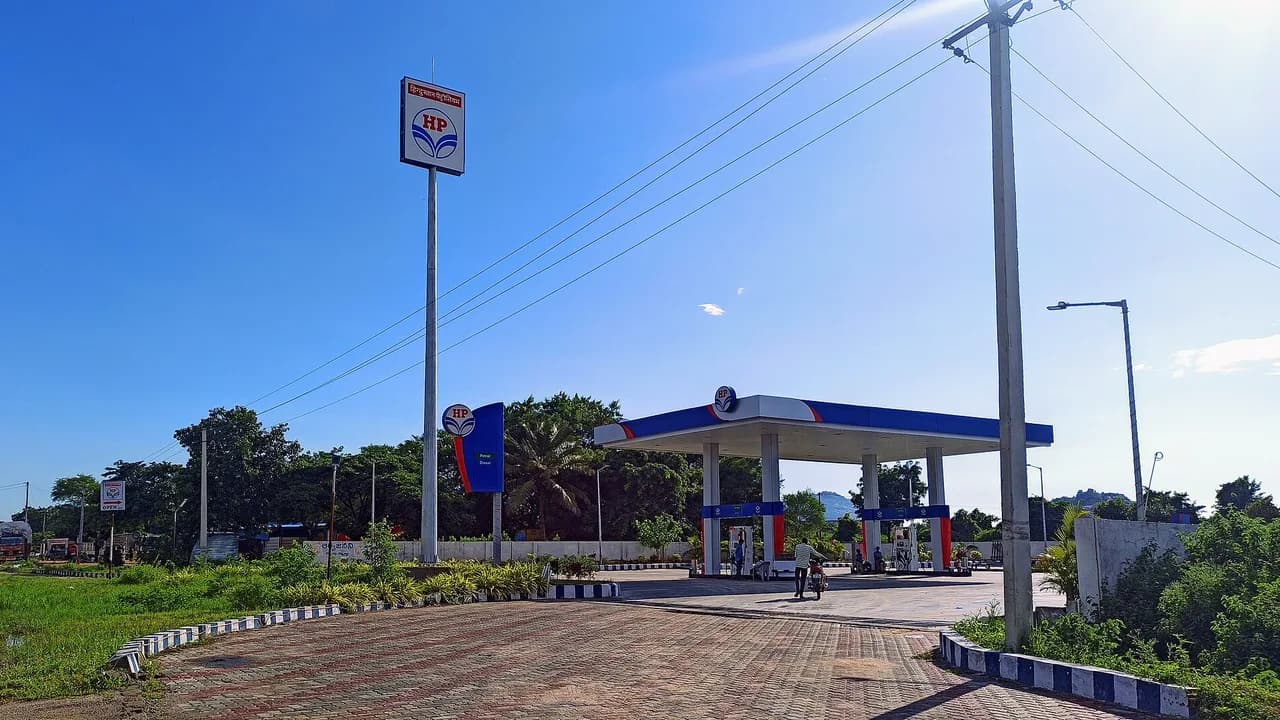
Fuel Surcharge Waiver Bands: Why Scooter Fills and Tankfuls Both Miss Out
Published: 18 October 2026 Category: how-to-guides | cardbuzz
The fuel surcharge waiver is the most misunderstood benefit in Indian credit cards. It is not a flat discount on fuel, it is not 1% off every fill, and it does not apply to every transaction at a pump. It is a conditional reversal that applies only when three separate conditions are all satisfied at once: the transaction amount sits inside a band, the monthly cap has headroom, and the transaction codes as fuel. Miss any one and you pay the surcharge in full. This guide maps the bands across major issuers and shows how driving habits interact with them.
The three gates
Think of every fuel transaction as passing through three gates:
- The transaction band gate. The single transaction must be between the card's minimum and maximum (e.g. ₹400–₹5,000 on standard HDFC cards, ₹500–₹3,000 on standard SBI Cards, ₹400–₹4,000 on ICICI Coral, ₹200–₹5,000 on Axis cards).
- The monthly cap gate. The total surcharge waived in the cycle must stay under the card's cap (commonly ₹100–₹500 per statement cycle depending on the card).
- The MCC gate. The transaction must carry the fuel merchant category code. Pump-attached convenience stores and wallet-routed payments can fail this gate.
All three must pass. A ₹350 scooter fill fails gate 1. A ₹6,000 SUV tankful on a ₹5,000-max card fails gate 1. A ₹2,000 fill made after the monthly cap is exhausted fails gate 2.
Who gets hurt by the minimum
The minimum transaction exists because the waiver was designed around car fills. Two-wheeler riders are the collateral damage:
| Fill size | Surcharge paid (~1.18%) | Waiver on a ₹400-min card |
|---|---|---|
| ₹200 (scooter top-up) | ₹2.36 | ₹0 — below band |
| ₹350 (bike fill) | ₹4.13 | ₹0 — below band |
| ₹400 (bike fill) | ₹4.72 | ~₹4.72 waived |
| ₹1,500 (car fill) | ₹17.70 | ~₹17.70 waived |
A rider doing four ₹300 fills a month pays about ₹14 in surcharge with zero waiver. The same ₹1,200 as one fill would be fully waived. If your card's minimum is ₹400 or ₹500, consolidating small fills is the single highest-value change a two-wheeler rider can make — though obviously only where the tank allows it.
Axis Bank's ₹200 minimum is the notable exception and one reason its cards suit two-wheeler riders better. Always confirm the current band in the card's MITC before choosing a card for this reason.
Who gets hurt by the maximum
At the other end, large vehicles and long highway runs hit the ceiling. A full tank on a large SUV can easily cross ₹5,000–₹6,000, and commercial-adjacent drivers filling jerry cans go higher still. On cards with a ₹3,000 or ₹4,000 maximum, even a normal sedan tankful can exceed the band.
The standard response is splitting: two transactions of ₹2,750 instead of one of ₹5,500, each inside the band. This works mechanically, but two cautions apply. First, the monthly cap still binds — splitting doesn't create extra cap headroom. Second, don't split transactions to manufacture milestone spend; issuers' terms generally treat split transactions at the same merchant on the same day as one transaction for milestone purposes, and gaming milestones is a fast route to a card review.
The monthly cap in practice
Caps cluster in a narrow range, and they are the real determinant of annual value:
| Monthly cap | Surcharge it covers | Rough annual value |
|---|---|---|
| ₹100/cycle (entry SBI Cards) | ~₹8,500 of fuel spend | ~₹1,200 |
| ₹250/cycle (standard HDFC) | ~₹21,000 of fuel spend | ~₹3,000 |
| ₹400–₹500/cycle (premium) | ~₹34,000–₹42,000 of fuel spend | ~₹4,800–₹6,000 |
A driver spending ₹10,000/month on fuel generates about ₹118/month in surcharge. Even the smallest cap covers it. The cap only bites above roughly ₹20,000/month in fuel — i.e. heavy commuters, sales professionals, and anyone running a vehicle for work. If that's you, the waiver alone won't carry the economics; you need a fuel co-branded card whose accelerated rewards (not just the waiver) do the heavy lifting.
Band-aware filling: a decision table
| Your situation | Best move |
|---|---|
| Scooter, fills under ₹400 | Consolidate fills above the minimum, or pay by UPI (no surcharge at all) |
| Car, fills ₹1,000–₹3,000 | Almost any waiver card works; pick on rewards, not the waiver |
| Large tank, fills ₹4,000–₹6,000 | Card with ₹5,000 max (HDFC/Axis standard); split if above |
| Monthly fuel above ₹20,000 | Co-branded fuel card with high caps + accelerated rewards |
| Mixed two-wheeler + car | Axis-style ₹200 minimum, or two cards |
Pitfalls
Pitfall 1: Assuming all pumps behave identically. Company-owned, company-operated (COCO) outlets and dealer outlets can settle through different acquirers. If the waiver works at one pump and not another, the MCC or terminal setup differs — not your card.
Pitfall 2: Confusing the waiver with rewards. Many programmes exclude fuel from reward points entirely while still offering the waiver. The waiver is a fee reversal; rewards are a separate earning track. A transaction can earn the waiver and zero points, or points and no waiver, depending on the card's two separate rule sets.
Pitfall 3: Forgetting the cap resets per statement cycle, not calendar month. If your cycle closes on the 15th, the cap window is the 15th-to-15th. Timing a big fill just after the cycle closes maximises headroom.
Pitfall 4: Premium cards with worse bands. A higher annual fee does not guarantee a better band. Some premium cards keep the same ₹400–₹5,000 / ₹250-cap structure as their mass siblings. Read the band, not the badge.


Comments
No comments yet
Be the first to share your experience with this card.