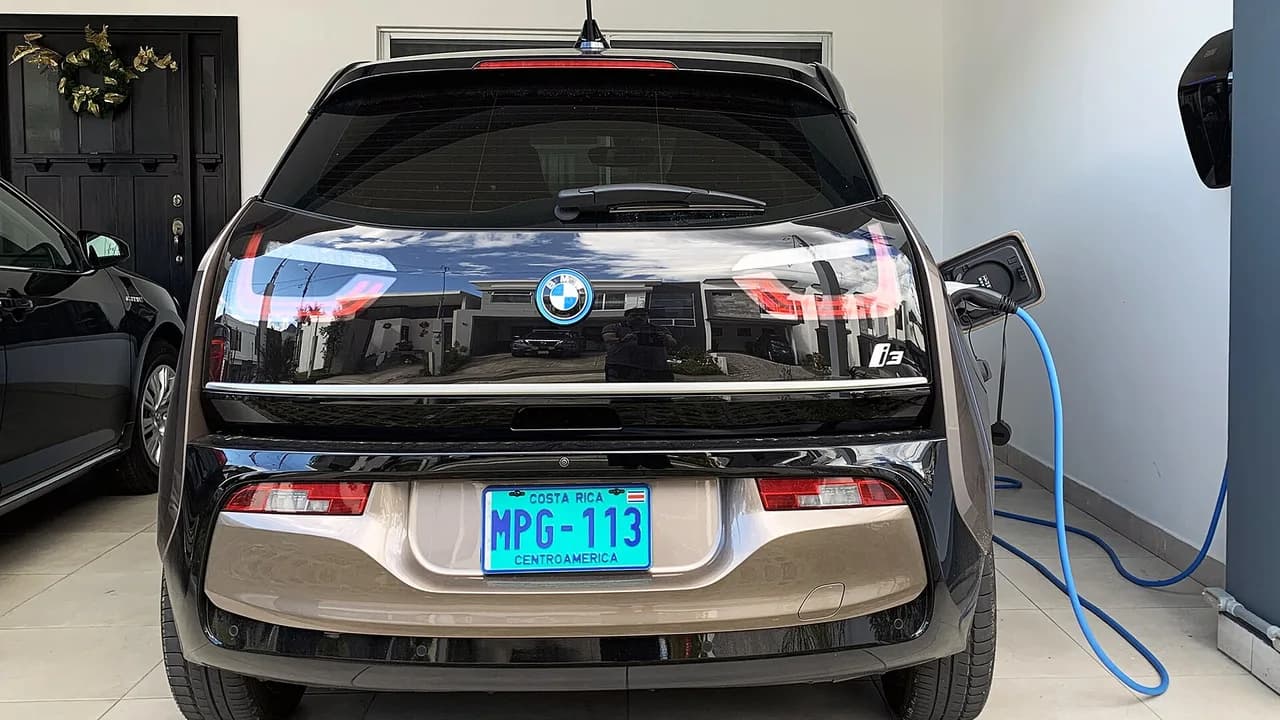
Home EV Charging on Your Electricity Bill: Which Cards Reward the DISCOM
Published: 18 October 2026 Category: how-to-guides | cardbuzz
The cheapest kilometre in Indian motoring is the one charged at home. A domestic tariff of roughly ₹6–₹10 per kWh against public DC at ₹18–₹25 (plus 18% GST) makes home charging two to three times cheaper than public charging — and the payment for it lands on your monthly electricity bill, paid to your DISCOM. That bill is a utility MCC transaction, which puts it under a completely different set of card rules than fuel or charging-app payments. This guide covers the reward mechanics of paying your electricity bill — inflated by an EV — with a credit card.
Why home charging changes the bill
An EV driven 1,500 km a month at 15 kWh/100 km consumes about 225 kWh monthly for charging. At ₹8/kWh that's ₹1,800 added to the electricity bill — roughly doubling a typical urban household's bill. Two consequences:
- Slab creep. Many states use telescopic domestic tariffs: higher monthly consumption pushes marginal units into higher-priced slabs. The EV's units may be billed at your top slab rate, not your average. Check your DISCOM's slab structure — in some states the difference between the first and last slab is 2x.
- The bill becomes a rewards-relevant spend. A ₹3,500/month electricity bill is ₹42,000 a year of utility spend. On a card earning base rewards on utilities, that's meaningful; on a card that caps or excludes utilities, it's dead spend.
Some states offer concessional EV tariffs or separate EV connections at reduced rates (Delhi, Gujarat, and Maharashtra have had such provisions). If your DISCOM offers one, the tariff saving dwarfs any card reward — sort the tariff first, the card second.
How cards treat electricity-bill payments
Utility payments sit in an awkward middle ground in Indian card terms:
| Treatment | What it means | Common pattern |
|---|---|---|
| Normal base rewards | Earn standard points per ₹100/₹200 | Many general rewards cards |
| Capped utility earn | Earn up to a monthly utility cap, then zero | Cards with category caps |
| Utility surcharge/fee | 1% fee above a threshold (e.g. utility transactions above ₹50,000 attract fees on some ICICI cards) | High-bill households |
| Excluded | No rewards on utilities | Some cashback and co-branded cards |
The thresholds matter more once an EV inflates the bill. A household whose bill crosses a card's utility cap because of the EV should split: pay the base bill on the capped card and the overflow on a card without the cap.
Paying the DISCOM bill: the routes
DISCOM website/app with card directly. The cleanest route — the transaction codes as a utility MCC, earns per the card's utility terms, and there's typically no convenience fee on many DISCOM portals (some add a small one; check before paying).
Third-party apps (CRED, Paytm, PhonePe, etc.). Convenient, but two issues: some apps add a convenience fee for credit-card bill payments, and issuers have been tightening terms on bill payments routed through third-party apps. HDFC, ICICI, and SBI have all imposed fees or restrictions on certain third-party-routed categories since 2024. For plain utility bills the direct DISCOM route avoids the question entirely.
Credit card on UPI (RuPay). If your DISCOM accepts UPI, a RuPay credit card on UPI may work and may earn per the card's UPI terms. Verify both acceptance and earn before relying on it.
Auto-debit/standing instruction. DISCOMs and banks support auto-pay mandates for electricity bills. This is the set-and-forget option — but audit it quarterly, because a slab-creep-inflated bill on autopilot is how ₹8,000 surprise bills happen.
The home-charger installation: a separate transaction
Installing a home charge point (7.4 kW AC charger plus wiring, earthing, and sometimes a load upgrade) is a one-time electrical-goods/services purchase, typically ₹15,000–₹60,000 depending on the charger and wiring run. This codes as a retail or services transaction — not a utility — so it earns normal rewards and is EMI-eligible. Two notes:
- Load upgrade charges paid to the DISCOM are a utility/government payment; rewards treatment follows the utility rules.
- Society permissions and shared parking are a legal/administrative matter, not a payment one — but keep the charger's purchase invoice; it's needed for the card's purchase-protection window and any warranty claim.
Worked example: the monthly maths
Household in a metro, domestic tariff effectively ₹8/kWh, EV using 225 kWh/month:
| Item | Amount |
|---|---|
| EV charging units | 225 kWh × ₹8 = ₹1,800 |
| Rest of household bill | ₹1,700 |
| Total electricity bill | ₹3,500 |
| Card reward at 1% base on utilities | ~₹35/month → ~₹420/year |
| Interest-free period value (45 days on ₹3,500 at ~7% savings rate) | ~₹30/month |
Neither figure is life-changing, but the bill is spend you'd make anyway — the card simply needs to not penalise it. The real optimisation remains: concessional EV tariff if available, charging in lower slabs where the tariff is time-of-day differentiated, and avoiding public DC except on road trips.
Pitfalls
Pitfall 1: Assuming the EV tariff applies automatically. Concessional EV tariffs usually require a separate application or a separate meter/connection. Default domestic billing applies until you opt in.
Pitfall 2: Third-party app convenience fees. A 1% convenience fee on a ₹3,500 bill is ₹35 + GST — roughly equal to the reward earn. Direct DISCOM payment avoids the fee.
Pitfall 3: Utility caps you didn't know about. The EV pushes the bill over caps that the pre-EV bill never touched. Re-read the utility clause after the first two EV-inflated bills.
Pitfall 4: Autopay without alerts. Set a bill-amount alert threshold on the DISCOM app so slab creep shows up as a notification, not a shock.
Pitfall 5: Paying the bill late because the card statement confused you. The DISCOM's due date and your card's due date are different clocks. A late DISCOM payment can attract the DISCOM's own late fee regardless of your card's interest-free period.

Comments
No comments yet
Be the first to share your experience with this card.