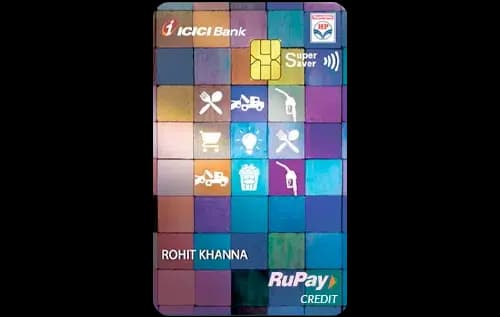
Quick Verdict
- The ICICI HPCL Super Saver Credit Card ⓘ wins for everyday spend with a higher base reward rate of 1% compared to 0.75% on the IDFC card.
- The IDFC HPCL First Power Plus Credit Card ⓘ offers a superior fuel category return of 6.5%, making it the better choice for heavy fuel spenders.
- Both cards have similar annual and joining fees around Rs 500, with fee waivers on Rs 1.5 lakh annual spend, but the ICICI card requires slightly less spend to cover its fee.
- Pick the ICICI card if you want balanced rewards across categories and better base returns. Choose the IDFC card if fuel spending dominates and you prefer lower lounge spend thresholds.
Side by Side
| Detail | ICICI HPCL Super Saver Credit Card ⓘ | IDFC HPCL First Power Plus Credit Card ⓘ |
|---|---|---|
| Annual fee | Rs 500 | Rs 499 |
| Joining fee | Rs 500 | Rs 499 |
| Fee waiver on spend | Rs 1.50 lakh | Rs 1.50 lakh |
| Reward rate | 1% base, 5% fuel/utilities/grocery | 0.75% base, 6.5% fuel, 5% grocery/utilities |
| Reward type | points | points |
| Domestic lounge | 4 per year, Rs 75,000 quarterly spend | 4 per year, Rs 20,000 monthly spend |
| International lounge | None | None |
| Forex markup | 3.5% | 3.5% |
| Best suited for | fuel, grocery, cashback, shopping, lounge | fuel, UPI-Rupay, grocery, lounge |
Rewards Compared
On a Rs 10,000 spend, the ICICI HPCL Super Saver Credit Card ⓘ yields Rs 100 back at the base rate of 1%. In key categories like fuel, utilities, and grocery, this card offers a compelling 5% return, translating into Rs 500 on Rs 10,000 spent. This makes it attractive for users who spend broadly across these categories and want higher rewards on essentials.
The IDFC HPCL First Power Plus Credit Card ⓘ, on the other hand, offers a lower base return of Rs 75 per Rs 10,000 due to its 0.75% base rate. However, it compensates with a higher 6.5% fuel category rate, returning Rs 650 on Rs 10,000 fuel spend, the best among the two. Its grocery and utilities rewards match ICICI’s 5%, making it a strong contender for fuel-heavy spenders who also shop for groceries and pay utilities regularly.
Fees Compared
Both cards have nearly identical joining and annual fees, Rs 500 for ICICI and Rs 499 for IDFC, with fee waivers triggered by an annual spend of Rs 1.5 lakh. This breaks down to a monthly spend of Rs 12,500 to avoid fees on either card. The ICICI card requires Rs 50,000 in spend at the base rate to cover its fee, slightly less than the Rs 66,533 needed by the IDFC card, suggesting the ICICI card is more cost-effective if you primarily rely on base rewards to justify the fee. The difference in annual fees is just Rs 1, which is negligible compared to the benefits.
Which One Should You Pick
Choose the ICICI HPCL Super Saver Credit Card ⓘ if you want a balanced card that rewards you well across multiple categories such as fuel, groceries, and utilities, plus a slightly better return on everyday spends. Its quarterly lounge spend gate of Rs 75,000 is also easier to manage if you use lounges moderately. This card suits shoppers who want cashback versatility with lower break-even spend.
Opt for the IDFC HPCL First Power Plus Credit Card ⓘ if your spending is concentrated on fuel, where it provides the highest reward rate, and you prefer a more frequent monthly lounge spend gate of Rs 20,000 which may suit regular travelers better. It is ideal for users who combine fuel expenses with UPI-Rupay transactions and grocery payments, leveraging the card’s focused category rewards.
Skip the ICICI card if your fuel spend is very high and you want maximum returns there, as the IDFC card’s 6.5% fuel return outperforms it. Conversely, avoid the IDFC card if you want better base returns on non-category spends or if you do not meet the higher spend thresholds easily, as its base rate is lower and fee break-even is higher.
What to Check Before You Apply
- Caps on lounge access: ICICI requires Rs 75,000 quarterly spend, IDFC Rs 20,000 monthly, so check your ability to meet these gates.
- Redemption value of points: Both cards offer points but verify how effectively you can convert them to cashback or rewards.
- Fee waiver maths: Both waive fees on Rs 1.5 lakh annual spend; ensure your spend pattern justifies the fee.
- Forex markup: Both charge 3.5% on foreign currency, which is standard but costly for international travelers.
- Lounge locations and gates: Confirm the domestic lounges covered and if international lounges are important, as neither card offers international access.

Comments
No comments yet
Be the first to share your experience with this card.