Quick Verdict
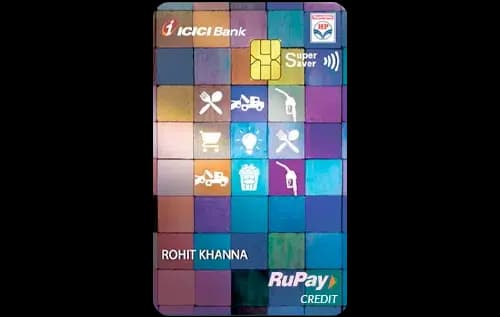
- The ICICI HPCL Super Saver Credit Cardⓘ wins for everyday spends, especially on fuel, utilities, and grocery, thanks to its higher reward rates.
- For travel and lounge access, both cards offer the same number of domestic lounge visits but have no international lounge access; however, the Yes Prosperity Edge Credit Cardⓘ adds golf access, which may appeal to some travelers.
- The ICICI card is cheaper to hold with a lower joining and annual fee and a higher waiver threshold.
- Pick ICICI HPCL Super Saver for fuel and grocery-focused users who spend more, and choose Yes Prosperity Edge if you want dining rewards, golf access, or a lower waiver threshold on annual fees.
Side by Side
| Detail | ICICI HPCL Super Saver Credit Card ⓘ | Yes Prosperity Edge Credit Card ⓘ |
|---|---|---|
| Annual fee | Rs 500 | Rs 599 |
| Joining fee | Rs 500 | Rs 599 |
| Fee waiver on spend | Rs 1.50 lakh | Rs 1.00 lakh |
| Reward rate | 1% base; 5% fuel, utilities, grocery | 0.8% base; 2% dining, grocery |
| Reward type | points | points |
| Domestic lounge | 4 per year | 4 per year |
| International lounge | None | None |
| Forex markup | 3.5% | 3.5% |
| Best suited for | fuel, grocery, cashback, shopping, lounge | rewards, dining, first-card, lounge, shopping |
| Lounge spend gate | Rs 75,000 quarterly | Rs 50,000 quarterly |
| Golf access | No | Yes |
Rewards Compared
On a Rs 10,000 spend, the ICICI HPCL Super Saver Credit Cardⓘ returns Rs 100 at its base rate of 1%. This increases significantly to Rs 500 when spending is in fuel, utilities, or grocery categories where the reward rate is 5%. This makes it highly rewarding for users whose spending is concentrated in these categories, especially fuel and grocery, which are common monthly expenses.
In contrast, the Yes Prosperity Edge Credit Cardⓘ offers a base reward of Rs 80 on Rs 10,000 spent, reflecting its lower base rate of 0.8%. Its category reward rate is 2% for dining and grocery, yielding Rs 200 on Rs 10,000 spent in these categories. While lower than ICICI’s category rates, this card suits users who prioritize dining rewards and moderate grocery spending. Overall, ICICI’s rewards are more generous for everyday and essential expenses, while Yes Bank’s card is more focused on dining and entry-level reward earners.
Fees Compared
The ICICI HPCL Super Saver Credit Cardⓘ carries a joining and annual fee of Rs 500 each. These fees are waived if you spend Rs 1.50 lakh annually, which breaks down to Rs 12,500 per month. This waiver threshold is higher but the fees are slightly lower. The card’s break-even spend at the base rate to cover the annual fee is Rs 50,000 per year.
The Yes Prosperity Edge Credit Cardⓘ charges Rs 599 for both joining and annual fees, slightly higher than ICICI’s. Its fee waiver threshold is Rs 1.00 lakh annually or about Rs 8,333 per month, which is more accessible for moderate spenders. The break-even spend for the base reward rate to cover annual fees is Rs 74,875 per year, higher than ICICI’s card due to the lower reward rate.
Which One Should You Pick
If you spend heavily on fuel, groceries, and utilities and want a straightforward cashback-style reward with a lower fee, the ICICI HPCL Super Saver Credit Cardⓘ is the better pick. Its higher category rewards and slightly lower fees make it ideal for users with Rs 12,500 or more in monthly spends who want value from everyday essentials.
The Yes Prosperity Edge Credit Cardⓘ suits those who prioritize dining rewards and golf access, or those looking for a card with a lower fee waiver threshold. It can also appeal to first-time credit card users who want a modest rewards program with some lifestyle perks. However, its lower base and category reward rates mean it is less rewarding for heavy everyday spenders.
In conclusion, heavy spenders on essentials should skip the Yes Prosperity Edge card due to its lower rewards and higher fees. Conversely, those with modest spending or a preference for dining and golf perks should skip the ICICI HPCL Super Saver card.
What to Check Before You Apply
- Confirm quarterly lounge eligibility limits and spending gates; ICICI requires Rs 75,000 quarterly versus Rs 50,000 for Yes Bank.
- Review any caps on category rewards or total points earned to avoid surprises.
- Check the redemption process and value of points, especially since both cards use points rather than direct cashback.
- Understand forex markup charges at 3.5% if you plan to use the card abroad, as both cards have the same foreign transaction fee.

Comments
No comments yet
Be the first to share your experience with this card.