Quick Verdict
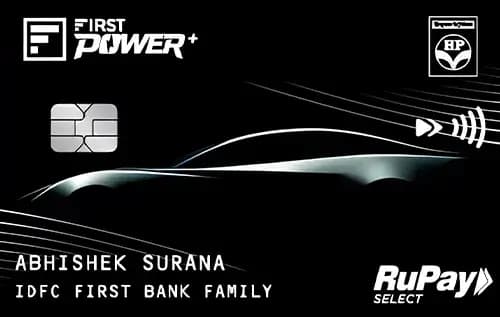
- The IDFC HPCL First Power Plus Credit Cardⓘ wins for everyday spend due to its higher base and category reward rates.
- The HDFC Bank Rupay IRCTC Credit Cardⓘ offers more domestic lounge visits, making it better for travel and lounge access.
- The Rupay IRCTC is cheaper to hold with no annual fee, while the IDFC card charges Rs 499 annually.
- Choose the IDFC Power Plus for fuel, grocery, and utilities spending; pick the HDFC IRCTC if you want a fee-free card with lounge benefits and occasional travel rewards.
Side by Side
| Detail | IDFC HPCL First Power Plus Credit Cardⓘ | HDFC Bank Rupay IRCTC Credit Cardⓘ |
|---|---|---|
| Annual fee | Rs 499 | Nil (lifetime free) |
| Joining fee | Rs 499 | Rs 500 |
| Fee waiver on spend | Rs 1.50 lakh | Rs 1.50 lakh |
| Reward rate | 0.75% base, 6.5% fuel, 5% grocery/utilities | 0.5% base, 5% travel, 1% UPI |
| Reward type | Points | Points |
| Domestic lounge | 4 per year (Rs 20,000 monthly spend gate) | 8 per year (Rs 75,000 quarterly spend gate) |
| International lounge | None | None |
| Forex markup | 3.5% | 3.5% |
| Best suited for | Fuel, UPI-Rupay, Grocery, Lounge | Travel, UPI-Rupay, First Card |
Rewards Compared
With Rs 10,000 spent, the IDFC HPCL First Power Plus Credit Cardⓘ returns Rs 75 at the base rate, jumping to Rs 650 for fuel and Rs 500 for grocery or utilities. This makes it particularly rewarding for everyday expenses like fuel and groceries. The high 6.5% fuel category rate translates to Rs 650 back on Rs 10,000 spent on fuel, a standout feature for drivers.
The HDFC Bank Rupay IRCTC Credit Cardⓘ offers Rs 50 at the base rate on Rs 10,000 spent, which is lower than IDFC’s base. However, it provides Rs 500 back on travel category spends, aligning well with those prioritizing travel rewards. The 1% return on UPI spends (Rs 100 on Rs 10,000) is modest, yet useful given the growing use of UPI payments.
Thus, IDFC’s card outperforms in fuel, grocery, and utilities, while HDFC IRCTC suits travelers better with dedicated travel rewards.
Fees Compared
The IDFC Power Plus card charges Rs 499 annually and a joining fee of Rs 499, both substantial upfront costs. The fee can be waived with Rs 1.50 lakh annual spend, which breaks down to Rs 12,500 per month. The break-even point to cover the extra annual fee through the higher reward rate is Rs 1,99,600 in spend, roughly Rs 2 lakh per year, which is quite high for most users.
The HDFC Rupay IRCTC card has a Rs 500 joining fee but no annual fee, making it effectively free to hold for a lifetime. Its fee waiver threshold matches IDFC’s at Rs 1.50 lakh annually but is less significant given no recurring fee.
In essence, HDFC’s card is cheaper to keep, especially for lower spenders or those who dislike annual fees.
Which One Should You Pick
Pick the IDFC HPCL First Power Plus Credit Cardⓘ if you spend heavily on fuel, groceries, and utilities. Its high category reward rates and welcome voucher on the first HPCL fuel transaction make it ideal for everyday Indian households and fuel buyers. Be prepared to meet the Rs 12,500 monthly spend to waive fees or accept the Rs 499 annual cost.
Opt for the HDFC Bank Rupay IRCTC Credit Cardⓘ if you want a fee-free card with decent travel rewards and more domestic lounge visits. This card fits well as a first credit card or for users who value lounge access and travel perks over high reward rates on daily spends. The Rs 75,000 quarterly lounge spend gate is higher but manageable for frequent travelers.
If you dislike annual fees and do not spend much on fuel or groceries, skip IDFC Power Plus. Conversely, if you want maximum rewards on fuel and grocery, avoid the Rupay IRCTC card despite its free status.
What to Check Before You Apply
- Verify if the fuel and grocery category rewards have monthly or transaction caps that limit your earnings.
- Understand the redemption process and value for points since reward types are points; poor redemption rates can reduce value.
- Confirm the exact monthly or quarterly spend needed to waive fees, as failing to meet thresholds means paying fees.
- Remember both cards charge 3.5% forex markup, so avoid foreign currency spends if you want to save on fees.
- Check the domestic lounge access rules, especially the spend gates of Rs 20,000 monthly for IDFC and Rs 75,000 quarterly for HDFC IRCTC, which may restrict lounge visits.

Comments
No comments yet
Be the first to share your experience with this card.