Quick Verdict
- The Indianoil HDFC Bank Credit Cardⓘ wins for everyday spend with a higher base reward rate of 1% versus 0.75% on the IDFC card.
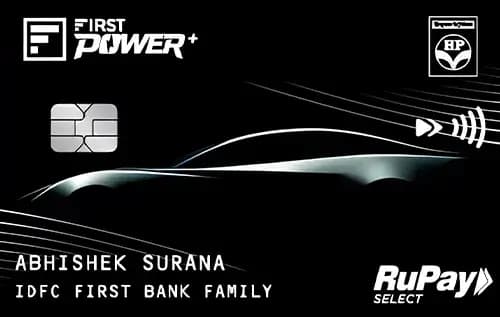
- The IDFC HPCL First Power Plus Credit Cardⓘ is better for fuel and grocery category rewards, offering up to 6.5% on fuel spend.
- IDFC’s card offers 4 domestic lounge visits annually, whereas the Indianoil HDFC card provides no lounge access.
- The Indianoil HDFC card is cheaper to hold in terms of fee waiver at Rs 50,000 yearly versus Rs 1.5 lakh on the IDFC First card.
- Pick the IDFC First Power Plus card if you prioritize fuel rewards and occasional lounge access; choose the Indianoil HDFC card for simpler, higher base rewards and lower fee waiver requirements.
Side by Side
| Detail | IDFC HPCL First Power Plus Credit Card ⓘ | Indianoil HDFC Bank Credit Card ⓘ |
|---|---|---|
| Annual fee | Rs 499 | Rs 500 |
| Joining fee | Rs 499 | Rs 500 |
| Fee waiver on spend | Rs 1.50 lakh | Rs 50,000 |
| Reward rate | 0.75% | 1% |
| Reward type | points | points |
| Domestic lounge | 4 per year | None |
| International lounge | None | None |
| Forex markup | 3.5% | 3.5% |
| Best suited for | fuel, upi-rupay, grocery, lounge | fuel, first-card, upi-rupay |
Rewards Compared
The IDFC HPCL First Power Plus Credit Cardⓘ earns Rs 75 on Rs 10,000 of general spend due to its 0.75% base reward rate. However, it significantly outperforms in categories such as fuel with 6.5% returns (Rs 650), and grocery and utilities at 5% (Rs 500). This tiered reward structure means it rewards category spenders handsomely but offers modest returns outside those categories.
In contrast, the Indianoil HDFC Bank Credit Cardⓘ provides a straightforward 1% base reward rate, yielding Rs 100 on Rs 10,000 spent regardless of category. It also offers 5% (Rs 500) on fuel and grocery categories, slightly lower than IDFC’s fuel rate but equal in grocery. This makes the Indianoil HDFC card more attractive for users preferring simple, consistent returns on all spend, while IDFC’s card suits those concentrating on fuel and groceries.
Fees Compared
Both cards have nearly identical joining and annual fees, Rs 499/500 respectively. The key difference lies in fee waiver requirements: the IDFC HPCL First Power Plus demands an annual spend of Rs 1.5 lakh (about Rs 12,500 monthly) to waive fees, whereas the Indianoil HDFC Bank card requires only Rs 50,000 annually (around Rs 4,167 monthly) for waiver.
The IDFC card’s higher waiver threshold means casual or low spenders will likely pay the fee, but heavy spenders on fuel and groceries can offset this with higher category rewards. The Indianoil HDFC card’s low waiver bar is easier to achieve, making it more accessible for moderate spenders. The head-to-head break-even point for the slightly better base rate on the Indianoil HDFC card is just Rs 400 more spend annually, a negligible difference.
Which One Should You Pick
Choose the IDFC HPCL First Power Plus Credit Cardⓘ if you fuel your vehicle frequently at HPCL stations and spend substantially on groceries and utilities. The card’s higher category rewards and domestic lounge access add value for such users. However, be prepared to meet the Rs 1.5 lakh annual spend for fee waiver, or else the Rs 499 fee may reduce your net benefits.
The Indianoil HDFC Bank Credit Cardⓘ suits first-time credit card users or those seeking a simple, good base reward rate of 1% on all spends with lower fee waiver requirements. It is ideal for fuel and grocery spenders who want consistent returns without managing category spends tightly. Lounge access is not available, so travel perks are limited.
If you rarely spend on fuel or groceries, or want lounge access, skip the Indianoil HDFC card. If you cannot commit to Rs 1.5 lakh annual spend, or do not value fuel category rewards highly, the IDFC card may not be cost-effective.
What to Check Before You Apply
- Confirm monthly spending capacity to meet fee waiver thresholds: Rs 12,500 for IDFC First, Rs 4,167 for Indianoil HDFC.
- Understand the redemption process and value of points as both cards use points but rates differ by category.
- Beware that forex markup of 3.5% applies on both cards, standard for Indian credit cards, making overseas spends costly.
- Check if domestic lounge visits on the IDFC First card require minimum Rs 20,000 monthly spend to unlock access.
- Review fuel station network compatibility to maximize category rewards, especially for the IDFC HPCL First Power Plus.

Comments
No comments yet
Be the first to share your experience with this card.