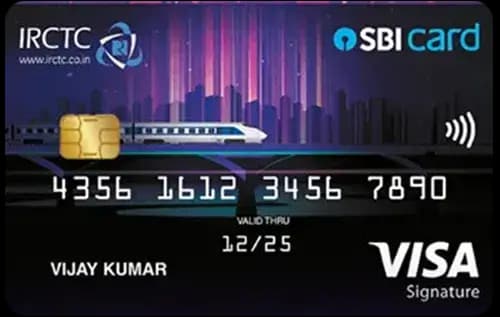
Quick Verdict
- For everyday spending, the SBI Card Pulse Credit Cardⓘ wins with a higher base reward rate of 0.5 percent versus 0.25 percent on the IRCTC SBI Card Premier.
- For travel and railway-related spends, the IRCTC SBI Card Premierⓘ offers superior category rewards and more complimentary domestic lounge visits.
- Both cards charge the same joining and annual fees of Rs 1,499, but the Pulse card has a realistic waiver on Rs 2 lakh annual spend, making it cheaper to hold for moderate users.
- Choose the IRCTC SBI Card Premierⓘ if your primary spend is on IRCTC railway tickets and you value railway lounge access. Opt for the SBI Card Pulseⓘ if you want better rewards on dining, utilities, and a welcome gift bundle with a smartwatch.
Side by Side
| Detail | IRCTC SBI Card Premierⓘ | SBI Card Pulse Credit Cardⓘ |
|---|---|---|
| Annual fee | Rs 1,499 | Rs 1,499 |
| Joining fee | Rs 1,499 | Rs 1,499 |
| Fee waiver on spend | Rs 2.00 lakh | |
| Reward rate | 0.25% base | 0.5% base |
| Reward type | points | points |
| Domestic lounge | 8 per year | 8 per year |
| International lounge | None | None |
| Forex markup | 3.5% | 3.5% |
| Best suited for | travel, upi-rupay, lounge | lounge, dining, rewards, travel, shopping |
Rewards Compared
The IRCTC SBI Card Premierⓘ earns Rs 25 on every Rs 10,000 spent, reflecting its modest base reward rate of 0.25 percent. This card shines when used for travel-related spends, especially IRCTC ticket bookings, where it returns a remarkable Rs 1,000 per Rs 10,000 spent due to a 10 percent category rate. The card also offers 1 percent back on UPI payments, yielding Rs 100 per Rs 10,000. This makes it attractive primarily for railway travelers and those heavily using UPI transactions.
In contrast, the SBI Card Pulse Credit Cardⓘ delivers double the base reward rate at 0.5 percent, equating to Rs 50 on Rs 10,000 spent. Its category rewards focus on dining and utilities, offering 2.5 percent or Rs 250 per Rs 10,000, which is a substantial uplift over the Premier card in these categories. This makes Pulse more rewarding for everyday spends outside travel, especially for users who frequently dine out or pay utility bills via the card.
Fees Compared
Both cards charge identical joining and annual fees of Rs 1,499. However, the SBI Card Pulse Credit Cardⓘ offers a fee waiver on spending Rs 2 lakh annually, which breaks down to about Rs 16,667 per month. This waiver threshold is reasonable for many salaried or urban customers who can offset the annual fee through consistent spending. The IRCTC SBI Card Premierⓘ does not offer any fee waiver, demanding that users spend close to Rs 6 lakh annually to break even purely on the base reward rate, which is a high bar.
Therefore, the Pulse card is more cost-effective for moderate spenders aiming to avoid fees, while the Premier card requires significant travel-related spending to justify its annual cost.
Which One Should You Pick
Choose the IRCTC SBI Card Premierⓘ if your primary spending revolves around railway travel and you value up to 8 complimentary domestic railway lounge visits per year. It is designed for IRCTC users and those who prefer dedicated travel rewards on ticket bookings. Skip this card if your spend is mostly outside travel or if you want fee waivers on lower spends.
Opt for the SBI Card Pulse Credit Cardⓘ if you want a versatile card with higher base rewards, appreciable category bonuses on dining and utilities, and a welcome gift comprising a smartwatch plus free memberships. Its fee waiver on Rs 2 lakh annual spend makes it a better choice for everyday users looking for a balance of rewards and value. Avoid this card if you rarely spend on dining or utilities or if you prioritize international lounge access, which neither card offers.
Overall, the Pulse card edges out for most users due to its higher base returns, welcome benefits, and fee waiver, while the IRCTC SBI Card Premier remains a niche pick for railway travelers.
What to Check Before You Apply
- Confirm the exact caps on category bonus spends, especially for travel and dining, to maximize rewards.
- Understand the redemption value and process for points since both cards earn points rather than cashback.
- Calculate the waiver math carefully; the Premier card has no waiver, and Pulse requires Rs 2 lakh annual spend.
- Note the 3.5 percent forex markup on both cards, which is standard but expensive for foreign currency spends.
- Verify the lounge access locations and eligibility; both cards offer domestic lounges only, with no international lounge access.

Comments
No comments yet
Be the first to share your experience with this card.