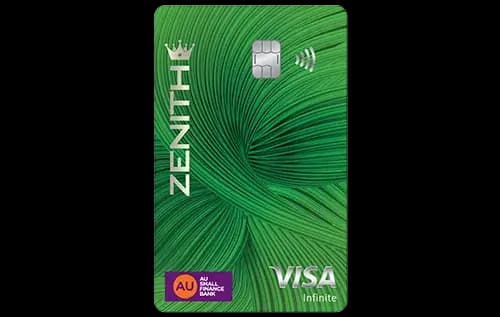
Quick Verdict
- For everyday spend, the Standard Chartered Ultimate Credit Cardⓘ wins with a higher base reward rate of 3.33% compared to 1% on the Zenith Credit Cardⓘ.
- For travel and lounge access, the Zenith Credit Cardⓘ offers more international lounge visits and a slightly lower forex markup fee, making it better for frequent international travellers.
- The Standard Chartered Ultimate Credit Cardⓘ is cheaper to hold with a Rs 5,000 annual and joining fee versus Rs 7,999 on the Zenith Credit Cardⓘ.
- Pick Zenith Credit Cardⓘ if you prioritise premium travel benefits and lounges, and Standard Chartered Ultimate Credit Cardⓘ if you want higher rewards on all spends and better value for moderate usage.
Side by Side
| Detail | Zenith Credit Cardⓘ | Standard Chartered Ultimate Credit Cardⓘ |
|---|---|---|
| Annual fee | Rs 7,999 | Rs 5,000 |
| Joining fee | Rs 7,999 | Rs 5,000 |
| Fee waiver on spend | Rs 7,99,900 annually | Rs 1,50,150 annually |
| Reward rate | 1% base, 5% on dining, travel | 3.33% base |
| Reward type | points | points |
| Domestic lounge | 8 per year | 8 per year |
| International lounge | 6 per year | 4 per year |
| Forex markup | 1.99% | 2% |
| Best suited for | premium, travel, lounge, rewards, dining, shopping | rewards, travel, lounge, premium, shopping |
Rewards Compared
The Zenith Credit Cardⓘ offers a base reward rate of 1%, translating to Rs 100 back on Rs 10,000 spent. Its standout feature is the 5% reward rate on dining and travel categories, which yields Rs 500 back per Rs 10,000 spent in those segments. This makes it attractive for users who spend heavily on dining and travel, as the rewards can significantly boost returns in these categories.
On the other hand, the Standard Chartered Ultimate Credit Cardⓘ provides a flat base reward rate of 3.33%, which means Rs 333 back on Rs 10,000 spent regardless of category. This higher base rate benefits users with diverse spending patterns who want consistent rewards across all transactions. Unlike the Zenith card, it does not specify enhanced category rates but compensates with a strong base return and additional perks like 5% cashback on duty-free spends.
Fees Compared
The Zenith Credit Cardⓘ commands a higher joining and annual fee of Rs 7,999 each, with a fee waiver threshold set very high at Rs 7,99,900 annually (about Rs 8 lakh). This means most users will end up paying the fee unless they are very heavy spenders. The Standard Chartered Ultimate Credit Cardⓘ has a lower joining and annual fee of Rs 5,000 each and a more achievable fee waiver threshold of Rs 1,50,150 annually (about Rs 1.5 lakh). This makes the Standard Chartered card more accessible for users who spend moderately and want to avoid fees.
The break-even spend to cover the annual fee via base rewards is around Rs 8 lakh for Zenith and Rs 1.5 lakh for Standard Chartered Ultimate, indicating that the latter offers better value for money for typical users.
Which One Should You Pick
Choose the Zenith Credit Cardⓘ if you are a premium traveller who values multiple international lounge visits, lower forex markup fees, and enhanced rewards on dining and travel. Its concierge services and comprehensive protection covers add to the premium experience. However, be prepared for a high fee unless you spend very heavily.
The Standard Chartered Ultimate Credit Cardⓘ suits users looking for a strong, flat rewards rate on all spends, including shopping and dining, with a lower fee structure and easier waiver conditions. It also offers good lounge access and additional benefits like golf access and fuel surcharge waivers, making it a versatile card for premium but cost-conscious customers.
In conclusion, if your spending is focused on travel and dining and you want premium benefits, pick Zenith Credit Cardⓘ. If you want higher returns on everyday spends and lower fees, Standard Chartered Ultimate Credit Cardⓘ is the smarter choice. Users with low or irregular spend should skip Zenith due to high fees, while those focused only on travel lounges might find Standard Chartered’s fewer international lounges limiting.
What to Check Before You Apply
- Verify the quarterly Rs 20,000 spend gate for domestic lounges on Zenith Credit Cardⓘ.
- Understand the redemption value and expiry of points on both cards to maximise rewards.
- Calculate if your monthly spend meets the fee waiver thresholds to avoid paying annual fees.
- Consider the forex markup fees if you travel internationally often and factor that into your cost-benefit analysis.
- Check which airports have lounge access for both domestic and international lounges to ensure convenience.


Comments
No comments yet
Be the first to share your experience with this card.