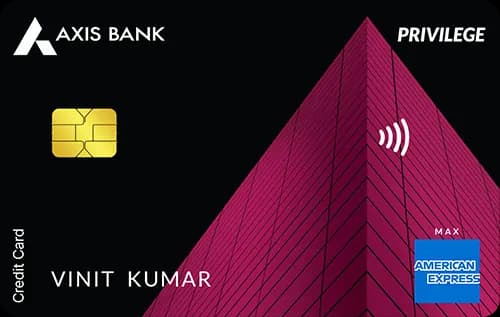
Quick Verdict
- For everyday spend, the Axis Bank Privilege Credit Cardⓘ offers a higher base reward rate of 0.8 percent compared to SBI Card Pulse Credit Card’s 0.5 percent, making it the better choice for general purchases.
- When it comes to dining and utilities, the SBI Card Pulse Credit Cardⓘ shines with a 2.5 percent reward rate, surpassing Axis Bank Privilege’s 2 percent on online spend, so it wins if your spend is concentrated in these categories.
- Both cards have similar annual fees near Rs 1,500 and forex markup of 3.5 percent, but Axis Bank Privilege requires a slightly higher monthly spend to waive fees.
- Pick the Axis Bank Privilege Credit Cardⓘ if you want better rewards on broad categories and more domestic lounge access, while the SBI Card Pulse Credit Cardⓘ suits dining enthusiasts and those who value welcome gifts like a smartwatch and Priority Pass.
Side by Side
| Detail | Axis Bank Privilege Credit Cardⓘ | SBI Card Pulse Credit Cardⓘ |
|---|---|---|
| Annual fee | Rs 1,500 | Rs 1,499 |
| Joining fee | Rs 1,500 | Rs 1,499 |
| Fee waiver on spend | Rs 2.50 lakh | Rs 2.00 lakh |
| Reward rate | 0.8% base, 2% online | 0.5% base, 2.5% dining & utilities |
| Reward type | points | points |
| Domestic lounge | 8 per year | 8 per year |
| International lounge | None | None |
| Forex markup | 3.5% | 3.5% |
| Best suited for | rewards, lounge, first-card, travel, shopping | lounge, dining, rewards, travel, shopping |
Rewards Compared
Spending Rs 10,000 on the Axis Bank Privilege Credit Cardⓘ earns Rs 80 worth of rewards at the base rate, but this rises to Rs 200 when spent online, reflecting a 2 percent effective return. This makes it a solid card for users who shop frequently online or want a decent baseline on other spends. On the other hand, the SBI Card Pulse Credit Cardⓘ delivers Rs 50 in rewards on general purchases, which is notably lower, but it compensates with a strong 2.5 percent reward rate in dining and utilities categories, yielding Rs 250 for every Rs 10,000 spent. This makes SBI Pulse a more attractive option for users with significant spend on food and bills.
While Axis Bank Privilege’s category-specific boost is limited to online shopping, SBI Pulse offers elevated rewards in two everyday categories, making it a better fit for lifestyle-focused spenders. Both cards’ reward types are points, but the value per point is embedded in the effective rates provided, so users can directly compare rupee returns without conversion confusion.
Fees Compared
The Axis Bank Privilege Credit Cardⓘ and SBI Card Pulse Credit Cardⓘ both carry an annual fee and joining fee close to Rs 1,500. Axis Bank charges Rs 1,500 for both, with a fee waiver on an annual spend of Rs 2.50 lakh, translating to about Rs 20,833 monthly. In contrast, SBI Pulse requires Rs 2.00 lakh annually (Rs 16,667 monthly) for fee waiver, which is a lower threshold and easier for many to meet.
Considering the break-even point for the base reward rate to cover the annual fee, Axis Bank Privilege needs about Rs 1.88 lakh annual spend, whereas SBI Pulse requires around Rs 3.00 lakh. This gap means Axis Bank Privilege offers better value for moderate spenders, while SBI Pulse demands higher spend to justify its fee purely from base rewards. The difference in annual fees is only Rs 1, so the reward rate difference is the main factor for fee recovery.
Which One Should You Pick
Choose the Axis Bank Privilege Credit Cardⓘ if you want a card that rewards online shopping well and provides more domestic lounge access. It is also a good first card for those who want a balanced travel and rewards package without high spend requirements for fee waiver. This card suits shoppers and travelers who appreciate benefits like quarterly lounge visits and a meaningful welcome voucher.
The SBI Card Pulse Credit Cardⓘ is ideal for heavy dining and utilities spenders who want a higher reward rate in those categories. It also appeals to users who value premium welcome gifts such as a Noise smartwatch and complimentary priority pass membership, adding lifestyle value beyond just cashback. If your spend is concentrated in dining or utilities, SBI Pulse delivers stronger category rewards.
In summary, skip Axis Bank Privilege if you rarely shop online or want rewards in dining, and skip SBI Pulse if your spend is broad-based or you want a lower fee waiver threshold. For everyday use and moderate spenders, Axis Bank Privilege is the winner. For category-focused rewards and lifestyle perks, SBI Pulse is preferable.
What to Check Before You Apply
- Confirm the quarterly Rs 50,000 spend requirement on Axis Bank Privilege to unlock domestic lounge access; missing this can limit lounge benefits.
- Understand the redemption value of points on both cards as it can impact the effective reward you realize, especially for category rewards.
- Carefully calculate monthly spend needed for fee waiver: Rs 20,833 for Axis Bank Privilege and Rs 16,667 for SBI Pulse to avoid paying fees unnecessarily.
- For foreign travel, both cards charge 3.5 percent forex markup, so consider alternatives if you do significant international transactions.
- Check which airports the domestic lounges are located in and whether their timings and facilities meet your travel patterns.


Comments
No comments yet
Be the first to share your experience with this card.