Balcony Solar and Portable Panels: Solar Power for Rented Homes
Published: 18 October 2026 Category: buying-guides | cardbuzz
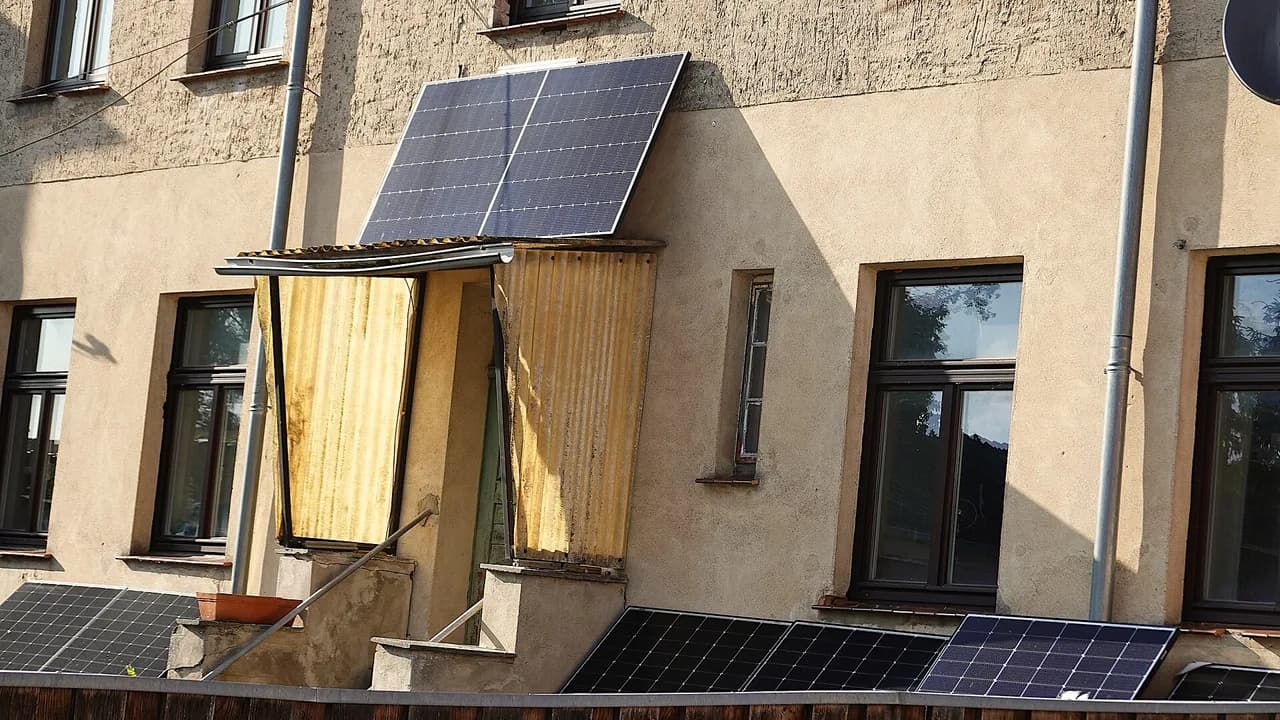
Rooftop solar is a homeowner's game — it needs a roof, a DISCOM approval, and a net meter. Renters, who form a large share of urban India, are locked out of the PM Surya Ghar subsidy and the whole rooftop playbook. But a smaller, renter-friendly category has emerged: balcony solar kits and portable panels — 200 W to 800 W plug-in systems that mount on a balcony railing or terrace parapet, feed power into the home through a standard socket (via a microinverter), and move with the tenant at the end of the lease. Here's what they can and cannot do, and how to buy one on a card.
What balcony solar is — and isn't
A typical kit: one or two 400 W panels, a microinverter, mounting clamps for a railing or wall, and a cable to a weatherproof outdoor socket. Generation is modest — a 400 W panel in good Indian sun produces roughly 1.5–1.8 units a day, or 45–55 units a month. That won't run an air conditioner, but it covers a meaningful slice of a 150–250 unit monthly bill: the refrigerator, fans, lights, router and laptop charging — the always-on base load.
What it isn't: it is not a substitute for rooftop solar (no net metering, no export of surplus, no subsidy), and it does not provide backup during power cuts unless paired with a battery — a grid-tied microinverter shuts down when the grid fails, by design and by safety regulation.
The renter's maths
Starter 400 W kits are typically advertised in the ₹25,000–40,000 range (approximate; prices vary by brand, panel wattage and mounting hardware), with 800 W dual-panel kits roughly double. At 50 units a month offset and ₹8 per unit, a 400 W kit saves roughly ₹400 a month — ₹4,800 a year. Simple payback: 5–8 years on the kit alone.
That looks slow next to rooftop solar's 2–5 year payback — but the comparison is wrong. The alternative for a renter isn't rooftop solar; it's the full grid bill. And three factors improve the picture: the kit moves to the next rented home (unlike a rooftop system, the asset isn't stranded), there's no DISCOM paperwork or society structural-approval battle for a non-penetrative railing mount, and panel prices continue their long decline. Households with higher daytime consumption — work-from-home setups, for instance — extract more value since every generated unit is consumed in-home rather than wasted.
Portable folding panels (100–200 W, roughly ₹8,000–18,000, approximate) are the lighter cousin: they charge power stations and run small DC loads directly, suit PG accommodations and hostels, and need no mounting at all — drape over a railing in sunlight, fold away at night.
Practical checks before buying
- Sunlight audit: the balcony needs 4+ hours of direct sun. North-facing balconies in high-rises are often shaded — a ₹200 lux-meter app check across the day, or simply observing the sun's path for a weekend, prevents an expensive mistake.
- Society and landlord clearance: non-penetrative railing mounts rarely need structural approval, but housing societies have rules about facade alterations. Get written consent from the landlord; it protects the deposit at move-out.
- Electrical safety: use a microinverter certified to Indian grid standards (anti-islanding protection is non-negotiable), a dedicated weatherproof outdoor socket with proper earthing, and never back-feed through a makeshift connection. If the building's wiring is old, have an electrician verify the socket's circuit first.
- Shadow and pigeons: partial shading kills panel output disproportionately, and balcony panels collect dust fast — a monthly wipe maintains 5–10% of generation.
Buying on the card
- Kits in the ₹25,000–80,000 band are ideal for no-cost EMI (6–12 months): the monthly EMI roughly matches the monthly bill saving, making the kit feel free from month one.
- Marketplace listings from solar brands carry the standard bank-offer discounts — stack these with the card's own reward earn.
- Buy the mounting hardware with the kit, not separately: mismatched clamps are the most common installation headache, and bundle pricing is usually better.
- Keep the GST invoice — even as an individual buyer it documents the asset for insurance and resale; used balcony kits hold value well because they're portable.
The microinverter question
The microinverter is the heart of a balcony kit, and it's where quality varies most. A microinverter converts the panel's DC to grid-synchronised AC at the panel itself (unlike a string inverter that centralises conversion). For balcony systems this architecture is ideal: each panel operates independently, so partial shading on one panel doesn't drag down the other.
What to verify: anti-islanding protection (the unit must shut down within seconds of a grid outage — this is a safety mandate, not a feature), Indian grid certification, an IP65 or better weatherproof rating (balconies get rain), and monitoring — most microinverters report per-panel generation to a phone app, which is how the renter verifies the system is actually producing. Beware of kits that use a simple grid-tie inverter without proper certification; they're cheaper for a reason, and an uncertified grid connection is both illegal and dangerous.
What about the housing society's common solar?
Renters have a second, often-overlooked route: the housing society itself. Under PM Surya Ghar's RWA track, housing societies can install solar for common facilities — lifts, lobbies, water pumps, common lighting — at ₹18,000 per kW of central assistance for up to 500 kW. Many societies are already doing this, and the savings flow into reduced common-area maintenance charges for every resident, renter included.
If the society hasn't explored it, the renter's leverage is the AGM: a short proposal showing the common-load bill, the subsidy maths, and two vendor quotes is often enough to get a committee formed. The renter can't claim the subsidy personally — but can absolutely benefit from the society claiming it. This is the rare case where the renter's solar story doesn't require buying anything at all.
Second-hand kits: the resale market
Because balcony kits are portable and standardised, a genuine second-hand market exists — and it's a buyer's market. Relocating renters sell barely-used 400 W kits at 40–60% of retail (approximate, based on classified listings), and panels degrade slowly (roughly 0.5% per year), so a two-year-old kit performs nearly like new. What to check: the microinverter's generation log in its app (verifies the unit works and shows lifetime output), physical panel condition (no cracked glass, no delamination), and that all mounting clamps and cables are included — missing proprietary clamps can cost more than the discount saved. Pay via a method with buyer protection, test the kit on the balcony before finalising, and factor that there's no manufacturer warranty transfer on most brands. For the budget-conscious renter, a verified used kit at half price cuts the payback period to 3–4 years — the best economics in this category.
Pigeons and dust are the unglamorous enemies of balcony solar. A panel on a city balcony accumulates a film of dust within weeks, and droppings on even a small corner of a panel disproportionately cut output — in a two-panel microinverter setup, only the affected panel suffers, but in a single-panel kit the whole system's generation drops. The fix is a monthly wipe with a damp microfibre cloth (five minutes, no detergents needed) and, in pigeon-heavy buildings, simple deterrents like reflective tape or a sloped mesh above the panel. Generation monitoring in the microinverter app makes the dirt visible: a gradual downward drift in daily yield between cleanings is the signal. Renters who ignore this lose 5–15% of generation to grime — the easiest saving in the system to capture.
One last practical point: balcony kits pair well with a small portable power station for renters who also face power cuts. The panel charges the station by day; the station runs the router and a fan by night. The two purchases together — kit plus a 500 Wh station — typically land under ₹70,000 on no-cost EMI, giving a renter daytime generation and evening backup with zero fixed installation and zero landlord structural work.
Moving house: the relocation checklist
Portability is the balcony kit's superpower — but only if the move is planned:
- Photograph the installation before dismantling: panel orientation, clamp positions, cable routing. Reinstallation takes half the time with a visual reference.
- Keep all original mounting hardware and packaging — replacement clamps for a specific railing profile are harder to source than expected.
- Survey the new balcony first: sun path, railing type, distance to the nearest weatherproof socket. A south or west-facing balcony is ideal; a fully shaded north-facing one may make reinstallation pointless — in which case, sell the kit (used balcony systems hold value well precisely because they're portable).
- Update the landlord consent in writing at the new flat, referencing the previous installation's track record — "two years, no damage, no complaints" is persuasive.
- Re-verify the socket and earthing at the new home before plugging in — different buildings, different wiring quality.
The verdict
Balcony solar won't zero a bill, and it won't earn a subsidy. What it does is give renters something rooftop solar never could: a portable, paperwork-free slice of generation that follows them from flat to flat. Size it to the balcony's real sunlight, mount it without drilling, put it on no-cost EMI — and let the meter's daytime reading do the quiet convincing.


Comments
No comments yet
Be the first to share your experience with this card.