Bihu in Assam: Gifting, Gamosa and Travel Home on Credit Cards
Published: 18 October 2026 Category: buying-guides | cardbuzz
Assam celebrates three Bihus through the year — Rongali (Bohag) Bihu in mid-April, Kongali (Kati) Bihu in October and Bhogali (Magh) Bihu in mid-January — and each one concentrates spending on gifting, traditional textiles, festive food and travel home. For cardholders with roots in Assam, the Bihu calendar creates three predictable spending peaks where the right card choices on flights, apparel, groceries and gifts translate directly into saved money.
The three Bihus and what each one costs
Each Bihu has a different spending profile, which matters because the card strategy changes with it:
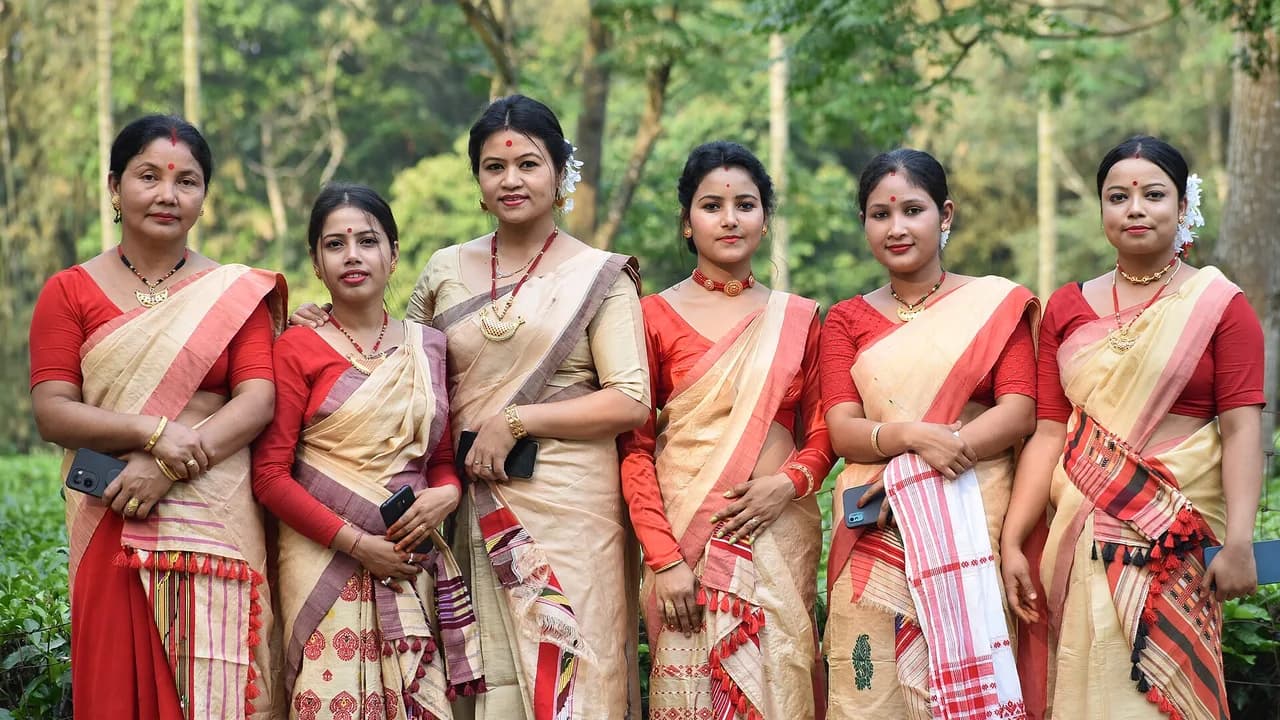
- Rongali/Bohag Bihu (mid-April): The Assamese New Year and the most commercial of the three. New mekhela chadors, kurtas and shirts for the family, gamosa gifts for elders and guests, and Bihu feasts. This is the apparel-and-gifting peak.
- Kongali/Kati Bihu (mid-October): A quieter, more solemn observance centred on the tulsi plant and prayers for the standing crop. Spending is modest — diyas, offerings, simple meals. Little card strategy is needed beyond normal grocery spends.
- Bhogali/Magh Bihu (mid-January): The harvest festival of feasting — community meji bonfires, tekeli bhat, pithas, larus, fish and meat curries. This is the food-and-grocery peak, plus travel home for the feasting days.
Rongali Bihu drives roughly the same kind of card activity as a small Diwali for an Assamese household, while Bhogali Bihu behaves like a concentrated grocery and travel event.
Travel home: Guwahati, Dibrugarh, Jorhat and Silchar routes
Flights into Assam spike around all three Bihus, with the April Rongali peak the sharpest. Guwahati is the main gateway; Dibrugarh, Jorhat and Silchar see fewer frequencies and higher holiday premiums. Booking mechanics:
- Book early, stay flexible: Fares on the Delhi–Guwahati and Bengaluru–Guwahati corridors can move substantially in the last two weeks before Rongali Bihu. Travellers with flexible dates should check departures a day or two on either side of the peak.
- Card choice: Airline co-brand cards earn best on direct airline bookings; general travel cards can earn bonus rewards when flights are booked through the issuer's travel portal, and portal bookings sometimes carry additional instant discounts. Compare final fares, not headline reward rates.
- Rail alternative: For travellers from West Bengal, Bihar and the Northeast itself, trains into Assam remain the economical backbone. IRCTC's convenience fee is ₹15 plus GST for non-AC and ₹30 plus GST for AC classes per ticket (₹10/₹20 plus GST via BHIM/UPI), charged per ticket rather than per passenger and non-refundable on cancellation. Advance booking opens roughly 60 days out — Bihu-season berths on popular trains like the Rajdhani services into Guwahati sell out well before that window closes on Tatkal.
Gifting: gamosa, mekhela chadors and the reward-caps trap
The gamosa — Assam's traditional handwoven towel — is the signature Bihu gift, presented to elders, guests and performers of Bihu dance. Authentic handloom gamosas and mekhela chadors are bought from handloom emporiums, weaver cooperatives, exhibitions and increasingly from online handloom marketplaces. Card considerations:
- Handloom and artisan purchases: Buying from weaver cooperatives and state handloom emporiums sometimes routes through payment gateways that code as government or quasi-government merchants. Some cards exclude such transactions from rewards or treat them at base rates. If a large mekhela chador purchase is planned, a quick test transaction (or a check of the card's merchant-category exclusions) avoids an unpleasant surprise on the statement.
- Online handloom marketplaces: These behave like normal e-commerce for card purposes — apparel-category rewards, platform coupons and card instant discounts all apply. No-cost EMI is sometimes offered on higher-value handloom sets; remember the processing fee (commonly ₹99–₹299 plus 18% GST) and reduced reward earnings on EMI transactions.
- Bulk gifting: Households that gift dozens of gamosas to staff, tenants or community members should watch reward caps. Many cards cap accelerated rewards per statement cycle or per category; a single bulk purchase can blow through the cap, after which the remaining spend earns only the base rate. Splitting a very large gift purchase across two cards with separate caps can be worthwhile when both cards' caps are understood in advance.
The Bhogali Bihu feast: grocery strategy
Bhogali Bihu feasting centres on rice, fish, meat, pithas (rice cakes), larus (coconut-jaggery sweets), sesame and generous quantities of ghee and oil. For a joint family hosting through the festival, the grocery bill rivals a wedding week's. Practical card moves:
- Consolidate the festival grocery run into one or two large orders rather than a dozen small ones — fewer delivery fees on instant-delivery apps and a better chance of hitting minimum-order thresholds for card-linked grocery offers.
- Fish and meat from local markets are usually cash or UPI transactions; factor that into the budget rather than assuming the whole feast can go on the card.
- Cards with accelerated grocery rewards exist but often carry monthly caps — route the big Bihu grocery orders through the card whose grocery cap is still unused.
Rongali Bihu apparel: mekhela chadors and festive wear
April's Rongali Bihu is Assam's biggest clothing-buying moment. Traditional mekhela chadors in muga, pat or eri silk command premium prices, and families often buy new outfits for every member. Marketplace festive offers around mid-April sometimes align with Bihu, bringing card instant discounts into play. For silk purchases above ₹25,000–₹50,000, compare three paths: paying in full on the highest-earning card, no-cost EMI (processing fee plus GST, reduced rewards), and merchant-offered instalment schemes at the emporium itself. The in-full route usually wins on total cost unless cash flow genuinely requires instalments.
Husori, Bihu functions and event spending
Rongali Bihu brings husori troupes, cultural functions, Bihu dance competitions and community feasts — ticketed events, food stalls and donations to organising committees. Event tickets bought online carry convenience fees and follow the platform's refund policy; committee donations are charity-type transactions that many cards exclude from rewards. Keep donation receipts separate from the card-rewards plan and never count on earning rewards for charitable giving.
After the Bihu: statement hygiene
With three Bihus a year, Assamese households get three rehearsal rounds for festival finance. After each Bihu, reconcile statements within a week: verify instant discounts posted, confirm EMI terms, and check that no duplicate charges slipped through during the rush of small festival transactions. Pay cards in full — the interest on carried balances (typically 3% or more per month on Indian cards, charged from the transaction date once the grace period is lost) erases every rupee of festival rewards several times over.
Sending Bihu gifts to family in other cities
Many Assamese families are split across cities, and Bihu gifting increasingly means shipping gamosas, pithas and larus to relatives elsewhere. Courier and logistics spends are ordinary card transactions that earn at standard rates. Two things to watch: first, perishable Bihu sweets need express shipping, which costs multiples of standard courier rates — budget for it rather than discovering it at the counter. Second, when ordering gifts online for direct delivery to relatives, the billing address mismatch (card registered in one city, delivery in another) occasionally triggers a bank's fraud check on large first-time orders; a quick confirmation with the bank clears it, but placing the order a few days early avoids a festival-eve scramble.
Kongali Bihu: the quiet one's card lesson
Kongali (Kati) Bihu in October is deliberately austere — prayers for the crop, earthen lamps, simple food. Its card lesson is restraint: not every festival needs a spending plan. Households that automatically scale up card spending for every festival on the calendar end up financing lifestyle inflation. Treating Kongali Bihu as a normal-spend week is itself a financial decision, and a good one.
Keeping the three Bihus on one rewards plan
Because the Bihus arrive in January, April and October, they interact with card annual cycles in useful ways: milestone-based cards (those that unlock bonus rewards or fee waivers at annual spend thresholds) get three natural spending pushes a year from Bihu alone. Households working toward a milestone can deliberately route the year's Bihu apparel, grocery and travel spends through the milestone card, while keeping everyday spending on the best flat-rate earner. The Bihus then do double duty — cultural celebration and milestone progress — without a rupee of manufactured spending.


Comments
No comments yet
Be the first to share your experience with this card.