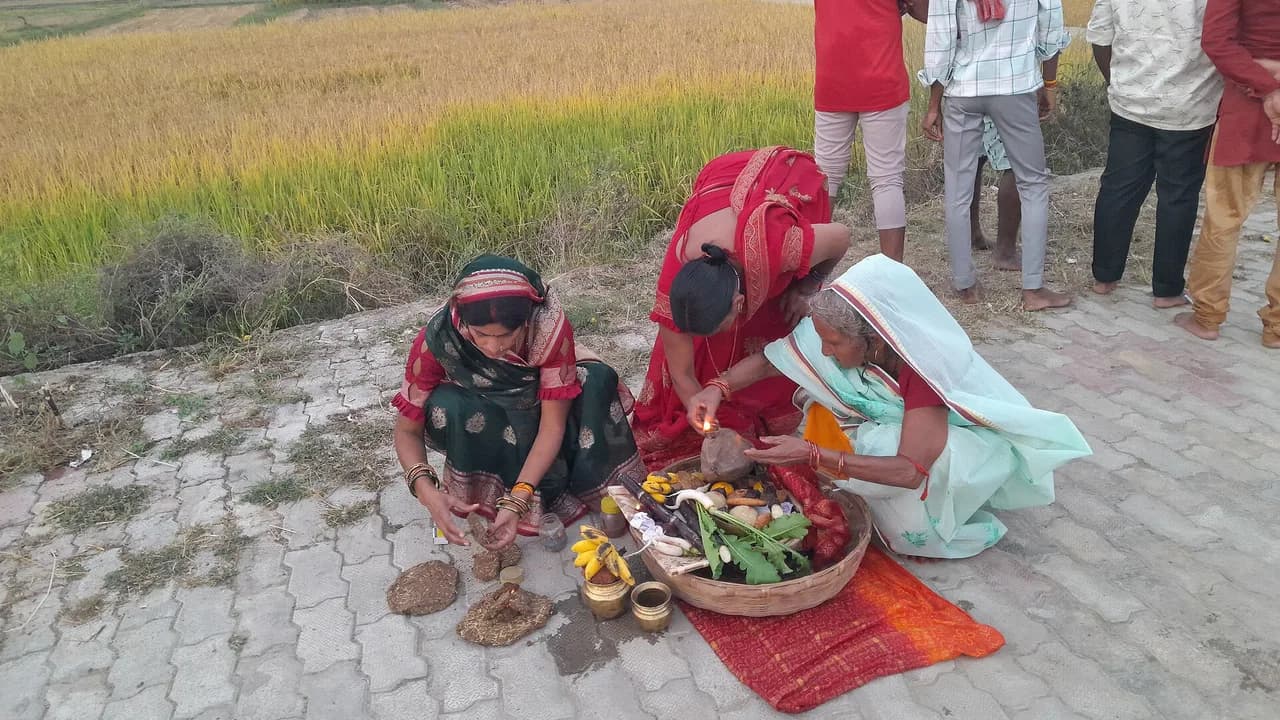
Chhath Puja Travel and Festive Spending: A Credit-Card Guide for Bihar-Bound Journeys
Published: 18 October 2026 Category: how-to-guides | cardbuzz
Chhath Puja — the four-day festival of the Sun God centred on Kartik Shukla Shashthi (15 November in 2026) — sends one of the largest homeward migrations in India toward Bihar, eastern Uttar Pradesh, Jharkhand and Nepal's Terai. The spending profile is distinctive: long-distance travel booked under pressure, ritual goods (soop, daura, thekua ingredients, sugarcane, coconuts), new clothes, and gifting across the extended family. Because Chhath travel demand is so concentrated, the card strategy starts with booking mechanics and ends with statement discipline.
The Chhath travel crunch: why booking early is everything
The week before Chhath sees extraordinary demand on every Delhi–Patna, Delhi–Gaya, Delhi–Muzaffarpur, Kolkata–Patna and Mumbai–Patna corridor. Trains sell out within hours of the advance window opening; flights to Patna, Gaya, Darbhanga and Ranchi price at multiples of normal fares. Practical steps:
- Trains first: Indian Railways' advance booking window runs roughly 60 days, and Chhath-week berths on popular trains disappear almost immediately. Book the moment the window opens. IRCTC's convenience fee is ₹15 plus GST for non-AC and ₹30 plus GST for AC classes per ticket (₹10/₹20 plus GST via BHIM/UPI), per ticket rather than per passenger, and non-refundable. Tatkal (one day before departure, premium fare) is the fallback — set reminders for the Tatkal opening times rather than hoping for leftover seats.
- Special trains: Indian Railways typically announces special trains for the Chhath/Diwali season to absorb the rush. These are announced through railway press releases in the weeks before the festival — worth watching because they add genuine capacity on the busiest corridors rather than just repricing the existing seats.
- Flights: Book as early as possible; the Patna corridor is one of India's most holiday-sensitive. Airline co-brand cards earn best on direct bookings, while travel-portal bookings on general travel cards sometimes carry additional instant discounts — compare final fares.
- Buses: Private sleeper and Volvo services on the Delhi–Patna and Kolkata–Patna routes multiply during Chhath week, with dynamic pricing. Bus bookings through travel aggregators earn standard online-travel rewards on most cards.
Paying for Tatkal and premium fares smartly
Tatkal fares include a premium over the base fare plus the standard convenience fee, and dynamic pricing on some trains pushes popular-route fares higher still. When fares are inflated, the instinct is to put everything on whichever card has limit available. Better approach: use the card with the best travel earn rate (the fare is large enough that the reward difference is meaningful), and keep one card's limit in reserve for the return journey. Families booking four or five Tatkal tickets at once can easily block ₹20,000–₹40,000 (illustrative) against a single card's limit — check available limit before starting the booking flow, not during it.
Ritual shopping: soop, daura, thekua and the festival kitchen
Chhath rituals require specific goods: bamboo soop (winnowing baskets) and daura baskets, thekua (the signature wheat-jaggery cookie), kasar, rice, wheat, jaggery, ghee, sugarcane stalks, coconuts, bananas and other fruits for the arghya offerings. Most of this is bought from local markets in cash or UPI — the card plays almost no role here, and that is fine. The card-relevant ritual-adjacent spends are:
- New clothes for the family for the four days — apparel-category rewards and any festive-season instant discounts apply.
- Ghee, dry fruits and bulk provisions for the thekua and prasad preparation — grocery-card routing for the supermarket portion.
- Home preparation: Many families whitewash or deep-clean the house before Chhath; cleaning supplies, paint and minor home goods bought on cards earn standard rates.
Gifting and the extended family
Chhath gatherings bring together the extended family, and gifting — clothes for elders, gifts for children, contributions to the collective festival expenses — is customary. As with other festivals, gift-card purchases are often excluded from rewards on many cards, so buying actual gifts earns more. Cash gifts for elders come from the bank account, never from credit-card cash advances (fees plus immediate interest, no grace period).
The ghat-side economy: food stalls, prasad and small vendors
The evenings of Sandhya Arghya transform river ghats into crowded fairgrounds — food stalls, prasad sellers, balloon vendors, temporary shops selling diyas and offerings. Almost all of this is cash or UPI. The card lesson is budgetary rather than rewards-based: set aside a realistic cash budget for the ghat evenings instead of assuming card coverage, and keep small-denomination cash ready since vendors at festival crowds rarely have change for large notes. UPI works where networks hold up, but ghat-side mobile congestion on the main evening is real — cash remains the reliable fallback.
Coordinating cards across the joint family
Chhath is often celebrated by the joint family under one roof, with spending split across members — one person books the trains, another buys the groceries, a third handles the clothes. Without coordination, the family leaves rewards on the table: the train booker uses a low-earn card while the grocery buyer's high-earn grocery card sits unused. A five-minute family huddle before the festival — assigning the travel booking to the best travel card, the grocery run to the best grocery card, apparel to the apparel-offer card — costs nothing and captures every available reward. It also prevents the common failure of two members unknowingly breaching the same card's reward cap on the same category.
Staying connected: the return journey
The return leg after Chhath is as pressured as the outward journey — book round trips together rather than assuming return seats will be available later. If the outward journey was booked on one card and the return on another for limit reasons, note both in one place; festival-week bookings are exactly when a forgotten return ticket surfaces as a crisis.
When the trains are full: the waitlist and alternatives ladder
Chhath-week trains routinely sell out, and the waitlist rarely clears on the busiest corridors. Work the alternatives in order:
- Special trains: Check for railway-announced festival specials on the corridor — these are the cheapest real seats.
- Nearby origin stations: A train that is waitlisted from New Delhi may have availability from a nearby origin (or a connecting train to a hub like Patna from Kolkata or Varanasi instead of Delhi).
- Premium trains: Premium and Suvidha-type services with dynamic pricing cost more but often have seats when regular trains are full. The premium is real money — compare it against the flight fare before booking.
- Flights: Last-resort but sometimes comparable to premium-train fares on the Patna corridor during peak week.
- Buses: Sleeper buses as the fallback, booked through aggregators with standard card rewards.
Never book a waitlisted ticket as the only plan for Chhath — the festival dates are fixed, and a waitlist that does not clear leaves no time for alternatives.
Chhath shopping before leaving the work city
Migrants often do their Chhath shopping — new clothes, thekua ingredients that travel well, gifts — in their work city before travelling, because prices and selection are better than in the home town's festival-week rush. This front-loads the spending into October, which is useful for card planning: the shopping hits one statement and the travel hits the next, rather than everything colliding at once. Marketplace festive offers in October add card instant discounts to the apparel portion. Pack thekua ingredients and dry provisions carefully — ghee and jaggery travel fine; anything perishable does not.
Managing the November statement
Chhath follows Diwali by about a week (Diwali 2026 falls on 8 November, Chhath Puja on 15 November), which means many households face two festival spending peaks inside a single billing cycle. This is the most dangerous card scenario of the year: Diwali balances not yet paid, Chhath travel and shopping added on top, and utilisation spiking past 30% on multiple cards. The defences:
- Pay the Diwali portion of the bill before the Chhath spends hit, even if the due date has not arrived — early payments free up limit and reduce the interest-bearing balance.
- Do not convert Chhath travel to EMI reflexively; the processing fee (commonly ₹99–₹299 plus 18% GST) plus reduced rewards makes EMI an expensive way to finance a train ticket.
- Keep one card with genuine headroom for December's essential spending.



Comments
No comments yet
Be the first to share your experience with this card.