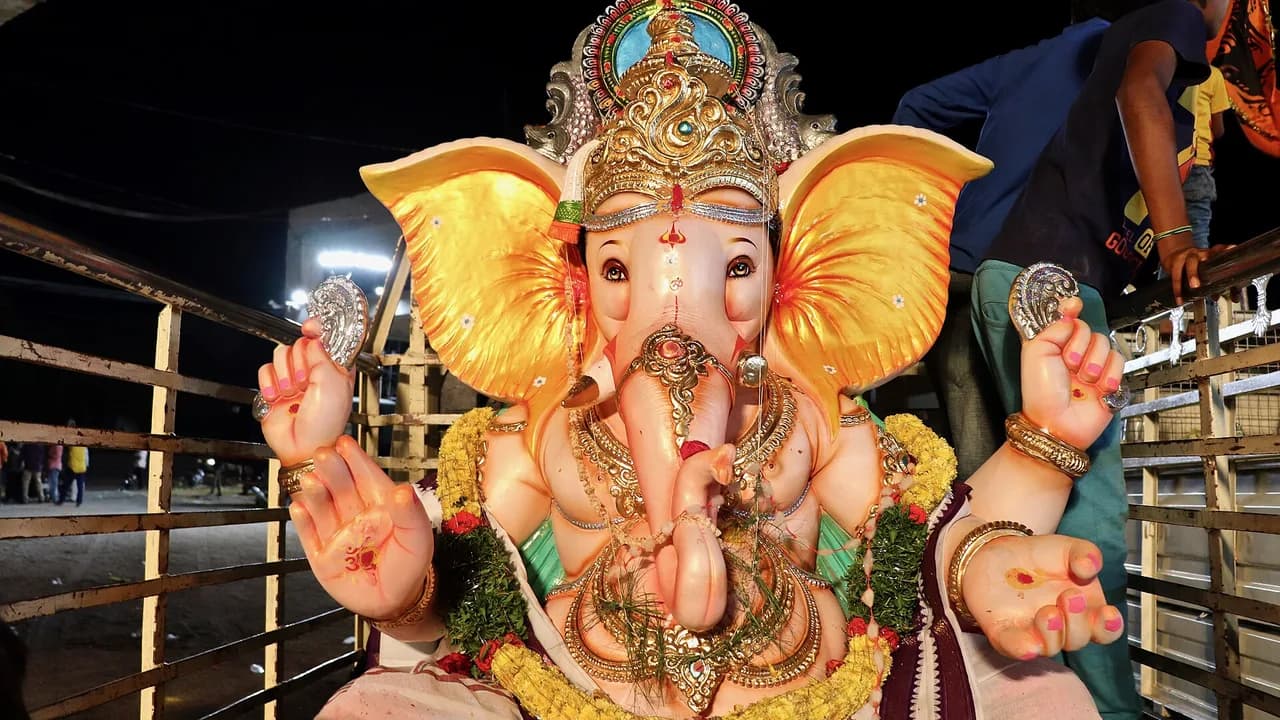
Ganesh Chaturthi Decor and Mandal Donations: A Credit-Card Spending Guide
Published: 18 October 2026 Category: how-to-guides | cardbuzz
Ganesh Chaturthi (14 September in 2026, with visarjan on Anant Chaturdashi, 25 September) drives a distinctive spending mix: home idols and decorations, modak ingredients and prasad, new clothes, and — uniquely — donations to neighbourhood mandals and sarvajanik pandals. The card strategy here has two halves: maximising rewards on the decor and celebration shopping, and understanding exactly how donation transactions are treated by card issuers.
The home celebration: idols, decor and prasad
Households celebrating at home buy the idol (increasingly eco-friendly clay idols), decorations (flowers, mango leaves, fabric backdrops, lighting), puja samagri, and ingredients for modaks, ladoos and the festive meals. Spending notes:
- Eco-friendly idols: Clay and natural-colour idols from artisan markets and NGO stalls are often cash/UPI purchases. Organised retailers and online sellers accept cards normally. Prices vary widely by size and craftsmanship — compare a few sellers rather than buying the first idol seen.
- Decor: Flowers, torans, fairy lights and backdrop fabrics come from local markets (cash/UPI) and home-decor retailers (cards). For lighting and electrical decor, check wattage and safety certification rather than chasing the cheapest option — festival-season electrical fires are a real hazard.
- Prasad groceries: Modak ingredients — rice flour, jaggery, coconut, ghee, cardamom — plus the festive meals make this a meaningful grocery run. Route the supermarket portion through the grocery-optimised card; the local-market portion stays cash/UPI.
Mandal and pandal donations: how cards treat charity
Donations to Ganesh mandals — whether the neighbourhood sarvajanik pandal or a workplace celebration fund — are the trickiest card transaction of the festival. Key mechanics:
- Rewards exclusion: A large majority of Indian credit cards exclude charitable donations from reward earnings, typically via merchant category code 8398 (charitable and social service organisations) or through explicit exclusions in the card's terms. Do not count on earning rewards for mandal donations — check the specific card's MITC if it matters.
- The surcharge question: Some donation platforms and payment gateways add a convenience fee or pass on processing costs to the donor. A "₹1,001 donation" that costs ₹1,031 at checkout is common (illustrative). Decide whether the fee is acceptable or whether a direct bank transfer to the mandal's account avoids it.
- Receipts and 80G: Donations to registered trusts and mandals may qualify for 80G tax receipts. Ask for the receipt at the time of donation — chasing it in March is painful. Keep donation transactions identifiable on the statement for tax-time reconciliation.
- UPI vs card for donations: Since rewards are typically excluded either way, UPI is often the simpler route for mandal donations — no reward is being sacrificed, and the transaction settles instantly.
Sarvajanik pandal committees: the organiser's card playbook
Committee treasurers handling lakhs in collections and expenses face their own card questions. Pandal expenses — idol, mandap, lighting, sound, prasad, security — paid to vendors who accept cards can earn rewards for the committee's account, but mixing personal cards with committee funds creates accounting and tax complications. The clean approach: a dedicated committee bank account, UPI for collections, and card payments only where the vendor accepts them and the receipt is in the committee's name. Treasurers should never route committee expenses through personal cards to "earn points" — the reconciliation risk and the appearance of impropriety far outweigh the rewards.
New clothes and festive shopping
Ganesh Chaturthi brings new clothes for the family in Maharashtra, Goa, Karnataka, Andhra Pradesh and Telangana. Mid-September marketplace offers sometimes align with the festival, bringing card instant discounts into play on apparel. The standard stacking order applies: platform coupon, card instant discount, rewards on the final amount. For premium silk or designer festive wear, compare paying in full on the best-earning card against no-cost EMI (processing fee commonly ₹99–₹299 plus 18% GST, reduced rewards on EMI) — in-full usually wins on total cost.
Visarjan day: processions, food and logistics
Visarjan processions mean a full day out — food stalls, water, transport, and often contributions to the procession's logistics. Keep a cash/UPI budget for the day; card acceptance at procession-route vendors is minimal. For families hiring transport for the idol immersion, the booking is an ordinary card transaction where cards are accepted.
The modak economy: making, ordering and gifting prasad
Modaks are the centrepiece prasad — ukadiche modaks (steamed), fried modaks, and increasingly chocolate or dry-fruit variants. Households choose between making them (ingredients on the grocery card), ordering from home chefs and sweet shops (ordinary card/UPI transactions, with festive-week premiums), or some hybrid. Ordering in for the whole ten-day festival, especially for office and neighbour distribution, can run into thousands of rupees (illustrative) — worth budgeting explicitly rather than absorbing as background spending. Gifting prasad boxes to neighbours and colleagues is customary; bought in bulk from sweet shops, these earn standard rewards where cards are accepted. Compare the home-chef price against the sweet-shop price per piece before committing to either for large quantities.
Ganpati decor: buy, rent or reuse
The home mandap ranges from a simple chaurang with flowers to elaborate themed backdrops. Three economics:
- Buy: Fabric backdrops, fairy lights and artificial flowers are reusable for years. Buying quality once and reusing for five-plus years beats rebuying cheap decor annually — the per-festival cost falls each year.
- Rent: Readymade mandap decoration services set up and dismantle themed decor. Convenient but single-use; compare the rental against the amortised cost of owned decor.
- Reuse: Last year's backdrop, lights and torans cost nothing. The most economical Ganpati decor is the one already in the cupboard.
Where cards are accepted (home-decor retailers, online sellers), decor purchases earn standard rewards. Artisan-made decorative items from festival markets are usually cash/UPI.
Workplace Ganesh celebrations: the office collection
Offices across Maharashtra and Goa organise Ganesh celebrations with per-employee collections. The organiser's playbook mirrors the mandal treasurer's: collect via UPI or bank transfer into a clear record, spend against receipts, and never route collections through a personal credit card for points. The amounts are smaller than sarvajanik pandals but the accounting principle is identical. If the office orders prasad or decor from vendors accepting cards, the purchase can go on whoever's card earns best — provided the reimbursement is settled before the statement due date and the receipt is in the company's or committee's name.
Eco-visarjan and artificial immersion tanks
Many cities now provide artificial immersion tanks or eco-visarjan facilities to keep natural water bodies clean, and housing societies increasingly organise collective immersions. Any booking fees for these facilities are nominal and usually UPI/cash. The card angle is minor; the environmental angle is the point — clay idols plus artificial-tank immersion is the combination civic bodies recommend, and it costs no more than the traditional route.
The September statement: festival plus back-to-school overlap
Ganesh Chaturthi spending lands in September, when many households are also handling school-fee and term expenses. Two spending peaks in one cycle demand the usual discipline: reconcile within a week (confirm discounts posted, verify EMI terms if any), pay in full to preserve the grace period, and keep utilisation in check. Interest on carried balances — typically 3% or more per month once the grace period is lost — erases the festival's rewards many times over.



Comments
No comments yet
Be the first to share your experience with this card.