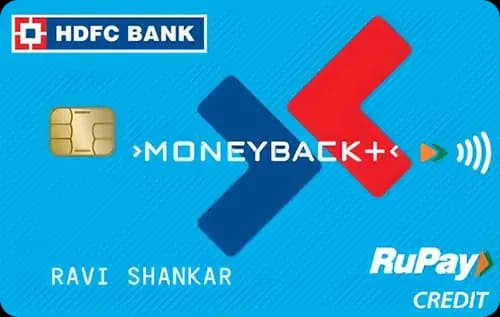
Quick Verdict
- For everyday spend, especially outside fuel and grocery, the IDFC HPCL First Power Credit Cardⓘ offers a higher base reward rate and wins.
- For fuel, grocery, and utilities spend, the IDFC HPCL First Power Credit Cardⓘ clearly leads with a 5% return.
- The HDFC Bank MoneyBack Plus Credit Cardⓘ has a higher fee but the waiver threshold is the same; it is more expensive to hold if you spend below Rs 1,00,000 annually.
- Choose the HDFC Bank MoneyBack Plus Credit Cardⓘ if you want a straightforward cashback card for online shopping and are a first-time cardholder. Opt for the IDFC HPCL First Power Credit Cardⓘ if your expenses are heavy on fuel, grocery, or utilities and you want better rewards on those categories.
Side by Side
| Detail | HDFC Bank MoneyBack Plus Credit Card | IDFC HPCL First Power Credit Card |
|---|---|---|
| Annual fee | Rs 500 | Rs 199 |
| Joining fee | Rs 500 | Rs 199 |
| Fee waiver on spend | Rs 50,000 | Rs 50,000 |
| Reward rate | 0.5% base, 3.33% on online | 0.75% base, 5% on fuel, grocery, utilities |
| Reward type | points | points |
| Domestic lounge | None | None |
| International lounge | None | None |
| Forex markup | 3.5% | 3.5% |
| Best suited for | first-card, cashback, shopping | fuel, upi-rupay, first-card |
Rewards Compared
Spending Rs 10,000 on the HDFC Bank MoneyBack Plus Credit Card yields Rs 50 back at the base rate. However, if the spend is online, the effective return jumps to Rs 333 per Rs 10,000, reflecting a strong incentive for digital shoppers. This card rewards users primarily through points that translate into cashback, making it suitable for those who shop frequently online and want a simple cashback experience.
The IDFC HPCL First Power Credit Card delivers Rs 75 per Rs 10,000 at the base rate, which is 50% higher than the MoneyBack Plus base rate. More importantly, in key categories like fuel, grocery, and utilities, the card offers a 5% return, translating to Rs 500 per Rs 10,000 spent. This makes it a compelling choice for users with significant expenses in these categories. The welcome benefits also provide a Rs 250 gift voucher on the first HPCL fuel transaction and up to 5% cashback on the first EMI, adding to the value proposition.
Fees Compared
The HDFC Bank MoneyBack Plus Credit Card carries a joining fee and annual fee of Rs 500 each. Both fees are waivable if you spend Rs 50,000 annually, which breaks down to about Rs 4,167 per month. The card requires a spend of around Rs 1,00,000 annually at the base rate to cover the annual fee cost purely through rewards.
The IDFC HPCL First Power Credit Card is significantly cheaper to hold, with a joining and annual fee of Rs 199 each, also waivable on Rs 50,000 annual spend (Rs 4,167 monthly). Due to its higher base reward rate, the break-even spend to cover the fee is around Rs 26,533, which is much lower than the MoneyBack Plus card. This makes it more cost-effective for moderate spenders.
Which One Should You Pick
Pick the HDFC Bank MoneyBack Plus Credit Card if you are a first-time credit card user looking for a simple cashback card focused on online shopping. Its strong online rewards and straightforward benefits make it a good starter card. However, skip this card if your spend is mostly offline or in categories other than online shopping, as the base rate is low and fees are relatively high.
Choose the IDFC HPCL First Power Credit Card if your monthly expenses include substantial fuel, grocery, or utility bills. Its higher base rate and category bonuses provide better returns, and the lower fees make it affordable to maintain. Also, if you want a Rupay card with UPI benefits, this card fits well. Avoid this card if your spend is mostly online shopping or you want lounge access, which it does not offer.
Overall, the IDFC HPCL First Power Credit Cardⓘ wins for value and rewards, especially for category spenders, while the HDFC Bank MoneyBack Plus Credit Cardⓘ suits online shoppers and first-time cardholders wanting a simple cashback experience.
What to Check Before You Apply
- Confirm if the category caps or exclusions limit your rewards on fuel, grocery, or online spends.
- Check the redemption value and ease for points earned since both cards use points but may differ in conversion.
- Understand the fee waiver math carefully; spending Rs 50,000 annually is mandatory to avoid fees.
- Both cards have a 3.5% forex markup, so avoid them for frequent foreign currency transactions.
- Neither card offers domestic or international lounge access, so do not expect travel lounge benefits.

Comments
No comments yet
Be the first to share your experience with this card.