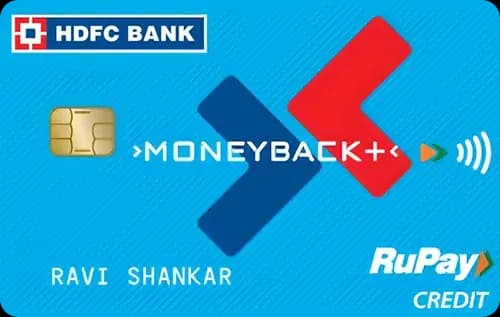
Quick Verdict
- For everyday spend, the IDFC HPCL First Power Plus Credit Cardⓘ wins with a higher base reward rate of 0.75% compared to 0.5% on the HDFC Bank MoneyBack Plus Credit Cardⓘ.
- When it comes to travel and lounges, the IDFC card is superior due to offering 4 domestic lounge accesses per year, while the HDFC card has none.
- The HDFC Bank MoneyBack Plus Credit Cardⓘ is cheaper to hold if you spend less than Rs 50,000 annually, as it has a lower fee waiver threshold than the IDFC card’s Rs 1.5 lakh.
- Pick the HDFC card if you are a first-time card user or focused on online shopping, and the IDFC card if you frequently spend on fuel, groceries, utilities, or value domestic lounge access.
Side by Side
| Detail | HDFC Bank MoneyBack Plus Credit Cardⓘ | IDFC HPCL First Power Plus Credit Cardⓘ |
|---|---|---|
| Annual fee | Rs 500 | Rs 499 |
| Joining fee | Rs 500 | Rs 499 |
| Fee waiver on spend | Rs 50,000 | Rs 1.50 lakh |
| Reward rate | 0.5% base, 3.33% online | 0.75% base, 6.5% fuel, 5% grocery and utilities |
| Reward type | points | points |
| Domestic lounge | None | 4 per year (Rs 20,000 monthly spend gate) |
| International lounge | None | None |
| Forex markup | 3.5% | 3.5% |
| Best suited for | first-card, cashback, shopping | fuel, UPI-RuPay, grocery, lounge |
Rewards Compared
On a Rs 10,000 spend, the HDFC Bank MoneyBack Plus Credit Cardⓘ earns Rs 50 back as points at its base reward rate of 0.5%. However, if you spend online, this card offers an elevated reward rate of 3.33% which translates to Rs 333 on Rs 10,000 spent, making it much more rewarding for online shoppers.
Meanwhile, the IDFC HPCL First Power Plus Credit Cardⓘ delivers Rs 75 on Rs 10,000 at its base 0.75% rate. Its strength lies in category bonuses: Rs 650 back on fuel spend, and Rs 500 back on grocery and utility spends for every Rs 10,000 spent. This makes the IDFC card very attractive for fuel and essential household expenses, outperforming the HDFC card in these categories.
Fees Compared
Both cards have a similar joining fee around Rs 500 and an annual fee close to Rs 500. The HDFC Bank MoneyBack Plus Credit Cardⓘ waives its Rs 500 annual fee if you spend Rs 50,000 annually, equating to about Rs 4,167 per month. On the other hand, the IDFC HPCL First Power Plus Credit Cardⓘ requires Rs 1.5 lakh annual spend, or Rs 12,500 monthly, to waive its Rs 499 fee.
In terms of break-even spend for the fee based on base rewards, the HDFC card needs Rs 1,00,000 to cover its fee through rewards, while the IDFC card breaks even sooner at Rs 66,533 due to its higher base rate. So if you spend heavily, the IDFC card’s fee is easier to justify.
Which One Should You Pick
Choose the HDFC Bank MoneyBack Plus Credit Cardⓘ if you are a first-time card user or primarily shop online and want a simple cashback structure with a low fee waiver threshold. It suits those who spend moderately and prefer a straightforward rewards system without lounge benefits.
The IDFC HPCL First Power Plus Credit Cardⓘ is ideal for regular fuel buyers, grocery shoppers, and those who appreciate domestic lounge access. It also works well if you can meet the higher fee waiver spend and want better returns on essential categories plus lounge visits.
Overall, if you want higher rewards on fuel and groceries along with lounge access, pick the IDFC card. If you want a lower spend barrier for fee waiver and better online shopping rewards, the HDFC card is better. Skip the HDFC card if you spend heavily on fuel or groceries, and skip the IDFC card if you spend less than Rs 1.5 lakh annually or do not value lounges.
What to Check Before You Apply
- Confirm if category reward caps or restrictions apply, especially for fuel and online spends.
- Understand the actual value and expiry rules of points before committing.
- Calculate your monthly spend to see if you meet the fee waiver thresholds.
- Beware of the 3.5% forex markup if you plan to use these cards abroad.
- Check which airports support the domestic lounge access on the IDFC card.

Comments
No comments yet
Be the first to share your experience with this card.