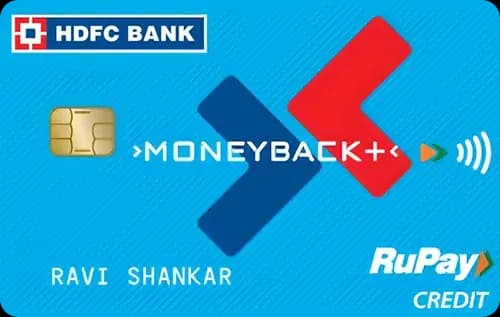
Quick Verdict
- For everyday spend, the Standard Chartered Rewards Credit Cardⓘ offers a better base reward rate, making it the winner for regular retail purchases.
- When it comes to travel perks, especially domestic lounge access, the Standard Chartered card also leads, providing four complimentary visits per year.
- The HDFC Bank MoneyBack Plus Credit Cardⓘ is cheaper to hold with a lower annual fee and joining fee, and easier fee waiver at Rs 50,000 annual spend.
- Choose the HDFC MoneyBack Plus if you are a beginner looking for cashback with minimal fees; pick the Standard Chartered Rewards card if you want higher rewards and lounge access, and can meet the higher spend threshold.
Side by Side
| Detail | HDFC Bank MoneyBack Plus Credit Cardⓘ | Standard Chartered Rewards Credit Cardⓘ |
|---|---|---|
| Annual fee | Rs 500 | Rs 1,000 |
| Joining fee | Rs 500 | Nil (lifetime free) |
| Fee waiver on spend | Rs 50,000 | Rs 1,00,000 |
| Reward rate | 0.5% base, 3.33% online | 1% base, 4% online and dining |
| Reward type | Points | Points |
| Domestic lounge | None | 4 per year (1 per quarter) |
| International lounge | None | None |
| Forex markup | 3.5% | 3.5% |
| Best suited for | First-card, cashback, shopping | Rewards, dining, first-card, shopping, lounge |
Rewards Compared
Spending Rs 10,000 on the HDFC Bank MoneyBack Plus Credit Cardⓘ earns Rs 50 in value from the base reward rate, with a significant boost to Rs 333 when spent on online shopping categories. This makes it an attractive option for online shoppers looking for cashback-style returns through points. However, its base return is relatively low, which means non-category spends earn modest rewards.
In contrast, the Standard Chartered Rewards Credit Cardⓘ yields Rs 100 in value for every Rs 10,000 spent at the base rate, doubling the HDFC card’s base return. It further enhances rewards to Rs 400 on both online and dining spends, making it superior for users who split their expenses between these categories. This card is better suited for lifestyle spending with higher reward multipliers and a broader category coverage.
Fees Compared
The HDFC MoneyBack Plus card charges an annual fee of Rs 500 and a joining fee of Rs 500, both relatively low compared to the Standard Chartered card. Its fee waiver threshold is Rs 50,000 per year, or about Rs 4,167 per month, making it easier for moderate spenders to avoid fees. The break-even spend to cover fees at the base return rate is approximately Rs 1,00,000.
On the other hand, the Standard Chartered Rewards card has no joining fee but a higher annual fee of Rs 1,000. The fee waiver requires Rs 1,00,000 annual spend, or Rs 8,333 per month, which is double the HDFC card’s waiver level. To justify the higher annual fee, the cardholder must spend about Rs 1,00,000 at the base rate, which corresponds to the extra Rs 500 fee. This makes the Standard Chartered card more suitable for higher spenders.
Which One Should You Pick
The HDFC Bank MoneyBack Plus Credit Cardⓘ is ideal for first-time credit card users or those with moderate spending patterns seeking straightforward cashback rewards, especially online shoppers. Its low fees and easier waiver make it a cost-effective choice for conservative spenders. Skip this card if you want premium benefits or lounge access.
The Standard Chartered Rewards Credit Cardⓘ suits users who spend extensively on dining and online shopping, and value complimentary domestic lounge visits. Its higher reward rates justify the steeper fee and waiver requirements if you can meet the Rs 1,00,000 annual spend. Avoid this card if your spend is low or you prefer a no-fee card.
Overall, the Standard Chartered Rewards card wins for rewards and perks, while the HDFC MoneyBack Plus is better for fee-conscious beginners.
What to Check Before You Apply
- Confirm the category caps and whether the 4X or 3.33% rates have spending limits.
- Understand the redemption value of points since both cards use points but with different effective returns.
- Calculate monthly spend carefully to ensure you meet the fee waiver thresholds.
- Be aware that both cards charge a 3.5% forex markup on foreign currency spends.
- Check which airports the domestic lounges are located in and any access restrictions, especially for the Standard Chartered card’s quarterly lounge visits.

Comments
No comments yet
Be the first to share your experience with this card.