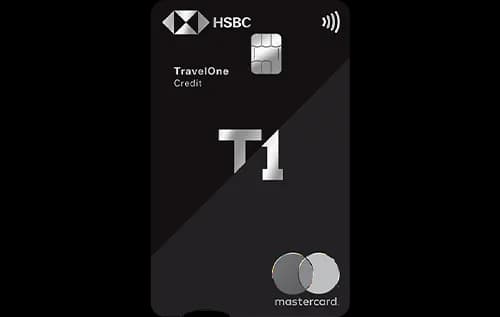
Quick Verdict
- For everyday spend, the Ashva Credit Cardⓘ offers a higher base reward rate, making it the better choice.
- For travel benefits, including superior lounge access and more travel-related discounts, the HSBC Travelone Credit Cardⓘ stands out.
- The Ashva Credit Card is cheaper to hold with a lower joining and annual fee and a more accessible fee waiver threshold.
- Pick the HSBC Travelone for frequent travelers who value premium perks and international lounge access. Choose Ashva for those seeking better rewards on everyday spend and who prefer a lower fee barrier.
Side by Side
| Detail | HSBC Travelone Credit Cardⓘ | Ashva Credit Cardⓘ |
|---|---|---|
| Annual fee | Rs 4,999 | Rs 2,999 |
| Joining fee | Rs 4,999 | Rs 2,999 |
| Fee waiver on spend | Rs 8.00 lakh | Not recorded |
| Reward rate | 1% base, 3% on travel & dining | 1.25% base, 2.5% on travel & dining |
| Reward type | points | points |
| Domestic lounge | 8 per year | 8 per year |
| International lounge | 6 per year | 4 per year |
| Forex markup | 0.99% | 1.5% |
| Best suited for | travel, rewards, lounge, forex, shopping | premium, travel, lounge, rewards, shopping |
Rewards Compared
The HSBC Travelone Credit Cardⓘ delivers Rs 100 in rewards on every Rs 10,000 spent at the base rate of 1%. However, it offers a significantly higher 3% return on travel and dining categories, translating to Rs 300 back on Rs 10,000 in those segments. This makes it highly attractive for users focused on travel and dining expenses where rewards triple the standard rate.
In contrast, the Ashva Credit Cardⓘ has a stronger base return of 1.25%, yielding Rs 125 on Rs 10,000 spent generally. Its category rewards on travel and dining stand at 2.5%, providing Rs 250 on similar spend, which is less than HSBC’s 3% but still higher than the base. Ashva’s higher base reward rate makes it advantageous for users with diverse spending beyond travel and dining, whereas HSBC’s reward structure benefits those with concentrated spend in those premium categories.
Fees Compared
The HSBC Travelone Credit Cardⓘ levies a substantial joining and annual fee of Rs 4,999 each. The annual fee waiver requires Rs 8 lakh in spend annually, which breaks down to about Rs 66,667 per month. This is a high spend threshold, meaning fee waiver is likely out of reach for moderate spenders. The card demands approximately Rs 5 lakh in spend annually at the base rate to cover the fee via rewards alone.
Meanwhile, the Ashva Credit Cardⓘ charges a more affordable Rs 2,999 for joining and annual fees. There is no explicit fee waiver on spend mentioned, suggesting the fees are fixed. However, the break-even point based on base rewards is much lower at around Rs 2.40 lakh annually, making it easier to earn back the fee through rewards.
Which One Should You Pick
Choose the HSBC Travelone Credit Cardⓘ if you are a frequent traveler who values extensive lounge access, six international and eight domestic visits annually, and exclusive travel discounts. The 0.99% forex markup is among the lowest, ideal for overseas spenders. Additionally, premium benefits like purchase protection and 1:1 reward point to air-mile conversions enhance its appeal. Avoid this card if your spending is below Rs 5 lakh annually or you do not travel often, as the high fee and waiver threshold may not justify it.
Opt for the Ashva Credit Cardⓘ if you want a card with a better base reward rate that benefits everyday spending, especially outside travel and dining. Its lower fees and easier break-even point make it suitable for moderate spenders. It also offers decent lounge access and luxury hotel benefits, plus concierge service. Skip this card if you prioritize maximum international lounge visits or the lowest possible forex markup, as HSBC has the edge there.
Overall, the decisive call depends on spending habits and travel frequency. For travel-focused users with high spend, choose HSBC Travelone. For broader rewards on everyday spend and lower fees, go with Ashva.
What to Check Before You Apply
- Confirm whether your monthly spend can realistically meet the HSBC Travelone’s Rs 66,667 fee waiver threshold.
- Review redemption options and the actual value of reward points for both cards to ensure they align with your spending patterns.
- Check that the forex markup suits your travel plans; Ashva’s 1.5% is considerably higher than HSBC’s 0.99%.
- Verify which airports and terminals the complimentary lounges cover, especially for international travel.


Comments
No comments yet
Be the first to share your experience with this card.