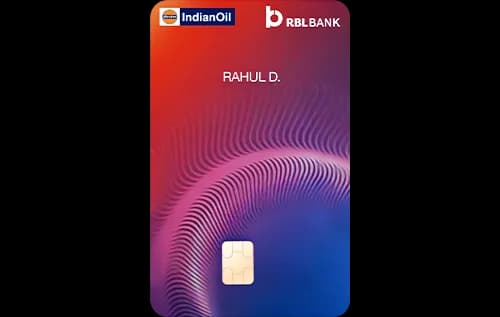
Quick Verdict
- For everyday spend outside specific categories, the SBI Card Pulse Credit Cardⓘ wins with a higher base reward rate of 0.5% versus 0.4% on the Indianoil RBL Bank Xtra Credit Cardⓘ.
- For fuel spend, the Indianoil RBL Bank Xtra Credit Cardⓘ is clearly superior, offering an 8.5% value back at IndianOil fuel stations.
- The SBI Card Pulse Credit Cardⓘ has a lower annual fee waiver threshold, making it cheaper to hold for moderate spenders.
- Pick the Indianoil RBL Bank Xtra Credit Cardⓘ if you prioritize fuel rewards and occasional domestic lounge access, and choose the SBI Card Pulse Credit Cardⓘ if you want better rewards on dining, utilities, and more lounge visits.
Side by Side
| Detail | Indianoil RBL Bank Xtra Credit Cardⓘ | SBI Card Pulse Credit Cardⓘ |
|---|---|---|
| Annual fee | Rs 1,500 | Rs 1,499 |
| Joining fee | Rs 1,500 | Rs 1,499 |
| Fee waiver on spend | Rs 2.75 lakh | Rs 2.00 lakh |
| Reward rate | 0.4% base | 0.5% base |
| Reward type | points | points |
| Domestic lounge | 4 per year (Rs 75,000 quarterly spend gate) | 8 per year |
| International lounge | None | None |
| Forex markup | 3.5% | 3.5% |
| Best suited for | fuel, rewards, lounge | lounge, dining, rewards, travel, shopping |
Rewards Compared
Spending Rs 10,000 on the Indianoil RBL Bank Xtra Credit Cardⓘ yields Rs 40 in rewards at the base rate, which is modest compared to the SBI Card Pulse Credit Cardⓘ that returns Rs 50 for the same spend. However, the Indianoil RBL Bank Xtra Credit Cardⓘ shines when used for fuel purchases, delivering an impressive Rs 850 return on Rs 10,000 spent at IndianOil fuel stations, a standout feature unmatched by the SBI Card Pulse Credit Cardⓘ. For groceries, it offers a 1% return, which is minimal but better than nothing.
The SBI Card Pulse Credit Cardⓘ offers specialized category returns of 2.5% for dining and utilities, equating to Rs 250 per Rs 10,000 spent in these categories. These category bonuses, coupled with its higher base rate, make it a strong choice for lifestyle and utility spends, whereas the Indianoil RBL Bank Xtra Credit Cardⓘ predominantly rewards fuel spending with a very high rate but minimal returns elsewhere.
Fees Compared
Both cards have nearly identical joining and annual fees, Rs 1,500 for Indianoil RBL Bank Xtra Credit Cardⓘ and Rs 1,499 for SBI Card Pulse Credit Cardⓘ. The fee waiver threshold differs significantly: Rs 2.75 lakh annual spend for the Indianoil RBL Bank Xtra Credit Cardⓘ, which breaks down to about Rs 22,917 per month, versus a lower Rs 2.00 lakh annual spend or Rs 16,667 per month for the SBI Card Pulse Credit Cardⓘ. This means moderate spenders will find it easier to get the fee waived on the SBI Card Pulse Credit Cardⓘ. The break-even spend to cover the annual fee at base rates is about Rs 3.75 lakh for the Indianoil RBL Bank Xtra Credit Cardⓘ and Rs 3.00 lakh for the SBI Card Pulse Credit Cardⓘ.
Which One Should You Pick
Choose the Indianoil RBL Bank Xtra Credit Cardⓘ if your primary spend is on fuel and you want to maximize valueback at IndianOil fuel stations. The card also suits those who can meet the quarterly Rs 75,000 spend gate to access up to 4 domestic lounges annually. Avoid this card if you spend little on fuel or if your monthly spend is below Rs 22,917, as the fee waiver could be hard to achieve.
The SBI Card Pulse Credit Cardⓘ is ideal for a broader lifestyle, rewarding dining, utilities, and shopping with better category returns and more domestic lounge visits per year. It also offers attractive welcome benefits like a smartwatch and complimentary memberships, increasing its appeal. However, if fuel is your primary expense, or you are not interested in the welcome gifts and memberships, this card may not be the best fit.
Overall, the SBI Card Pulse Credit Cardⓘ edges ahead for general spenders and lifestyle users due to its better base rate and lower fee waiver hurdle, while the Indianoil RBL Bank Xtra Credit Cardⓘ dominates for fuel-centric users. Skip the Indianoil card if you do not spend heavily on fuel. Skip the SBI Pulse card if your expenses are mostly fuel-based.
What to Check Before You Apply
- Confirm if there are any caps on fuel points or category rewards that might limit your returns.
- Check the redemption value of points, especially how fuel points convert to benefits.
- Carefully calculate if your monthly spend meets the fee waiver threshold to avoid paying the fee unnecessarily.
- Consider forex costs of 3.5% markup if you spend abroad, as both cards charge the same high markup.
- Verify the lounge access terms, especially spend gates and number of visits allowed per year.

Comments
No comments yet
Be the first to share your experience with this card.