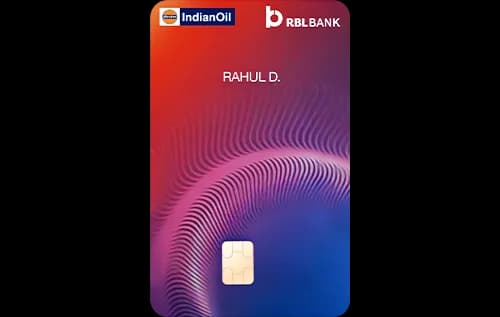
Quick Verdict
- For everyday spend outside fuel, the SBI Prime Credit Cardⓘ wins with a higher base reward rate and better category returns on dining, grocery, and utilities.
- For fuel purchases and surcharge waivers at IndianOil stations, the Indianoil RBL Bank Xtra Credit Cardⓘ offers superior rewards and valueback.
- The RBL Indianoil card is cheaper to hold with a lower joining and annual fee, and a lower waiver spend threshold.
- Choose the RBL Indianoil card if you prioritize fuel savings and occasional domestic lounge access; pick the SBI Prime card if you want broader rewards, international lounges, and premium travel benefits.
Side by Side
| Detail | Indianoil RBL Bank Xtra Credit Cardⓘ | SBI Prime Credit Cardⓘ |
|---|---|---|
| Annual fee | Rs 1,500 | Rs 2,999 |
| Joining fee | Rs 1,500 | Rs 2,999 |
| Fee waiver on spend | Rs 2.75 lakh | Rs 3.00 lakh |
| Reward rate | 0.4% base | 0.5% base |
| Reward type | points | points |
| Domestic lounge | 4 per year | 8 per year |
| International lounge | None | 4 per year |
| Forex markup | 3.5% | 3.5% |
| Best suited for | fuel, rewards, lounge | rewards, dining, lounge, grocery, travel, shopping |
Rewards Compared
The Indianoil RBL Bank Xtra Credit Cardⓘ yields Rs 40 for every Rs 10,000 spent at the base rate. It significantly shines in the fuel category with an 8.5% effective return, translating to Rs 850 back on Rs 10,000 spent at IndianOil stations. Grocery purchases earn a modest 1% or Rs 100 per Rs 10,000. This makes it ideal for fuel-centric users seeking maximum value from petrol expenses and a 1% fuel surcharge waiver capped monthly.
In contrast, the SBI Prime Credit Cardⓘ offers a higher base reward rate of 0.5%, giving Rs 50 back on Rs 10,000 spent. Its category bonuses are more diversified with 2.5% returns on dining, grocery, and utilities, resulting in Rs 250 per Rs 10,000 spent in each of these categories. This card suits users who want enhanced returns across multiple lifestyle spends including dining and groceries, along with premium rewards for travel and shopping.
Fees Compared
The Indianoil RBL Bank Xtra Credit Cardⓘ requires Rs 1,500 as both joining and annual fees. To waive the annual fee, a Rs 2.75 lakh annual spend is necessary, which breaks down to approximately Rs 22,917 monthly. The card’s base reward rate covers its fee at an annual spend of about Rs 3.75 lakh.
The SBI Prime Credit Cardⓘ commands a higher joining and annual fee of Rs 2,999 each. The waiver threshold is Rs 3.00 lakh annually or Rs 25,000 monthly. Due to its slightly better base rate, the break-even annual spend to cover fees is higher at approximately Rs 6.00 lakh. The higher fee reflects added perks such as international lounges and priority pass membership.
Head to head, the SBI Prime card demands an extra annual fee of Rs 1,499 over the RBL Indianoil card. To justify this with rewards alone, a user would need to spend an additional Rs 14.99 lakh annually, which is an impractically high threshold for most.
Which One Should You Pick
The Indianoil RBL Bank Xtra Credit Cardⓘ is best for those who spend heavily on fuel and want to maximize their savings on petrol with an outstanding 8.5% return. It also suits users who desire some domestic lounge access and prefer a lower fee commitment. Skip this card if you want broader category rewards or international lounge access.
The SBI Prime Credit Cardⓘ is tailored for people with a diverse spending pattern across dining, groceries, utilities, and travel. It is ideal for those who value premium benefits like international lounge access and complimentary priority pass membership. However, skip this card if you primarily spend on fuel or find the higher fee and waiver threshold prohibitive.
For a decisive call: choose the RBL Indianoil card if fuel savings and lower fees matter most. Opt for the SBI Prime card if you want premium travel perks and enhanced rewards on lifestyle spends beyond fuel.
What to Check Before You Apply
- Verify if the fuel surcharge waiver on the RBL Indianoil card has monthly caps that limit its value.
- Confirm the redemption options and point expiry policies for both cards to avoid losing rewards.
- Review the monthly spend required to waive fees and assess if it aligns with your spending habits.
- Check the forex markup of 3.5% on both cards if you plan to use them overseas, and confirm international lounge locations if that is a priority.

Comments
No comments yet
Be the first to share your experience with this card.