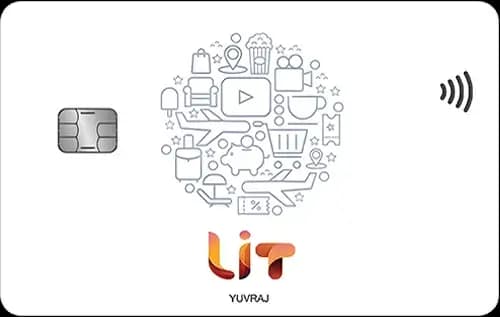
Quick Verdict
- For everyday spend, the HDFC Bank UPI Rupay Credit Cardⓘ wins with higher cashback rates on groceries and dining.
- Neither card offers domestic or international lounge access, so no travel or lounge advantage.
- The Lit Credit Cardⓘ is cheaper to hold with no joining or annual fees.
- Pick the Lit card for a truly fee-free experience and broad category use; choose the HDFC card if you want better rewards on groceries and dining despite minimal fees.
Side by Side
| Detail | Lit Credit Cardⓘ | HDFC Bank UPI Rupay Credit Cardⓘ |
|---|---|---|
| Annual fee | Nil (lifetime free) | Rs 99 |
| Joining fee | Nil (lifetime free) | Rs 99 |
| Fee waiver on spend | Not applicable | Not applicable |
| Reward rate | 1% base, 2% online | 1% base, 3% grocery & dining |
| Reward type | Cashback | Cashback |
| Domestic lounge | None | None |
| International lounge | None | None |
| Forex markup | 3.5% | 3.5% |
| Best suited for | Lifetime-free, cashback, travel, dining, fuel, shopping, lounge | UPI-Rupay, lifetime-free, cashback, first-card, shopping |
Rewards Compared
When spending Rs 10,000 on general purchases, both the Lit Credit Cardⓘ and the HDFC Bank UPI Rupay Credit Cardⓘ offer a base cashback of Rs 100, reflecting their 1% base reward rate. However, the HDFC card shines in specific categories such as groceries and dining, where it provides a 3% cashback, translating to Rs 300 on Rs 10,000 spent. The Lit card offers a 2% cashback on online spend, yielding Rs 200 on the same amount. This means for those focusing on groceries and dining, the HDFC card delivers superior rewards, while the Lit card benefits online shoppers with a moderate boost over the base rate.
The HDFC card also offers 1% cashback on UPI transactions, aligning with its base rate, whereas the Lit card does not specify category rates beyond online spend. Both cards maintain a forex markup of 3.5%, making foreign currency transactions equally costly. Neither card provides lounge access, so rewards in travel or lounge categories do not differ.
Fees Compared
The Lit Credit Cardⓘ is entirely fee-free, with no joining or annual fees for lifetime use. This makes it an attractive option for users wishing to avoid any fee liabilities regardless of their spending habits.
In contrast, the HDFC Bank UPI Rupay Credit Cardⓘ charges a joining fee and an annual fee of Rs 99 each. There is no fee waiver based on spending, so these fees apply regardless of usage. The derived spend threshold for the HDFC card to cover its fee at the base cashback rate is Rs 9,900 annually, meaning users spending less than this amount will effectively pay more in fees than they earn in base cashback. However, the higher category cashback rates on groceries and dining can offset these fees quickly for users who spend significantly in these categories.
Which One Should You Pick
Choose the Lit Credit Cardⓘ if you want a truly no-fee credit card with straightforward cashback rewards. It suits users who prefer online shopping and want to avoid any joining or annual fees, making it ideal for light to moderate spenders or those who dislike fee commitments. However, it lacks category bonuses on groceries or dining and offers no lounge access, so it is less rewarding for category-focused spenders or travelers.
The HDFC Bank UPI Rupay Credit Cardⓘ is better suited for first-time credit card users or those who spend heavily on groceries and dining. Despite the small joining and annual fees, its 3% cashback in these categories can quickly justify the cost. It is also a good fit for users who prefer UPI transactions and want a card that rewards them modestly across various spends. However, users who spend very little or avoid groceries and dining may find the fees outweigh the benefits.
In the final call, if fee avoidance is paramount, go for the Lit Credit Card. If you want better category rewards and don’t mind minimal fees, the HDFC Bank UPI Rupay Credit Card is the stronger choice. Skip the Lit card if you want higher rewards on groceries and dining. Skip the HDFC card if you want a completely fee-free card or do not spend enough to cover the fees.
What to Check Before You Apply
- Confirm any caps on category cashback, as these can limit rewards beyond a certain spend.
- Verify the redemption process and value to ensure cashback is credited or redeemable as expected.
- Understand the fee waiver criteria carefully; here, the HDFC card has no waiver despite fees.
- Consider foreign travel plans since both cards charge 3.5% forex markup, making overseas spends expensive.
- Check which airports or lounges are accessible if lounge access is important; neither card offers this benefit.

Comments
No comments yet
Be the first to share your experience with this card.