Planning a Varanasi Yatra with Credit Cards: Flights, Trains and Ghat-Side Stays
Published: 18 October 2026 Category: buying-guides | cardbuzz
Varanasi compresses the whole of Indian travel into one trip: a flight or an overnight train to get there, a 26-kilometre airport transfer, hotels wedged into lanes too narrow for cars, boatmen who quote in cash, and a dawn boat ride that justifies everything. It is also a trip where credit cards pull more weight than travellers expect — not just for the big bookings, but for lounge access on an early flight, the rewards stacked across four separate legs, and the emergency buffer when plans change at midnight.
This guide plans the yatra end to end through the cardholder's lens: getting there, getting into town, staying near the ghats, paying for boats and guides, and making the airport lounge and layover work for the itinerary rather than against it.
Getting There: Flights into VNS vs the Overnight Train
By air. Varanasi is served by Lal Bahadur Shastri International Airport (IATA code VNS) at Babatpur, about 26 km northwest of the city centre and the ghats — a 45–60 minute drive in normal traffic. Direct flights connect Delhi, Mumbai, Bengaluru, Hyderabad and Kolkata, among others. Airfares swing violently with season: festival periods (Dev Deepawali, Mahashivratri) and the October–March peak season price far above monsoon months, so the card-relevant advice is evergreen — book early, compare the airline's own site against OTAs on the final payable (convenience fees are revealed at the payment step on aggregators), and pay with the card that earns best on airline or travel MCCs.
By rail. Varanasi Junction (BSB) is one of the best-connected stations in the country, with overnight trains from Delhi, Kolkata, Mumbai and Patna. Sleeper and 3AC berths make the train the economical default for families. Two card-relevant facts: IRCTC levies a convenience fee of ₹15 plus GST per ticket for non-AC classes and ₹30 plus GST for AC classes (reduced to ₹10 and ₹20 plus GST respectively for BHIM/UPI payments), and these fees are non-refundable on cancellation. And the senior citizen fare concession — 40% for men over 60, 50% for women over 58 — was withdrawn with effect from 20 March 2020 and has not been restored as of late 2026; budget rail fares at full price, though lower-berth priority in the senior citizen quota remains.
The trade-off. The flight saves a night and lands the traveller at the ghats by afternoon; the train saves money and arrives at Varanasi Cantt, minutes from the old city. For a two-day yatra, the flight's time saving is usually worth it. For longer stays, the train's economics are hard to beat — especially when the fare difference funds the boat rides and the hotel upgrade.
Airport Transfers: The Prepaid Counter and the Card Question
VNS has a prepaid taxi counter inside the arrivals hall, app-based cabs (Ola, Uber) from designated parking zones, UPSRTC air-conditioned electric buses (routes 101/102, roughly ₹40–₹140, every 30–60 minutes, 60–75 minutes to the city), and local trains from Babatpur station (1–2 km from the terminal) to Varanasi Junction for ₹30–₹150. Indicative 2026 fares to the ghats area: app cabs ₹620–₹1,200, fixed-fare sedans around ₹899, with night surcharges typically added between 11 PM and 6 AM.
Payment mechanics vary by mode:
- Prepaid counter: fixed fare, receipt issued, card usually accepted — the cleanest card transaction of the arrival.
- App cabs: billed to the card on file in the app; earns at the card's standard online rate. Surge pricing applies at peak arrival banks.
- Pre-booked private transfers (hotel-arranged or aggregator): often payable by link in advance — confirm whether the link charges the card directly (rewards-earning) or routes through a wallet.
- UPSRTC buses and local trains: cash/UPI territory; keep small change ready.
For late-night arrivals — common on the last Delhi–Varanasi flights — the prepaid counter or a pre-booked pickup beats negotiating with touts at midnight, and the fixed fare removes the most common arrival scam entirely.
Staying Near the Ghats: What the Lanes Mean for Card Payments
The ghat-side hotel market splits into three zones. Assi (southern, quieter, popular with longer stays and foreign travellers), Godowlia–Dashashwamedh (the dense commercial heart, walking distance to the evening aarti), and the Cantonment/Sigra side (wider roads, business hotels, car access to the door). Old-city properties near the ghats often sit 100–300 metres inside pedestrian lanes — porters, not cars, cover the last stretch.
Booking mechanics mirror the temple-town playbook: OTAs list the full range, direct booking with the property sometimes shaves the platform's 18–23% commission off the price, and walk-ins work on lean weekdays but not on festival dates. Two Varanasi-specific wrinkles:
- "Near the ghats" needs verification. Listings stretch the definition; a hotel "5 minutes from Dashashwamedh" may mean five minutes by vehicle plus a lane walk. Check the map pin, not the headline.
- Prepaid vs pay-at-property matters more here because plans change — fog delays the flight, the train runs six hours late. A pay-at-property rate with free cancellation until the day of arrival is worth a small premium over a non-refundable prepaid rate during winter fog season.
On billing: rooms up to ₹7,500 per night carry 5% GST (no ITC) and rooms above ₹7,500 carry 18% (with ITC), per the slab structure effective 22 September 2025. Most ghat-side mid-range rooms fall in the 5% slab. Prepaid OTA bookings earn rewards at the card's travel rate; desk payments earn on the hotel's own terminal — confirm card acceptance at small guesthouses in the lanes, where UPI is often the default.
Boat Rides and the Ganga Aarti: Paying on the Water
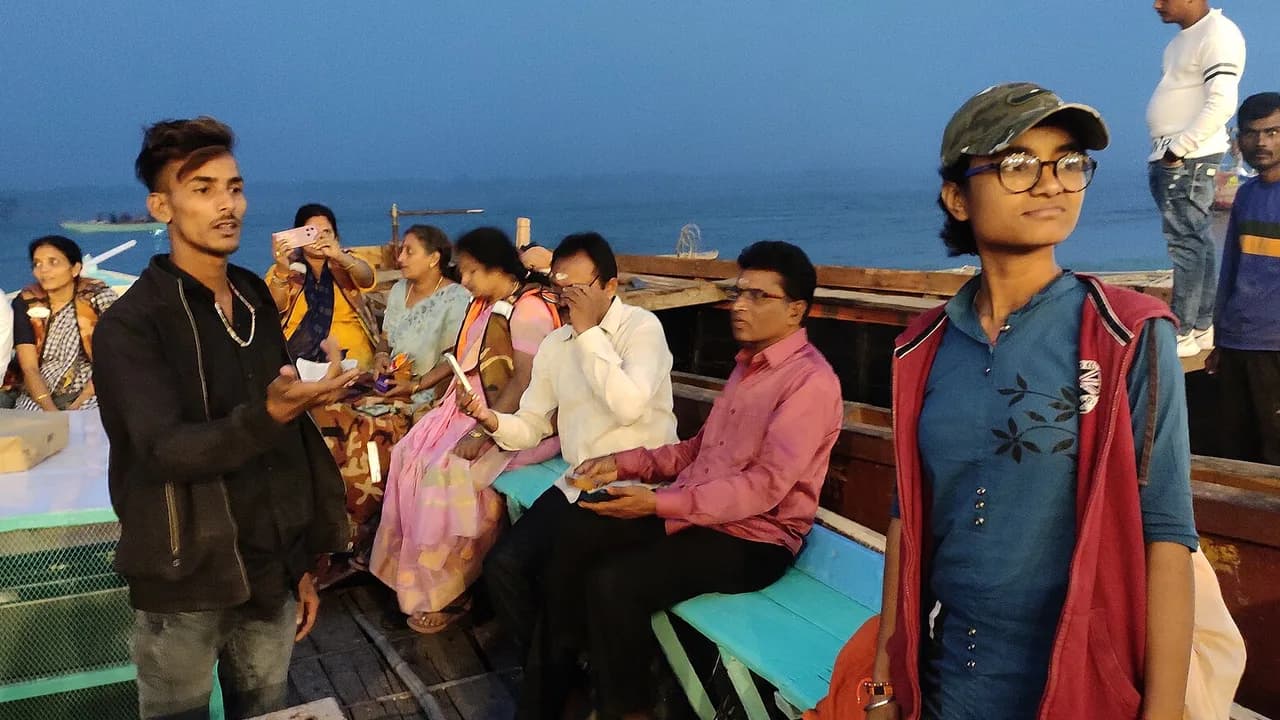
The boat ride is the heart of the yatra and almost entirely a cash economy. Indicative 2026 pricing (per local operator listings; negotiate the total before boarding):
- Shared sunrise boat: ₹100–₹300 per person (₹200–₹400 in the premium sunrise slot).
- Private wooden boat: ₹1,500–₹3,000 per boat.
- Private motorboat: ₹3,500–₹5,000+.
- Evening Ganga Aarti from the river: ₹250–₹350 per person for shared seats; private boats around ₹3,500 for up to 6 passengers, rising with group size.
Sunrise boats leave from Assi Ghat around 5:00–6:30 AM; the evening aarti session boards at Dashashwamedh around 5:30 PM in the winter schedule. Agree on the boat type, duration, route and total fare before stepping aboard, confirm life jackets, and get the fare in writing where a desk or operator offers it.
The card strategy here is indirect: no card earns on a cash boat fare, so the play is to protect the cash float — withdraw or carry enough for two boat sessions plus aarti seating, and keep the cards for everything else. Pre-booked boat experiences through established operators sometimes offer online payment; where they do, the convenience of a confirmed sunrise slot during peak season outweighs the small booking fee.
Guides, Food and the Small-Cash Problem
Licensed local guides for the old city, Sarnath (about 10 km away, the Buddhist circuit) and the ghats typically charge per half-day or full-day and accept cash or UPI. Full-day private cabs run from around ₹1,900 for an 8-hour/80 km sedan package. Street food, Banarasi silk shopping in the lanes, prasadam and temple offerings are cash/UPI.
The practical cardholder's wallet for Varanasi therefore has three layers: cards for flights, trains, hotels, prepaid transfers and larger restaurant bills; UPI for guides, cabs, shops and mid-size payments; and cash for boats, aarti seating, small vendors and temple counters. Running the whole trip on cards alone is not feasible — and the traveller who tries usually ends up paying an ATM cash-advance fee (2.5–3% plus interest from day one) at the worst moment. Carry the cash from home.
Airport Lounges and Layovers: Making the Wait Work
Varanasi's airport has a passenger lounge, and most domestic itineraries route through Delhi or Mumbai — which is where lounge access earns its keep on a yatra. The mechanics of card-based lounge access in India changed recently, and the old assumptions need updating:
- DreamFolks no longer aggregates domestic lounge access (it exited in late 2025). Banks now deal directly with lounge operators; card benefits still work, but through the bank's own rails — showing or swiping the eligible card with a boarding pass at the desk.
- Spend-based unlocks are now common. Many cards grant complimentary visits only if a quarterly spend threshold was met in the previous quarter — for example, HDFC Regalia Gold requires ₹60,000 in the preceding quarter, and ICICI Sapphiro requires ₹75,000 on select variants. Check eligibility in the bank's app before flying; the lounge desk cannot override it.
- Visit quotas are modest. Typical mid-range cards offer 2–8 complimentary domestic visits per quarter or per year; premium cards go higher. A ₹2 card-validation authorisation is charged at entry to verify the card.
- Walk-in rates at Indian domestic lounges run roughly ₹1,500–₹3,500 per visit.
For the yatra itinerary, the lounge calculus is simple: an early-morning departure from Delhi with a two-hour layover is a lounge trip; a direct 80-minute hop to VNS barely justifies the detour. Travellers with elderly parents should weigh the lounge's seating, food and restrooms against the walk to reach it — on a pilgrimage, comfort is the point.
Stacking Rewards Across the Legs: An Illustrative Pass
Consider a two-person, three-day yatra assembled card-first (figures illustrative, using typical mid-range pricing):
| Leg | Typical cost (illustrative) | Card play |
|---|---|---|
| Delhi–Varanasi return flights | ₹12,000 | Airline/travel card at accelerated earn |
| Prepaid airport transfers (2 ways) | ₹1,800 | App cab on card on file |
| Ghat-side hotel, 2 nights | ₹8,000 + 5% GST | Prepaid OTA booking on travel card |
| Boat rides (sunrise + aarti) | ₹1,200 | Cash float — no card play |
| Guide + Sarnath half-day cab | ₹2,500 | UPI or card link |
| Food, shopping, temple | ₹4,000 | Mix of card and UPI |
| Trip total | ≈ ₹29,500 |
Roughly ₹22,000 of the ₹29,500 flows through cards — at a 2–3% blended reward rate, that is ₹440–₹660 back in points or cashback, plus the lounge visits on the layover legs. The remaining cash/UPI portion is structural: no card product covers the boatman. The stacking lesson is to route every card-eligible rupee through the single best-earning travel card rather than splitting across cards, since reward thresholds and milestone benefits (annual fee waivers, bonus points) reward concentration.
The Yatra Card Checklist
- Before booking: check lounge eligibility in the bank app (spend thresholds now gate many cards); confirm the hotel's lane access and cancellation terms; compare OTA final payable against the direct rate.
- At payment: flights and prepaid hotels on the best travel-earn card; IRCTC rail tickets noting the ₹15/₹30 convenience fee and the withdrawn senior concession; app cabs on the card on file.
- On arrival: prepaid taxi counter or pre-booked pickup for late nights; UPSRTC bus as the budget fallback.
- On the ghats: cash float for boats (₹100–₹300 per person shared, private boats from ₹1,500), aarti seating and temple counters; UPI for guides and shops.
- Contingency: keep one card with clear limit headroom — fog-season flight cancellations and rebookings are the moment the credit line earns its place.


Comments
No comments yet
Be the first to share your experience with this card.