Portable Power Stations in India: Buying Backup Power on EMI
Published: 18 October 2026 Category: buying-guides | cardbuzz
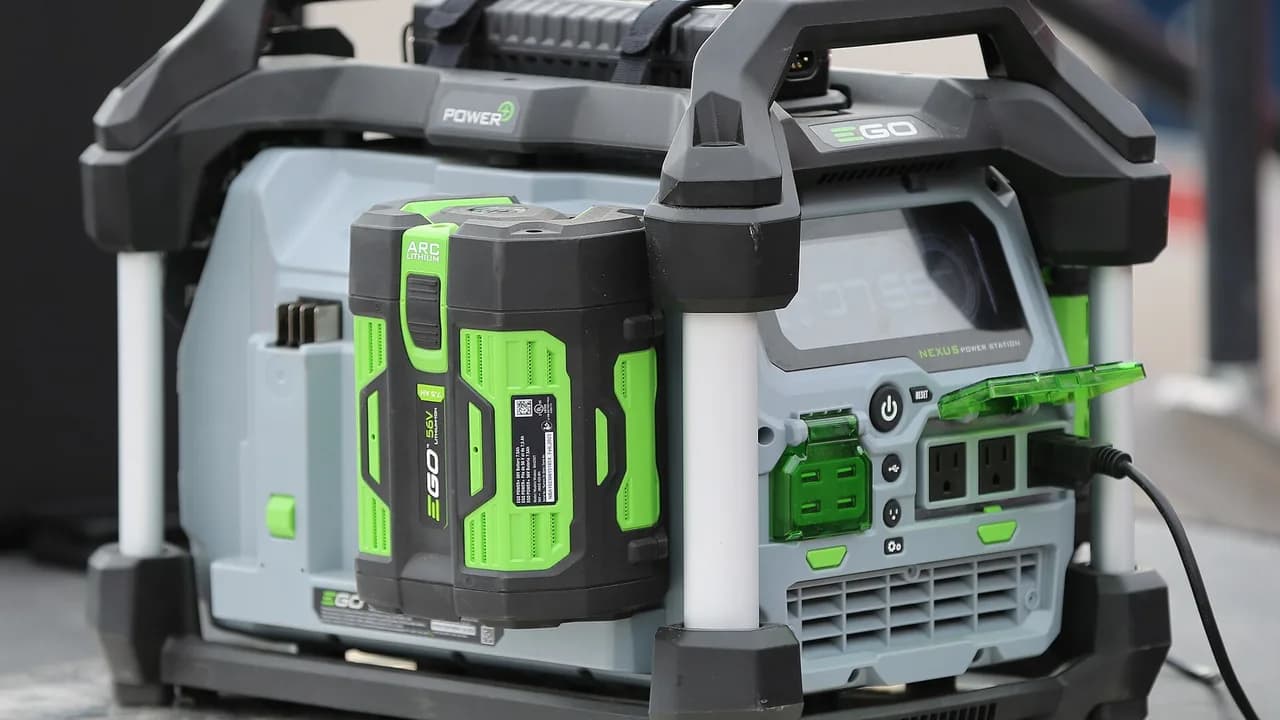
Between the humble power bank and the full home inverter sits a category that barely existed in India five years ago: the portable power station — a lithium-battery box with AC outlets, USB-C PD, and often solar input, sized from 300 Wh to 2 kWh. It runs the Wi-Fi router through a cut, powers a laptop for a full workday, keeps a CPAP machine alive overnight, or runs a campsite. Prices run roughly ₹25,000–1,20,000 (approximate, brand-dependent) — firmly in credit-card EMI territory. Here's how to buy one wisely.
What a power station actually does
Think of it as a silent, fume-free mini-inverter: a lithium (usually LiFePO4) battery, an inverter, a charge controller, and multiple outputs in one portable unit. A 1 kWh unit stores one "unit" of electricity — enough to run a 65 W laptop for ~12 hours, a 40 W fan for ~20 hours, or a 150 W mini-fridge for ~5 hours (allowing for inverter losses of 10–15%).
The use cases that justify the price:
- Work-from-home continuity: router + laptop + monitor draw roughly 120–150 W. A 500–700 Wh station bridges 3–5 hour cuts — the exact gap where a small home UPS gives up.
- Medical devices: CPAP machines (30–60 W) and oxygen concentrators (300–600 W) need clean, uninterrupted power. A power station with UPS-mode switchover (under 20 ms on better models) works as a dedicated medical backup.
- Outdoor and site work: shoots, stalls, and farm visits where grid power is absent and a diesel genset is overkill.
- Travel and camping: with a folding solar panel, the station becomes a self-recharging off-grid kit.
Sizing: the one calculation that matters
List the devices, note each one's wattage (printed on the adapter or nameplate), and add 20% headroom. Then multiply by the hours of backup needed:
- Router (10 W) + laptop (65 W) + monitor (25 W) = 100 W × 4 hours = 400 Wh → a 500 Wh station.
- Add a fan (40 W) for summer: 140 W × 4 hours = 560 Wh → step up to 700 Wh–1 kWh.
- Oxygen concentrator (400 W) × 6 hours = 2,400 Wh → a 2 kWh unit, and verify the station's continuous AC output rating exceeds 400 W with margin.
The two numbers on the spec sheet that matter most: battery capacity (Wh) and continuous AC output (W). A 1 kWh station with only 300 W of AC output cannot run a 400 W device — capacity without output is a trap.
Battery chemistry and lifespan
Prefer LiFePO4 (lithium iron phosphate) over older NMC chemistries: LiFePO4 typically delivers 3,000+ charge cycles to 80% capacity — roughly 8–10 years of regular use — versus ~800 cycles for NMC. It is also more thermally stable, which matters in Indian summers. Check the cycle-life claim on the datasheet, not the marketing page, and confirm the warranty covers the battery specifically (2–5 years is typical; some brands warrant the unit but not the cells).
Other specs worth checking: UPS-mode switchover time (≤20 ms for medical/desktop use), solar input wattage and MPPT support (a 1 kWh station pairs well with 200–400 W of panels), pass-through charging (can it charge and discharge simultaneously?), and weight — a 1 kWh LiFePO4 unit weighs 10–14 kg, genuinely portable; 2 kWh units cross 20 kg and need wheels.
Power station vs home inverter vs genset
- Vs home inverter: the power station is portable, silent, and needs no installation — but costs 3–5× more per Wh of storage than a tubular-battery inverter. For fixed whole-home backup, the inverter wins. For targeted, portable backup, the station wins.
- Vs diesel genset: the station is silent, fume-free, and instant — but a genset runs indefinitely on fuel while the station is limited by its battery. For multi-day outages, the genset (or solar + station) is the answer.
- Vs a big power bank: power banks top out at USB outputs and ~100 W. The moment an AC plug is needed, only the power station qualifies.
Buying on the card
At ₹25,000–1,20,000, the playbook writes itself:
- Marketplace purchases (the main channel for this category in India) qualify for the usual bank instant-discount and no-cost EMI offers — watch for the category sales where electronics accessories get extra card discounts.
- No-cost EMI over 6–12 months is the natural fit: a ₹60,000 station at 12-month no-cost EMI is ₹5,000 a month with zero interest leakage.
- Check the seller's GST invoice — business buyers and freelancers can claim input tax credit on GST paid, which at 18% is a bigger saving than any card reward. Buy from GST-registered sellers and keep the invoice.
- Solar panel bundles: some sellers bundle a 100–200 W folding panel. Price the bundle against buying the panel separately — bundles are convenient but not always cheaper, and panel wattage matters more than brand here.
Solar charging: pairing panels with the station
Most power stations accept solar input through an MPPT controller, and this is where the category gets genuinely interesting for Indian homes with balconies or terraces. A 1 kWh station paired with 200–400 W of folding or rigid panels becomes a self-recharging daytime system: panels charge the station through the day, the station runs the evening load. In effect, a miniature version of balcony solar with built-in storage — no DISCOM paperwork, no fixed installation.
Sizing the panel array: match roughly 0.2–0.4 W of panel per Wh of battery for a full recharge in 4–6 peak sun hours. A 500 Wh station wants 100–200 W of panels; a 1 kWh station wants 200–400 W. Rigid panels (cheaper per watt, roughly ₹25–35/W, approximate) suit fixed balcony mounts; folding panels (2–3× the price) suit portability. Either way, verify the station's solar input voltage range before buying panels — mismatched voltage is the most common pairing failure.
Safety certifications to demand
A box storing a kilowatt-hour of lithium energy inside a home deserves scrutiny:
- Cell certification: look for UN38.3 (transport safety) and IEC 62133 on the cells, and BIS registration on the product for the Indian market.
- Battery management system (BMS): every reputable station has one — it prevents overcharge, over-discharge, and thermal runaway. If the spec sheet doesn't mention a BMS, walk away.
- Inverter waveform: pure sine wave is mandatory for anything with a motor or medical device; "modified sine wave" units can damage sensitive electronics and are a false economy.
- Thermal design: the unit should stay cool to the touch under sustained load; fan noise under load is normal, excessive heat is not. In Indian summers, don't run the station inside a closed cabinet — airflow matters.
Renting a power station for one-off needs
Buying isn't always the answer. For a single outdoor event, a film shoot, or a week-long site camp, renting a 1–2 kWh power station costs roughly ₹1,500–3,000 per day (approximate, metro rental market rates) — a tenth of the purchase price for a week's use. Rental also answers the "will it actually get used?" question before committing ₹60,000: rent once for the next long outage or trip, track how often it gets used, and buy only if the utilisation justifies it. Some sellers offer rent-to-own arrangements where a portion of rental payments offsets the purchase price — worth asking about, and worth getting in writing. Put the rental deposit on the credit card as usual; it's a standard refundable transaction.
Airline travel with a power station needs planning: most airlines cap lithium batteries at 100 Wh in carry-on (up to 160 Wh with airline approval), which rules out every meaningful power station for cabin baggage — and they're far too heavy for it anyway. For road trips this is irrelevant, but for anyone considering flying a station to a remote site, the answer is to ship it as cargo under dangerous-goods rules or rent at the destination. Within India, surface courier of LiFePO4 stations is routine; keep the original packaging for exactly this reason.
Maintenance, storage and lifespan
LiFePO4 stations are nearly maintenance-free, but three habits extend life: store at 50–80% charge (not full, not empty) if unused for months; run a full charge–discharge cycle every 3–6 months to keep the BMS calibrated; and keep firmware updated — several brands improve charging curves and fan profiles via app updates. Avoid leaving the unit in a parked car in summer; sustained 50°C+ heat degrades any lithium chemistry.
Realistic lifespan: 3,000+ cycles to 80% capacity for LiFePO4 means roughly 8–10 years of daily cycling, or 12–15 years of occasional outage use. The inverter electronics, not the cells, are the likelier failure point over that horizon — which is why the warranty's coverage of the whole unit (not just cells) matters at purchase.
The verdict
A portable power station is a specialist tool, not a replacement for a home inverter — buy it for portability, silence, and targeted backup (work desk, medical device, outdoors), sized by the watt-hours maths above. Choose LiFePO4, verify the AC output rating against the heaviest device, and put it on no-cost EMI. The power cut won't notice the difference; the laptop will.


Comments
No comments yet
Be the first to share your experience with this card.