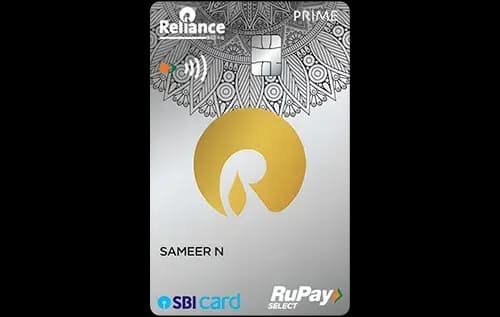
Quick Verdict
- For everyday spend, especially groceries and online shopping, the Reliance SBI Card Prime ⓘ wins with its superior category reward rates.
- For travel and lounge access, the Reliance SBI Card Prime ⓘ also leads with both domestic and international lounge visits, whereas the SBI Card Pulse Credit Card ⓘ only offers domestic lounges.
- The SBI Card Pulse Credit Card ⓘ is cheaper to hold with a lower joining and annual fee and a lower waiver threshold.
- Choose Reliance SBI Card Prime ⓘ if you are a high spender focused on shopping and travel benefits; pick SBI Card Pulse Credit Card ⓘ if you want a lower fee card with decent rewards on dining and utilities.
Side by Side
| Detail | Reliance SBI Card Prime ⓘ | SBI Card Pulse Credit Card ⓘ |
|---|---|---|
| Annual fee | Rs 2,999 | Rs 1,499 |
| Joining fee | Rs 2,999 | Rs 1,499 |
| Fee waiver on spend | Rs 3.00 lakh | Rs 2.00 lakh |
| Reward rate | 0.5% base; 5% grocery & online | 0.5% base; 2.5% dining & utilities |
| Reward type | Points | Points |
| Domestic lounge | 8 per year | 8 per year |
| International lounge | 4 per year | None |
| Forex markup | 3.5% | 3.5% |
| Best suited for | Shopping, grocery, lounge, rewards | Lounge, dining, rewards, travel, shopping |
Rewards Compared
The Reliance SBI Card Prime ⓘ delivers Rs 50 back on Rs 10,000 spent at the base rate of 0.5%. However, it truly shines in grocery and online spends, offering an effective return of Rs 500 per Rs 10,000 spent in these categories thanks to a 5% reward rate. This makes it very attractive for shoppers who frequently buy groceries or shop online.
On the other hand, the SBI Card Pulse Credit Card ⓘ also gives Rs 50 back on Rs 10,000 spent at base rate but focuses on dining and utilities categories, where it offers a 2.5% reward rate, yielding Rs 250 back per Rs 10,000 spent. While this is half the category reward of Reliance SBI Card Prime ⓘ, it caters well to users who prioritize dining and utilities expenses.
Both cards return the same base rewards but differ significantly in category benefits, with Reliance SBI Card Prime ⓘ better for grocery and online shopping and SBI Card Pulse Credit Card ⓘ better for dining and utilities.
Fees Compared
The Reliance SBI Card Prime ⓘ demands a higher joining and annual fee of Rs 2,999 each. To waive the annual fee, you must spend Rs 3.00 lakh annually, which breaks down to Rs 25,000 per month. The card requires about Rs 6.00 lakh of annual spend at the base reward rate to cover the fee cost purely through rewards.
Conversely, the SBI Card Pulse Credit Card ⓘ comes with a lower joining and annual fee of Rs 1,499 each. The fee waiver threshold is also more accessible at Rs 2.00 lakh annually or approximately Rs 16,667 per month. The breakeven spend to cover the fee with base rewards is about Rs 3.00 lakh, half that of Reliance SBI Card Prime ⓘ.
Therefore, SBI Card Pulse Credit Card ⓘ is more cost-effective for moderate spenders or those unwilling to commit to high monthly spends.
Which One Should You Pick
Pick the Reliance SBI Card Prime ⓘ if you frequently shop at groceries and online stores and value premium travel perks like international lounge access. Its higher fees are justified for high spenders who can maximize category rewards and take advantage of the welcome benefits and hotel discounts.
Choose the SBI Card Pulse Credit Card ⓘ if you want a lower-cost card with reasonable rewards on dining and utilities, plus domestic lounge access. Its welcome gift and memberships add value for health and fitness-conscious users. It suits moderate spenders who want travel perks without a high fee burden.
Skip Reliance SBI Card Prime ⓘ if you do not spend enough to meet the high fee waiver threshold or do not utilize international lounges. Avoid SBI Card Pulse Credit Card ⓘ if you seek better category rewards on groceries or online shopping or international lounge access.
What to Check Before You Apply
- Confirm the monthly spend needed to waive the annual fee and whether your typical spending meets it.
- Verify if there are caps or limits on category bonuses or lounge visits.
- Check the redemption rules and value of points for your preferred rewards.
- For foreign travel, consider the 3.5% forex markup as it impacts cost of overseas transactions.
- Confirm which airports and locations are covered under the domestic and international lounge access.

Comments
No comments yet
Be the first to share your experience with this card.