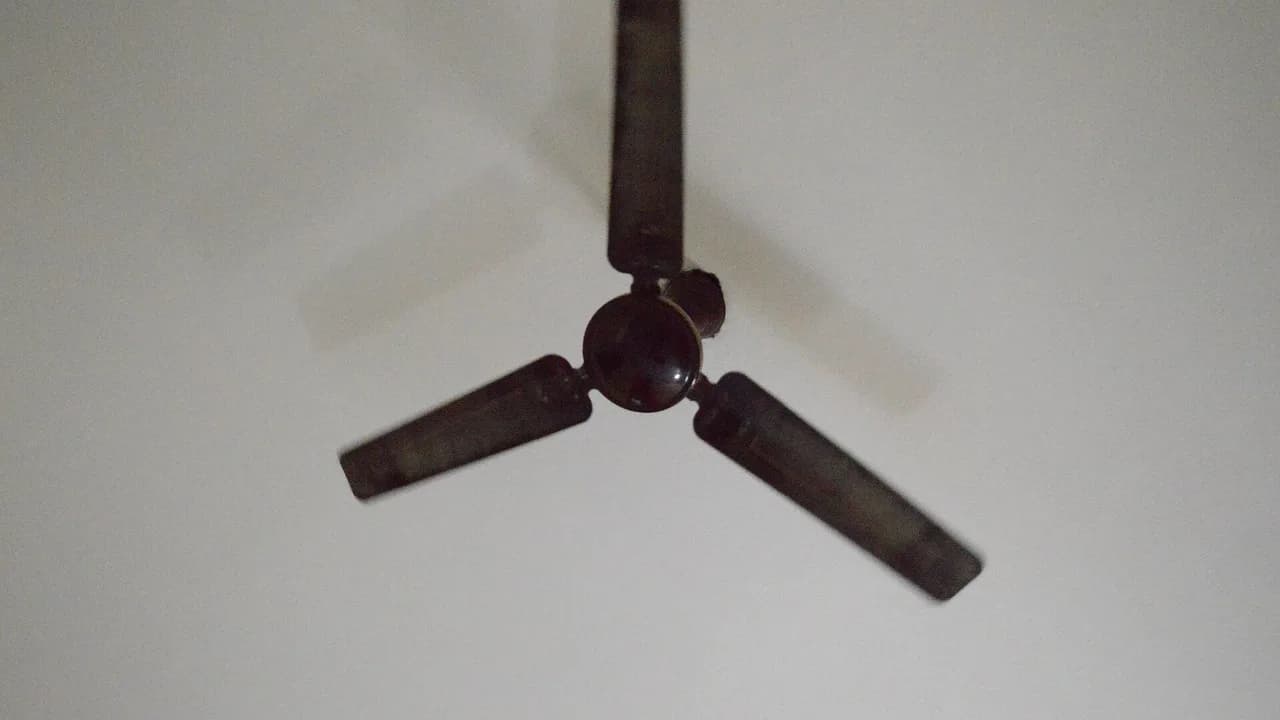
The BLDC Fan Upgrade: Swapping Every Fan in the House on a Credit Card
Published: 18 October 2026 Category: how-to-guides | cardbuzz
Of all the energy upgrades an Indian home can make, swapping ceiling fans has the best return per rupee — and it is the one almost nobody does. A conventional induction ceiling fan draws 70–80 W at full speed. A BLDC (brushless DC motor) fan draws 28–35 W and moves comparable air. That 50%+ saving, multiplied across every fan in the house and 3,000+ running hours a year, makes the humble fan the fastest-paying appliance upgrade available. Here's how to plan the swap, what it costs, and how to pay for it smartly.
Why fans, why now
Since January 2023, the Bureau of Energy Efficiency has made star labelling mandatory for ceiling fans, rated on "service value" — air delivery per watt. Conventional fans land at 1–3 stars; BLDC fans routinely hit 4–5 stars because the motor wastes far less energy as heat. A 5-star BLDC fan at 28 W delivers a service value above 8 CMM/W (cubic metres per minute per watt) against roughly 2.5–4 CMM/W for older induction fans.
The economics are striking. Based on a widely cited 10-year lifecycle analysis (12 hours daily, 250 days a year, ₹8 per unit):
| Fan type | Power | Purchase price | 10-year electricity cost | Total lifecycle cost |
|---|---|---|---|---|
| 0-star conventional | 75 W | ~₹1,200 | ~₹18,000 | ~₹19,200 |
| 1-star conventional | 50 W | ~₹1,400 | ~₹12,000 | ~₹13,400 |
| 5-star BLDC | 28 W | ~₹2,500 | ~₹6,720 | ~₹9,220 |
The cheapest fan to buy is the most expensive fan to own — by roughly ₹10,000 over its life. And the upgrade pays for its own price premium fast: replacing a 75 W fan with a 28 W BLDC saves about 141 units a year at 3,000 hours of use, or roughly ₹1,130 at ₹8 per unit. On a ₹2,500–3,500 BLDC fan, the premium over a conventional replacement (about ₹1,300–2,000 extra) pays back in roughly 12–18 months.
Planning a whole-house swap
Count the fans first. A typical 3BHK runs 5–7 ceiling fans — living room, three bedrooms, study, kitchen. Six fans at ₹3,000 each is ₹18,000 — a mid-size card ticket, and the classic case where a single planned purchase beats six impulse buys.
Prioritise by running hours: bedrooms and the living room run 10–16 hours daily in summer; the guest room and kitchen fans run far less. Swap the high-use rooms first. There is no need to replace a rarely used fan — its payback stretches past a decade.
Check compatibility before ordering: BLDC fans need electronic regulators (step-type, minimum 5 positions) rather than old resistive wall regulators, though most BLDC models now ship with RF remotes that bypass the wall regulator entirely. They also run cooler and quieter on inverter backup — a 650 VA home inverter can run 6–8 BLDC fans where it struggled with 3–4 conventional ones, effectively extending backup runtime without touching the battery.
Buying: what to look for
- BEE star rating: insist on the label; 5-star is the target. The rating is mandatory, so an unlabelled fan is a red flag.
- Air delivery: look for 210+ CMM at 1200 mm sweep — low-wattage fans that move little air are a false economy.
- Remote and smart features: RF remotes are standard on most BLDC models; app and voice control come on premium ones. A sleep timer that steps the speed down overnight saves another 20–30% on the already-low consumption.
- Warranty and service: BLDC electronics need authorised service — a local electrician can rewind an induction motor but cannot easily repair a BLDC controller board. Check the brand's service network in the city and prefer 2+ year warranties.
The card strategy for a ₹15,000–25,000 bulk buy
This is textbook card-optimisation territory:
- One consolidated order, one swipe. Buying all fans together — from a single retailer or marketplace seller — crosses the minimum thresholds for bank instant-discount offers (typically ₹500–2,000 off above ₹10,000–15,000 on specific cards) that six separate purchases would miss.
- Pay in full if the billing cycle allows. At this ticket size, a single statement payment captures the full reward earn — roughly ₹270–450 in points value at 1.5–2.5% — with zero interest.
- No-cost EMI as the fallback. Six months of no-cost EMI on ₹18,000 is ₹3,000 a month — painless, and the energy saving (about ₹500–700 a month across six fans in summer) visibly offsets it on the electricity bill.
- Timing: fan prices and bank offers peak around March–May, ahead of summer. Buying in winter, when demand is low, often finds the same models discounted — and the saving starts compounding from the first hot month.
What about the old fans?
Don't bin working fans — sell or donate them. Second-hand 75 W fans fetch ₹300–500 in most cities, and housing societies, paying-guest accommodations and rural relatives will take them gladly. A responsible disposal route also avoids the e-waste problem: the copper and steel in old fans are fully recyclable through authorised recyclers.
The inverter-runtime bonus, quantified
This is the benefit nobody prices into the payback maths, and it's substantial. A typical 1100 VA home inverter with a 150 Ah battery stores roughly 1.5–1.8 kWh of usable energy. Four conventional 75 W fans draw 300 W — the battery is flat in about 5–6 hours. Swap those four fans for 28 W BLDC models (112 W total) and the same battery stretches to 13–16 hours. In effect, the fan upgrade doubles or triples backup duration without spending a rupee on batteries.
For homes that already own an inverter, this changes the next battery replacement decision: instead of adding a second battery (roughly ₹15,000–18,000, approximate) to survive longer cuts, the fan swap (roughly ₹12,000 for four fans) delivers the same runtime extension while also cutting the grid bill every day of the year. And BLDC fans start cleanly on the inverter's waveform — no humming, no excess heat — whereas old induction fans run noticeably hotter and noisier on backup power.
Remote, regulator and wiring pitfalls
Three practical issues account for most BLDC complaints:
- Old wall regulators: resistive-type regulators (the ones that get warm) can conflict with the fan's electronic controller, causing speed-step issues or humming. Most BLDC fans ship with RF remotes that bypass the wall regulator — set the wall regulator to full speed and control from the remote. If the home has very old wiring with resistive regulators in every room, budget an hour of electrician time per room to bypass or replace them.
- Remote signal range: RF remotes work through walls within 8–10 metres; IR-only models need line of sight. For large halls, confirm the remote type before buying.
- Downrod length: BLDC fans are marginally heavier than induction models due to the controller housing. On standard 1-foot downrods this is irrelevant, but for high-ceiling installations with long downrods, ensure the mounting clamp and shackle are rated for the weight — the installer should confirm this, not assume it.
When to buy: the seasonal price curve
Fan demand in India is violently seasonal — and prices follow. March to June is peak season: full MRP, thin discounts, and installers booked out. The smart window is October to February: manufacturers clear inventory, marketplaces run end-of-season sales on cooling appliances, and bank-offer discounts stack deeper because the category needs moving. A 5-star BLDC fan bought in December can cost 10–15% less than the same model in May (illustrative, based on typical seasonal discounting patterns) — and it starts saving from the first hot week of March anyway. For a six-fan order, that timing difference alone is worth ₹2,000–3,000. Buy the fans when nobody wants them; let them earn when everybody does.
One caution on bulk orders: verify the seller's return window for multi-unit purchases before the electrician's visit. A fan with a manufacturing defect (wobble, remote pairing failure) is easy to exchange within the standard 7–10 day window; discovering it after installation, with the old fan already discarded, turns a simple swap into a second electrician visit. Unbox and bench-test every fan — spin it up on the floor, pair the remote — before the old ones come down. The ten minutes per fan is the cheapest insurance in this whole project.
Renters: the portable version of this upgrade
Tenants can't always replace ceiling fans — but they can replace the fans they own. Pedestal and table fans with BLDC motors (25–35 W vs 50–60 W for conventional) are a straight swap with no installation, and they move with the tenant. A work-from-home desk running a BLDC table fan 10 hours a day saves roughly 100 units a year — about ₹800 — on a ₹2,000–3,000 purchase. The same card strategy applies: consolidate, pay in full or no-cost EMI, and buy ahead of summer.
The bottom line
A whole-house BLDC swap costs about as much as one mid-range smartphone, pays for itself in 12–18 months through the electricity bill, and keeps paying for a decade. Put the consolidated order on the card that gives the best instant discount, pay it in full or on no-cost EMI, and let the meter confirm the decision every month.



Comments
No comments yet
Be the first to share your experience with this card.