Travel Insurance for Yatras: Treks, Senior Citizens and What Card Cover Actually Pays
Published: 18 October 2026 Category: buying-guides | cardbuzz
Most premium credit cards in India advertise complimentary travel insurance, and most cardholders assume it covers their Char Dham or Amarnath yatra. It usually does not — or rather, it covers a much narrower slice of the yatra than the brochure suggests. The gap sits exactly where pilgrimages are riskiest: high-altitude trekking, helicopter legs, senior citizens with pre-existing conditions, and domestic medical emergencies. This article maps what card-linked cover actually pays on a yatra, where it goes silent, and when a standalone policy is the only honest option.
What "complimentary travel insurance" on Indian cards actually is
Card-linked travel cover in India is typically a bundle of three things, not one:
- Air accident cover — a lump-sum payout (reported ranges run from about ₹50,000 on basic cards up to ₹3 crore on super-premium cards) on death or permanent disability caused specifically by an air accident while travelling as a fare-paying passenger.
- Travel inconvenience cover — fixed payouts for flight delays, lost or delayed baggage, and lost travel documents. Typical published figures: flight-delay payouts in the ₹10,000–30,000 band after a 4–6 hour threshold, baggage delay around $100–300, checked-baggage loss higher.
- Overseas medical cover — emergency hospitalisation abroad, on premium cards often in the $25,000–50,000 band per trip, with per-incident sub-limits.
Two structural facts shape everything that follows. First, the medical component on most Indian cards covers international travel only — ICICI Bank's published card insurance terms, for example, state plainly that travel insurance covers international travel only, and only when the ticket was purchased on that card. A Kedarnath trekker hospitalised in Rudraprayag cannot claim on it. Second, the air-accident component is the part most relevant to yatras with flight or helicopter legs — but it pays on death or disability from the accident itself, not on the medical bills of surviving it, and the policy wording decides what counts as covered air travel.
How the cover activates — and the three ways travellers void it
Complimentary cover is not automatic with card ownership. Issuers impose activation conditions, and violating any of them means there is no cover at all:
- Full fare on the card. The most common rule: the entire ticket cost must be charged to the card. Paying the base fare on the card and the taxes by UPI, or splitting across two cards, typically fails activation. Some policies accept a high threshold (illustratively around 75% of the ticket on the card), but the safe assumption is 100%.
- Recent card usage. Several issuers require the card to have been used within a window before the incident — ICICI Bank requires at least one transaction in the 60 days before the event; other issuers use a 30-day window with a minimum transaction value (illustratively ₹499 and above). A card sitting unused in a drawer since last Diwali likely carries no live cover.
- Primary cardholder only. Many issuers restrict insurance to the primary card. ICICI's terms state there is no insurance cover on supplementary cards. A few premium cards (HDFC Infinia and the Amex Platinum Charge are the commonly cited examples) extend cover to add-on holders — the exception, not the rule. If the family yatra relies on card cover, each adult either needs their own eligible card or a standalone policy.
- Card account in good standing. Issuers commonly require the minimum amount due to be paid up; a delinquent account can suspend the benefit.
The practical checklist before any yatra: pay the full fare on one eligible card, use that card at least once in the preceding weeks, confirm the travelling members are named insureds, and keep the account current.
The altitude problem: where standard policies stop
This is the exclusion that hits Himalayan yatras hardest. Standard travel policies — card-linked or standalone — commonly cap trekking coverage at 3,000 metres, and many exclude trekking, mountaineering and hazardous activities outright.
Now place the yatras on that map:
- Kedarnath sits at approximately 3,583 metres — above the standard cap.
- Amarnath cave is at 3,888 metres — above the standard cap.
- The Char Dham circuit as a whole involves sustained travel above 3,000 metres.
A standard card-linked policy, even where its medical component applied domestically (which it usually does not), would exclude a trekking injury at these altitudes. Specialist adventure policies handle this honestly: standard tiers cover trekking up to 3,000m, mid tiers extend to 4,500–4,600m, and expedition tiers reach 6,000–6,500m, usually at an additional premium and only when the activity is declared at purchase. For Kedarnath and Amarnath, the mid tier is the minimum honest choice — and the declaration must name trekking at altitude, not just "travel".
Three related points:
- Acute mountain sickness (including HAPE and HACE) is the signature risk of these yatras. It is a medical emergency, not an "accident" in the air-accident sense — card-linked air-accident cover does not pay for the hospitalisation. Only a medical policy with altitude-appropriate trekking cover does.
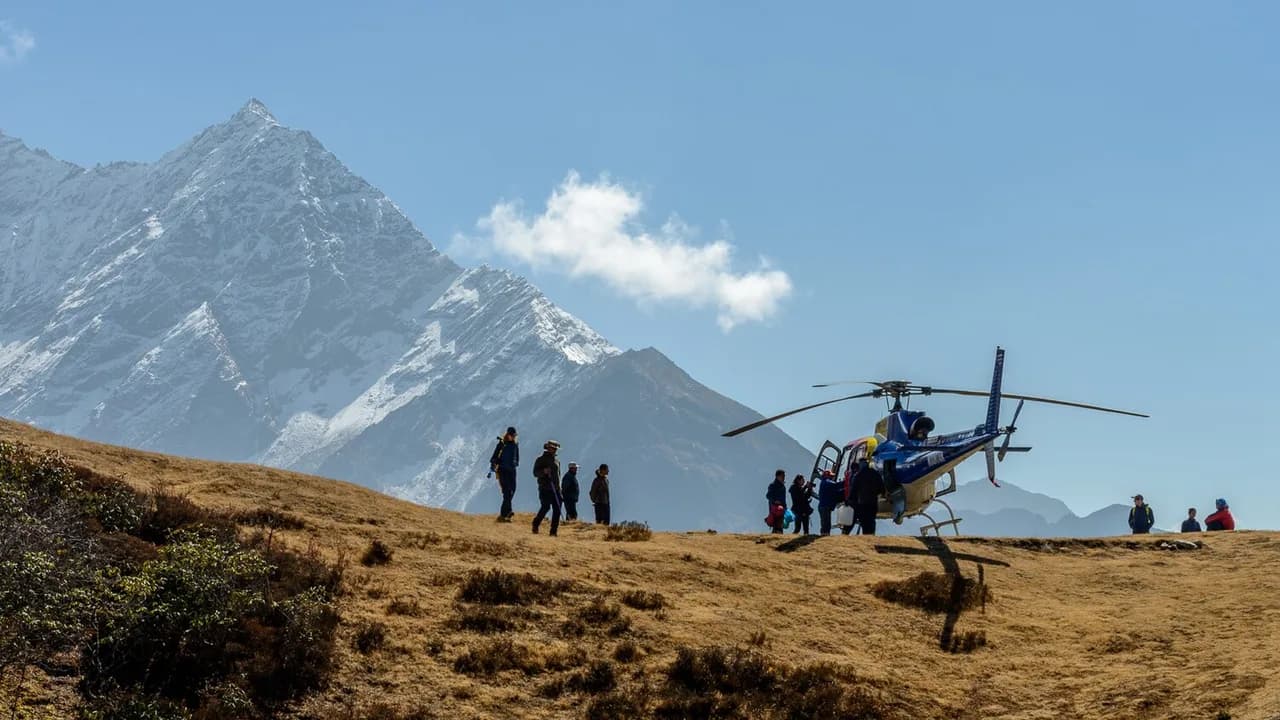
- Helicopter evacuation is the realistic rescue mode in the Garhwal and Kashmir Himalayas. Standard policies frequently exclude search-and-rescue and evacuation costs unless the policy explicitly includes emergency medical evacuation. Confirm the evacuation clause and its sub-limit before relying on it.
- Helicopter as transport (the Kedarnath shuttle from Phata, Sersi or Guptkashi) raises a different question: does the card's air-accident cover treat a helicopter shuttle as covered air travel? Policy wordings define this differently — some cover scheduled commercial flights only. Do not assume; read the definition of covered conveyance in the schedule.
Senior citizens: the age caps and the pre-existing-condition wall
Yatras skew older — Char Dham and Tirupati draw large numbers of pilgrims over 60 — and this is where card cover is thinnest:
- Age caps on card-linked cover. Complimentary policies commonly cap eligibility at 65 years (IndusInd Bank's published card-cover terms set the age group at up to 65, for example). A 70-year-old parent travelling on the family card is very likely outside the cover entirely.
- Pre-existing conditions are excluded by default. Card-linked policies, like most base travel policies, exclude claims arising from pre-existing diseases. For a senior with diabetes, hypertension or a cardiac history — the exact conditions most likely to cause a yatra emergency — the exclusion removes the cover precisely where it is needed.
- Trip-duration caps. Complimentary policies often limit trips to 30–60 days per trip. A long, multi-dham itinerary with extended stays can breach this quietly.
The honest alternatives for senior yatris:
- Standalone senior-citizen travel plans exist with far higher entry ages — some insurers offer senior travel products with entry up to 70, 80 or even 99 years, with medical sums insured up to $50,000–$100,000 for the 71–80 band. Pre-existing conditions are typically covered only in life-threatening emergencies and within sub-limits, not for routine treatment — but that emergency-only cover is exactly the yatra risk being insured.
- Domestic health insurance (the family's regular mediclaim) covers hospitalisation anywhere in India, including a yatra emergency — but check the fine print on adventure-activity exclusions and on cashless-network availability in hill towns. A policy that is cashless in Delhi may be reimbursement-only in Uttarkashi.
- Ayushman Bharat's Vay Vandana covers citizens 70 and above up to ₹5 lakh per annum at empanelled hospitals — a genuine backstop for the oldest pilgrims, worth registering for before the yatra season.
The card angle for seniors: the senior's own ticket should be paid on a card whose cover actually includes them, or the family should buy the standalone policy and pay its premium by card — the premium itself earns reward points, and the purchase is documented.
What the Amarnath rules add
The Shri Amarnath Shrine Board's framework sharpens the insurance question:
- Registration and medical fitness are mandatory — a compulsory health certificate from designated doctors, with the yatra restricted to medically fit pilgrims.
- Children below 13 are not permitted, and the board sets health bars that effectively exclude the frail elderly from the trek route.
- The route's altitude (3,888m) and weather volatility make evacuation cover more relevant here than on almost any other Indian pilgrimage.
For Amarnath specifically, the insurance stack that makes sense is: the mandatory registration, a standalone adventure-tier policy naming trekking to 4,500m+ with evacuation, and the card used purely as the payment method — not as the insurance.
The claim-documentation checklist
Card-linked claims fail most often on paperwork, not on coverage. Assemble this file before the yatra and keep copies in the cloud:
- Proof of activation — the card statement showing the full fare charged to the eligible card, within the policy's usage window.
- Travel proof — e-tickets, boarding passes, PNRs for every leg. For the helicopter shuttle, the IRCTC HeliYatra ticket with booking ID.
- Incident proof — for delays, the airline's delay certificate showing duration past the threshold; for baggage, the Property Irregularity Report filed at the airport; for medical events, the hospital's admission and discharge summaries with diagnosis.
- Expense proof — original receipts for every rupee claimed (medicines, accommodation during delays, transport). Reimbursement-mode policies pay against receipts, not estimates.
- Insurer notification within the window — most policies require intimation within 24–72 hours of the incident. Save the insurer's helpline number in the phone before departure, not after the emergency.
- ID and policy reference — the card number (masked as the insurer requires), the policy/certificate number from the card's insurance schedule, and government ID of the insured.
File the claim the week of return. Memories fade, receipts get lost, and several policies impose 30-day filing deadlines that are easy to miss once normal life resumes.
When to buy standalone cover instead — the decision tree
Buy a standalone policy (and use the card only to pay its premium) when any of these is true:
- Any traveller is over the card policy's age cap (commonly 65).
- The itinerary goes above 3,000 metres on foot — Kedarnath, Amarnath, high Char Dham stretches.
- Any traveller has a pre-existing condition that could plausibly cause a claim, and the card policy excludes it.
- The trip is domestic and the card's medical cover is international-only (the common case).
- The family is relying on add-on cardholders being insured, and the issuer covers primary only.
- The itinerary includes helicopter shuttles or evacuation exposure not clearly inside the card's definition of covered air travel.
Use the card's complimentary cover as the primary protection only when none of these is true: a young, healthy primary cardholder flying a straightforward domestic or international sector, full fare on the card, within the age and duration caps, with the inconvenience benefits (delay, baggage) as the realistic claim categories.
A note on paying for all of this by card
Insurance premiums — standalone or top-up — are ordinary card transactions and earn reward points at the base rate. There is no bonus category for insurance on most Indian cards, so use whichever card is closest to a milestone or has the best flat earn rate. Buy the policy before leaving India: several insurers decline to issue or renew travel cover once the journey has begun, and card-linked activation rules similarly assume the ticket was bought before travel. A policy bought mid-yatra from a hotel lobby is the most expensive kind — the kind that does not exist when it is needed.
Card-linked travel insurance is a real benefit, honestly designed for a narrow case: the working-age frequent flyer whose full fare rides on the card. Yatras — high, senior, domestic, family-sized — sit almost entirely outside that case. Recognising the boundary is what the cover is for; buying the right standalone policy for everything beyond it is what the card is for.


Comments
No comments yet
Be the first to share your experience with this card.