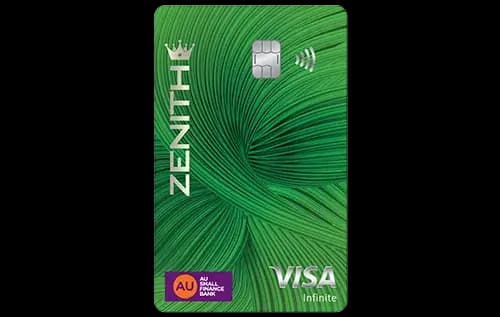
Quick Verdict
- For everyday spend, the Axis Bank Magnus Credit Cardⓘ wins with a higher base reward rate of 2.4% versus 1% on the Zenith.
- For travel and lounge access, the Zenith Credit Cardⓘ offers better value with 8 domestic and 6 international lounge visits, although Magnus provides unlimited domestic lounges with a higher spend gate.
- The Zenith card is cheaper to hold with an annual fee of Rs 7,999 compared to Rs 12,500 on the Magnus.
- Choose Zenith if you prioritize lounge access and premium travel benefits on a moderate fee; pick Magnus if you want superior rewards on everyday spend and don’t mind paying extra.
Side by Side
| Detail | Zenith Credit Card ⓘ | Axis Bank Magnus Credit Card ⓘ |
|---|---|---|
| Annual fee | Rs 7,999 | Rs 12,500 |
| Joining fee | Rs 7,999 | Rs 12,500 |
| Fee waiver on spend | None specified | None specified |
| Reward rate | 1% base; 5% dining & travel | 2.4% base |
| Reward type | points | points |
| Domestic lounge | 8 per year | Unlimited (Rs 50,000 quarterly spend gate) |
| International lounge | 6 per year | 8 per year |
| Forex markup | 1.99% | 2% |
| Best suited for | premium, travel, lounge, rewards, dining, shopping | premium, travel, lounge, forex, dining, shopping |
Rewards Compared
On a Rs 10,000 spend, the Zenith Credit Cardⓘ delivers Rs 100 back at its base rate of 1%. However, in its key categories of dining and travel, it offers 5% rewards, effectively Rs 500 on Rs 10,000 spent, making it a strong choice for category-focused spenders. The Axis Bank Magnus Credit Cardⓘ, by contrast, offers a flat 2.4% return across categories, translating to Rs 240 on Rs 10,000 spent. While this is less than Zenith’s category rates, it is more than double the Zenith’s base rate, making Magnus more rewarding for general spenders without specific category preferences.
Magnus’s higher flat rate benefits those who spend broadly without focusing on dining or travel, whereas Zenith’s superior category multipliers reward targeted spenders. For example, if you primarily spend on dining or travel, Zenith’s Rs 500 return per Rs 10,000 is significantly better than Magnus’s Rs 240. Conversely, for mixed or non-category spend, Magnus’s 2.4% is more lucrative.
Fees Compared
The Zenith Credit Card has a joining and annual fee of Rs 7,999 each, while the Axis Bank Magnus Credit Card charges Rs 12,500 for both joining and annual fees, making it Rs 4,501 more expensive annually. Neither card specifies a fee waiver based on spend, so the fees are effectively fixed. To justify the higher fee of the Magnus card purely from base rewards, you would need to spend approximately Rs 5,20,833 annually, compared to about Rs 7,99,900 on the Zenith card to cover its fee at base rates.
The head-to-head extra spend needed to cover the fee gap due to Magnus’s higher base rate is around Rs 3,21,500. This means if you spend more than Rs 3.21 lakh beyond Zenith’s break-even point, Magnus’s higher rewards compensate for its higher fee. For moderate spenders, Zenith’s lower fee makes it easier to break even.
Which One Should You Pick
Choose the Zenith Credit Cardⓘ if you are a premium traveller who values lounge access and category rewards on dining and travel. Its 8 domestic and 6 international lounge visits, plus lower forex markup of 1.99%, make it ideal for frequent flyers and diners who want premium benefits without the highest fee. Also, the monthly milestone bonuses and birthday rewards add to its appeal for targeted spenders.
The Axis Bank Magnus Credit Cardⓘ suits high-spending generalists who want a superior flat reward rate of 2.4% across all spends and unlimited domestic lounges with a higher Rs 50,000 quarterly spend gate. If you spend heavily and broadly, Magnus’s higher rewards can offset its expensive fee. Its EazyDiner Prime membership also adds dining privileges for food lovers.
Skip Zenith if you do not spend enough in dining or travel categories to benefit from its multipliers or if you want unlimited lounge access. Skip Magnus if you have moderate spends that do not justify its high fee or if you want more international lounge visits as Zenith offers 6 versus Magnus’s 8 but with fewer domestic lounges.
What to Check Before You Apply
- Verify if lounge access limits and quarterly spend gates fit your usage pattern to avoid denied visits.
- Understand the redemption process and value of reward points since both cards use points but rates differ.
- Calculate fee waiver thresholds carefully if you expect to meet any spend conditions for fee waivers.
- Consider forex markup charges for foreign currency spends; Zenith has a slightly lower 1.99% versus 2% on Magnus.
- Check which airports and lounges are accessible under each card to ensure coverage matches your travel routes.

Comments
No comments yet
Be the first to share your experience with this card.