Quick Verdict
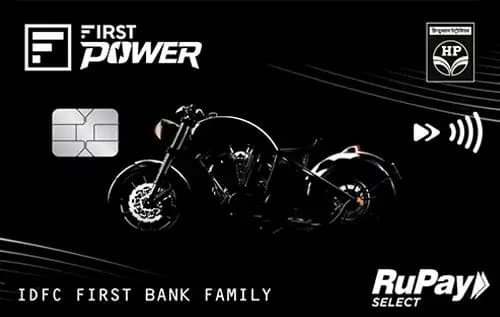
- The IDFC HPCL First Power Credit Card ⓘ wins for everyday spend due to its higher base reward rate and strong category returns on fuel, grocery, and utilities.
- For travel or lounge benefits, neither card offers domestic or international lounge access, so neither has a distinct advantage.
- The RBL Bank ShopRite Credit Card ⓘ is cheaper to hold with no joining or annual fees.
- Choose the IDFC card ⓘ if you spend heavily on fuel, groceries, or utilities and can justify the Rs 199 annual fee with your rewards. Opt for the RBL ShopRite ⓘ if you want a fee-free card for moderate spending in grocery and fuel categories.
Side by Side
| Detail | IDFC HPCL First Power Credit Card ⓘ | RBL Bank ShopRite Credit Card ⓘ |
|---|---|---|
| Annual fee | Rs 199 | Nil (lifetime free) |
| Joining fee | Rs 199 | Nil (lifetime free) |
| Fee waiver on spend | Rs 50,000 | Rs 2,00,000 |
| Reward rate | 0.75% base, 5% fuel/grocery/utilities | 0.4% base, 5% fuel/grocery |
| Reward type | Points | Points |
| Domestic lounge | None | None |
| International lounge | None | None |
| Forex markup | 3.5% | 3.5% |
| Best suited for | Fuel, UPI-RuPay, First card | Cashback, Grocery, Fuel, Shopping |
Rewards Compared
Spending Rs 10,000 on the IDFC HPCL First Power Credit Card ⓘ earns Rs 75 in rewards at the base rate. However, when spending in the fuel, grocery, or utilities categories, the reward rate jumps to 5%, resulting in Rs 500 back on Rs 10,000 spent in these categories. This makes the card very rewarding for frequent spenders in these areas.
The RBL Bank ShopRite Credit Card ⓘ offers a lower base reward rate of 0.4%, translating to Rs 40 back on Rs 10,000 spent outside categories. For grocery and fuel, it matches the IDFC card’s 5% rate, also returning Rs 500 on Rs 10,000 spent. This makes it suitable for those focusing specifically on grocery and fuel expenses but less rewarding for general spend.
Fees Compared
The IDFC HPCL First Power Credit Card ⓘ charges a joining fee and annual fee of Rs 199 each. The annual fee is waived if you spend Rs 50,000 annually or Rs 4,167 monthly. To cover the extra Rs 199 fee compared to the RBL ShopRite card ⓘ, you must spend Rs 26,533 at the base rate or Rs 56,857 factoring in the higher base reward rate gap.
In contrast, the RBL Bank ShopRite Credit Card ⓘ has no joining or annual fees and is lifetime free, with a fee waiver threshold listed at Rs 2,00,000 which is irrelevant here since there are no fees to waive. This makes the RBL card attractive for low to moderate spenders not wanting to worry about fee waivers.
Which One Should You Pick
Pick the IDFC HPCL First Power Credit Card ⓘ if you spend regularly on fuel, groceries, and utilities and can comfortably meet the Rs 4,167 monthly spend to waive the annual fee. The higher base rewards and category bonuses will reward you well and justify the Rs 199 fee. This card is also a good first credit card option due to its UPI-RuPay compatibility.
Choose the RBL Bank ShopRite Credit Card ⓘ if you prefer a no-fee card that offers solid 5% rewards on grocery and fuel without the pressure of fee waivers. It suits cautious spenders or those with irregular spending patterns who want to avoid fees and still earn category rewards.
If you rarely spend on fuel or groceries, skip both cards and look for options better aligned with your spending. Those seeking travel perks or lounge access should also look elsewhere.
What to Check Before You Apply
- Confirm the category caps and exclusions on 5% rewards, especially for fuel and grocery transactions.
- Understand the redemption value and terms for points as both cards offer points but with different base rates.
- Calculate the fee waiver threshold monthly spend carefully to see if you can realistically meet it on the IDFC card.
- Consider the 3.5% forex markup if you plan to use the card abroad; both cards charge this standard rate.
- Neither card offers lounge access, so check if that is a priority for you before choosing either.

Comments
No comments yet
Be the first to share your experience with this card.