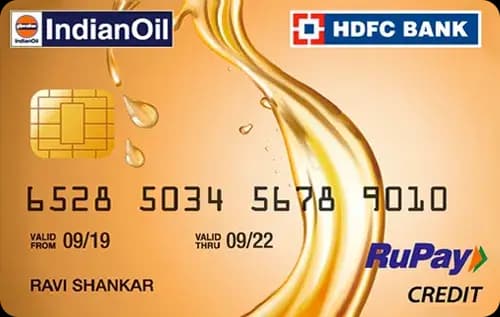
Quick Verdict
- The Indianoil HDFC Bank Credit Cardⓘ wins for everyday spend thanks to its higher base reward rate of 1% versus 0.4% on the RBL Bank ShopRite Credit Cardⓘ.
- Both cards offer 5% rewards on fuel and grocery spends, so neither pulls ahead specifically in these categories.
- The RBL Bank ShopRite Credit Cardⓘ is cheaper to hold with no joining or annual fees, while Indianoil HDFC Bank Credit Cardⓘ charges Rs 500 for each.
- Choose the Indianoil HDFC Bank Credit Cardⓘ if you spend at least Rs 50,000 annually to justify the fee and want a straightforward fuel and grocery rewards card. Pick the RBL Bank ShopRite Credit Cardⓘ if you want a truly free card for general shopping and fuel with no fee worries.
Side by Side
| Detail | Indianoil HDFC Bank Credit Cardⓘ | RBL Bank ShopRite Credit Cardⓘ |
|---|---|---|
| Annual fee | Rs 500 | Nil (lifetime free) |
| Joining fee | Rs 500 | Nil (lifetime free) |
| Fee waiver on spend | Rs 50,000 | Rs 2,00,000 |
| Reward rate | 1% base, 5% fuel & grocery | 0.4% base, 5% fuel & grocery |
| Reward type | points | points |
| Domestic lounge | None | None |
| International lounge | None | None |
| Forex markup | 3.5% | 3.5% |
| Best suited for | fuel, first-card, upi-rupay | cashback, grocery, fuel, shopping |
Rewards Compared
The Indianoil HDFC Bank Credit Cardⓘ offers a base reward of Rs 100 on every Rs 10,000 spent, which is more than double the Rs 40 earned on the same spend with the RBL Bank ShopRite Credit Cardⓘ. Both cards significantly boost rewards to Rs 500 per Rs 10,000 spent in the fuel and grocery categories, making them equally attractive for regular purchases in these areas.
For general spends outside these categories, Indianoil HDFC Bank Credit Cardⓘ clearly leads with its superior 1% base rate compared to 0.4% on the RBL Bank ShopRite Credit Cardⓘ. This makes Indianoil HDFC Bank Credit Cardⓘ a better choice for users with diverse spending habits who want steady rewards across the board, while RBL Bank ShopRite Credit Cardⓘ is more targeted towards those focusing on specific categories.
Fees Compared
The Indianoil HDFC Bank Credit Cardⓘ charges a joining fee and annual fee of Rs 500 each, which can be waived by spending Rs 50,000 annually (about Rs 4,167 per month). The RBL Bank ShopRite Credit Cardⓘ, on the other hand, has no joining or annual fees and is lifetime free, though it mentions a fee waiver threshold of Rs 2,00,000 which is largely irrelevant given the no-fee status.
To break even on the extra Rs 500 annual fee of the Indianoil HDFC Bank Credit Cardⓘ through its higher base rewards, a cardholder needs to spend approximately Rs 83,333 more annually than the RBL Bank ShopRite Credit Cardⓘ user. This means unless your spend comfortably exceeds Rs 50,000 a year, the fee-free RBL Bank ShopRite Credit Cardⓘ is more economical.
Which One Should You Pick
Choose the Indianoil HDFC Bank Credit Cardⓘ if you are a regular fuel or grocery spender who can cross the Rs 50,000 annual spend threshold to waive the fee. Its higher base rewards and targeted category bonuses make it suitable for first-time credit card users wanting a simple, effective card with decent upside on fuel and groceries. However, skip this card if you do not spend enough to justify the fees or want a no-maintenance-cost option.
Opt for the RBL Bank ShopRite Credit Cardⓘ if you prefer a no-fee card with decent 5% rewards on fuel and grocery shopping. Its lower base reward rate is offset by the fact that you never pay an annual or joining fee. This card is ideal for budget-conscious shoppers looking for a free card that rewards fuel, grocery, and general shopping. Avoid it if you want better returns on general spends or are a high spender who can benefit more from the Indianoil HDFC Bank Credit Cardⓘ.
In conclusion, the Indianoil HDFC Bank Credit Cardⓘ is best for disciplined users with moderate to high spend who want better rewards and can handle fees. The RBL Bank ShopRite Credit Cardⓘ suits those who want a lifetime free card with good category rewards and minimal fuss.
What to Check Before You Apply
- Verify if the 5% category rewards on fuel and grocery have any monthly or annual caps limiting your earnings.
- Check the actual redemption value of points to ensure that the stated percentage returns translate into real benefits.
- Confirm the fee waiver calculations carefully to avoid surprises in annual costs.
- Be aware of the 3.5% forex markup on international spends, which is standard but can add to costs if you travel frequently.
- Since neither card offers lounge access, do not expect complimentary airport lounge benefits.

Comments
No comments yet
Be the first to share your experience with this card.