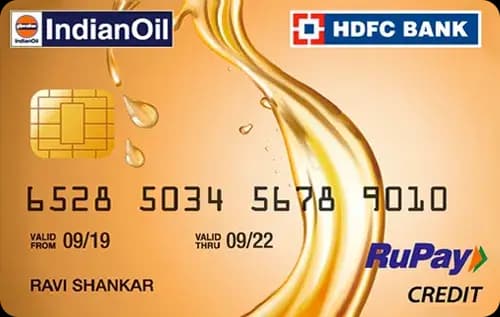
Quick Verdict
- The Indianoil HDFC Bank Credit Cardⓘ wins for fuel and grocery spend, offering a superior 5% return in these categories.
- The Yes Bank Rupay Credit Cardⓘ takes the lead for domestic lounge access, granting 4 free visits per year with a manageable quarterly spend condition.
- The Yes Bank Rupay card is cheaper to hold with no joining or annual fees, while the Indianoil card requires Rs 500 each.
- Fuel-focused spenders and first-time card users seeking high rewards in fuel and groceries should choose Indianoil HDFC, whereas those valuing free lounges, no fees, and broader category rewards should opt for Yes Bank Rupay.
Side by Side
| Detail | Indianoil HDFC Bank Credit Cardⓘ | Yes Bank Rupay Credit Cardⓘ |
|---|---|---|
| Annual fee | Rs 500 | Nil (lifetime free) |
| Joining fee | Rs 500 | Nil (lifetime free) |
| Fee waiver on spend | Rs 50,000 annually (Rs 4,167 monthly) | Rs 75,000 annually (Rs 6,250 monthly) |
| Reward rate | 1% base, 5% fuel & grocery | 1% base, 3% grocery & dining, 1% UPI |
| Reward type | Points | Points |
| Domestic lounge | None | 4 per year (Rs 50,000 quarterly spend gate) |
| International lounge | None | None |
| Forex markup | 3.5% | 3.5% |
| Best suited for | Fuel, first-card, UPI-Rupay | UPI-Rupay, rewards, grocery, first-card, shopping |
Rewards Compared
Spending Rs 10,000 on the Indianoil HDFC Bank Credit Cardⓘ yields Rs 100 back at the base rate. However, in fuel and grocery categories, this card stands out by delivering Rs 500 back on the same spend, thanks to its 5% reward rate. This makes it highly advantageous for customers who frequently spend on fuel or groceries, effectively multiplying their rewards fivefold in these segments.
In contrast, the Yes Bank Rupay Credit Cardⓘ also offers Rs 100 back on Rs 10,000 spend at its base rate but provides a more balanced category reward structure. It grants Rs 300 back on grocery and dining spends per Rs 10,000, reflecting a 3% reward rate, and Rs 100 back on UPI transactions. This makes the Yes Bank Rupay card more versatile for users who spend across dining, groceries, and UPI payments but less rewarding than Indianoil HDFC in fuel and grocery categories.
Fees Compared
The Indianoil HDFC Bank Credit Cardⓘ charges a joining fee and annual fee of Rs 500 each, which can be waived by spending Rs 50,000 annually. This translates to a monthly spend of Rs 4,167 needed to avoid fees. The card’s fee waiver threshold is relatively accessible for regular users with medium to high monthly spends.
The Yes Bank Rupay Credit Cardⓘ is completely free to join and hold, with no annual fee. Although it lists a fee waiver spend of Rs 75,000 annually, this is likely related to lounge access criteria rather than fee waivers since the fees are nil. Its monthly equivalent spend is Rs 6,250 for lounge eligibility. This card is more attractive for users who want to avoid any fees but still enjoy rewards and limited lounge benefits.
Neither card offers international lounge access, and both apply a 3.5% forex markup on foreign currency transactions, which is standard but costly for overseas spenders.
Which One Should You Pick
The Indianoil HDFC Bank Credit Cardⓘ is best for those who prioritize high rewards on fuel and grocery purchases. It is also suitable as a first credit card due to its straightforward rewards and moderate fees, which can be waived with regular spending. If fuel or grocery expenses form a significant part of your budget, this card’s 5% rate in these categories delivers superior value.
The Yes Bank Rupay Credit Cardⓘ suits users who want a zero-fee card with decent rewards across groceries, dining, and UPI payments. It is also a strong choice for those who value four free domestic lounge visits annually, provided they meet the Rs 50,000 quarterly spend gate. Its broader category appeal and fee-free status make it attractive for everyday spenders who want lounge benefits without paying fees.
In conclusion, fuel and grocery heavy spenders should pick the Indianoil HDFC card, while casual spenders, shopping enthusiasts, and lounge users on a budget should go for the Yes Bank Rupay. Those who do not spend much on fuel or groceries and dislike paying any fees should skip the Indianoil card. Conversely, if lounge access is not important and you want better fuel rewards, skip the Yes Bank Rupay.
What to Check Before You Apply
- Confirm if the 5% fuel and grocery rewards on the Indianoil card have any monthly or annual caps that could limit earnings.
- Check the redemption value and ease of converting points for both cards to ensure rewards can be effectively utilized.
- Understand the fee waiver conditions carefully to avoid paying fees unexpectedly, especially for Indianoil’s Rs 50,000 annual spend requirement.
- Be aware that both cards have a 3.5% forex markup, which makes them expensive for international travel or shopping.

Comments
No comments yet
Be the first to share your experience with this card.