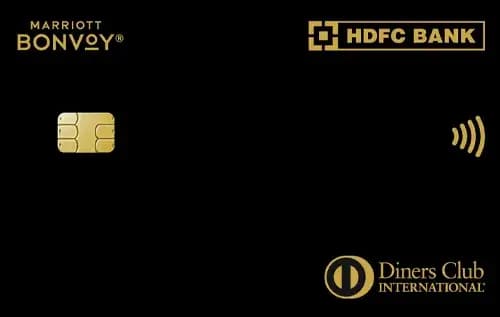
Quick Verdict
- The Marriott Bonvoy HDFC Bank Credit Cardⓘ wins for everyday spend with a higher base reward rate of 1.3% versus 0.8% on the RBL Bank Icon Credit Cardⓘ.
- For travel and dining spends, the RBL Bank Icon Credit Cardⓘ offers a superior 4% return versus 2.6% on the Marriott Bonvoy card, making it better for category spenders.
- The Marriott Bonvoy card is cheaper to hold overall, with a Rs 3,000 annual fee and no waiver, compared to Rs 5,000 annual fee and Rs 3 lakh annual spend waiver on the RBL Icon.
- Choose Marriott Bonvoy HDFC Bank Credit Cardⓘ if you prioritize consistent rewards on all spend and more lounge access. Pick RBL Bank Icon Credit Cardⓘ if you spend heavily on travel and dining and can meet the high fee waiver.
Side by Side
| Detail | Marriott Bonvoy HDFC Bank Credit Cardⓘ | RBL Bank Icon Credit Cardⓘ |
|---|---|---|
| Annual fee | Rs 3,000 | Rs 5,000 |
| Joining fee | Rs 3,000 | Rs 5,000 |
| Fee waiver on spend | Rs 3.00 lakh (Rs 25,000/month) | |
| Reward rate | 1.3% base, 2.6% travel & dining | 0.8% base, 4% travel & dining |
| Reward type | points | points |
| Domestic lounge | 12 per year | 8 per year |
| International lounge | 12 per year | 4 per year |
| Forex markup | 3.5% | 2% |
| Best suited for | travel, premium, lounge, rewards, shopping | travel, dining, lounge, rewards, shopping |
Rewards Compared
On a Rs 10,000 spend, the Marriott Bonvoy HDFC Bank Credit Cardⓘ returns Rs 130 at the base rate, which is notably higher than the Rs 80 from the RBL Bank Icon Credit Cardⓘ. This means everyday spending on the Marriott Bonvoy card yields better rewards in rupee terms without focusing on any category.
However, when spending on travel or dining, the RBL Bank Icon Credit Cardⓘ significantly outshines with a 4% effective return, giving Rs 400 back on Rs 10,000 spent in these categories. The Marriott Bonvoy card offers a 2.6% return or Rs 260 for the same categories, which is still good but clearly less rewarding than the RBL Icon card. This means category spenders in travel and dining will maximize value with the RBL Bank Icon Credit Cardⓘ.
Fees Compared
The Marriott Bonvoy HDFC Bank Credit Cardⓘ charges Rs 3,000 as both joining and annual fee with no mention of waiver, making it straightforward to calculate costs. You break even on fee versus rewards at about Rs 2.31 lakh annual spend at the base rate.
The RBL Bank Icon Credit Cardⓘ carries a higher joining and annual fee of Rs 5,000 each, but this annual fee can be waived if you spend Rs 3 lakh annually or Rs 25,000 monthly. The break-even with fee at the base rate is much higher at Rs 6.25 lakh annual spend, reflecting the lower base reward rate and higher fee. If you fail to meet the waiver, the card becomes more expensive to hold.
Which One Should You Pick
The Marriott Bonvoy HDFC Bank Credit Cardⓘ is best suited for premium travelers and shoppers who want a good base reward rate and generous lounge access including 12 domestic and 12 international visits per year. The included Silver Elite status and golf privileges add value for lifestyle and travel enthusiasts. Skip this card if you do not travel often or spend enough to justify the Rs 3,000 annual fee.
The RBL Bank Icon Credit Cardⓘ appeals to heavy spenders on travel and dining who can comfortably meet the Rs 3 lakh annual fee waiver threshold. Its 4% category rewards and access to exclusive global events add premium perks. Also, it has a lower forex markup of 2%, benefiting international spenders. Avoid this card if you do not spend heavily in the fee waiver categories or want more lounge access.
In conclusion, for most users prioritizing everyday rewards and lounge benefits, the Marriott Bonvoy HDFC Bank Credit Cardⓘ is the smarter choice. For high travel and dining spenders with the discipline to meet fee waivers, the RBL Bank Icon Credit Cardⓘ delivers better category rewards and unique event access.
What to Check Before You Apply
- Confirm the quarterly domestic lounge visit spend gate of Rs 35,000 on the RBL Bank Icon Credit Cardⓘ.
- Understand the redemption value and conditions of points for both cards as reward types differ.
- Verify your monthly spend pattern to see if you can realistically meet the Rs 25,000 monthly fee waiver for the RBL card.
- Note the forex markup differences: 3.5% on Marriott Bonvoy vs 2% on RBL Icon, which can impact international spend costs.
- Check the locations and acceptance of domestic and international lounges offered by each card.

Comments
No comments yet
Be the first to share your experience with this card.